


The implementation of Predictive Maintenance (PdM) is revolutionizing the offshore wind energy sector, shifting from reactive or scheduled approaches to condition-based strategies. This article delves into the intricacies of PdM for offshore wind farms, exploring its benefits, challenges, and the advanced technologies driving its adoption to enhance operational efficiency and asset longevity.
The Crucial Role of Predictive Maintenance (PdM) in Offshore Wind Farms
Predictive Maintenance (PdM) is no longer a futuristic concept but a critical operational imperative for the offshore wind energy industry. As wind farms are deployed in increasingly remote and challenging marine environments, the costs and complexities associated with unscheduled downtime and reactive repairs skyrocket. PdM systems, leveraging sophisticated data analytics and sensor technology, enable operators to anticipate component failures before they occur. This proactive approach allows for planned interventions, minimizing disruption, reducing maintenance expenditure, and maximizing energy generation. The focus of Predictive Maintenance (PdM) in this context is to transform asset management from a purely cost-centric activity into a strategic enabler of performance and profitability. Understanding the nuances of PdM implementation is paramount for any stakeholder in the offshore wind value chain seeking to optimize asset performance and mitigate operational risks in a competitive global energy market. The inherent complexity of offshore wind turbines, coupled with the harsh environmental conditions, makes traditional maintenance strategies increasingly untenable. Predictive Maintenance (PdM) offers a data-driven solution to this challenge, promising significant improvements in reliability, availability, and overall economic viability. This in-depth exploration will illuminate the transformative power of PdM in this vital renewable energy sector.
Unlocking the Potential: Key Drivers for Predictive Maintenance (PdM) Adoption
The adoption of Predictive Maintenance (PdM) in offshore wind farms is driven by a confluence of economic, operational, and technological factors. The escalating capital expenditure and the high operational costs associated with offshore assets necessitate a paradigm shift towards more intelligent maintenance strategies. The long operational lifespans of wind turbines, typically 20-25 years, mean that optimizing their performance and longevity throughout their lifecycle is crucial for return on investment. Furthermore, the increasing size and complexity of offshore wind turbines, with larger rotor diameters and higher hub heights, magnify the challenges of traditional maintenance. Unscheduled downtime in an offshore setting is exceptionally costly, involving specialized vessels, highly trained personnel, and often weather-dependent logistics. Predictive Maintenance (PdM) directly addresses these pain points by providing early warnings of potential failures, allowing for scheduled maintenance during optimal windows, thereby significantly reducing these prohibitive costs.
– The increasing complexity of wind turbine technology and control systems demands a more sophisticated approach to maintenance.
– The drive for enhanced operational efficiency and maximum energy output necessitates minimizing downtime and ensuring continuous power generation.
– The stringent safety regulations governing offshore operations underscore the importance of preventing catastrophic failures.
– The economic imperative to reduce the Levelized Cost of Energy (LCOE) by optimizing O&M expenditure.
The Economic Imperative: Reducing O&M Costs and Maximizing ROI
Operational and Maintenance (O&M) costs represent a significant portion of the overall expenditure for offshore wind farms. Traditional scheduled maintenance, while providing a degree of predictability, often leads to unnecessary part replacements and labor deployment. Reactive maintenance, on the other hand, is inherently costly due to emergency call-outs, expedited shipping of parts, and prolonged downtime. Predictive Maintenance (PdM) offers a compelling economic advantage by shifting maintenance activities from a time-based or failure-driven model to a condition-based one. By accurately predicting when a component is likely to fail, maintenance can be scheduled precisely, minimizing the need for premature replacements and avoiding costly emergency interventions. This optimized approach directly translates into lower O&M expenditure.
– Targeted interventions: Maintenance is performed only when necessary, based on actual asset condition.
– Reduced spare parts inventory: By understanding component wear patterns, operators can optimize spare parts management, reducing holding costs.
– Minimized logistical overhead: Planned maintenance allows for efficient scheduling of vessels, personnel, and equipment, avoiding premium rates for emergency services.
– Extended asset life: Proactive identification and resolution of minor issues prevent them from escalating into major failures, thereby extending the operational life of critical components and the wind turbine as a whole.
– Increased energy production: Reduced downtime means turbines are generating power for a greater percentage of the time, directly impacting revenue.
Foundations of Predictive Maintenance (PdM): Data Acquisition and Sensor Technologies
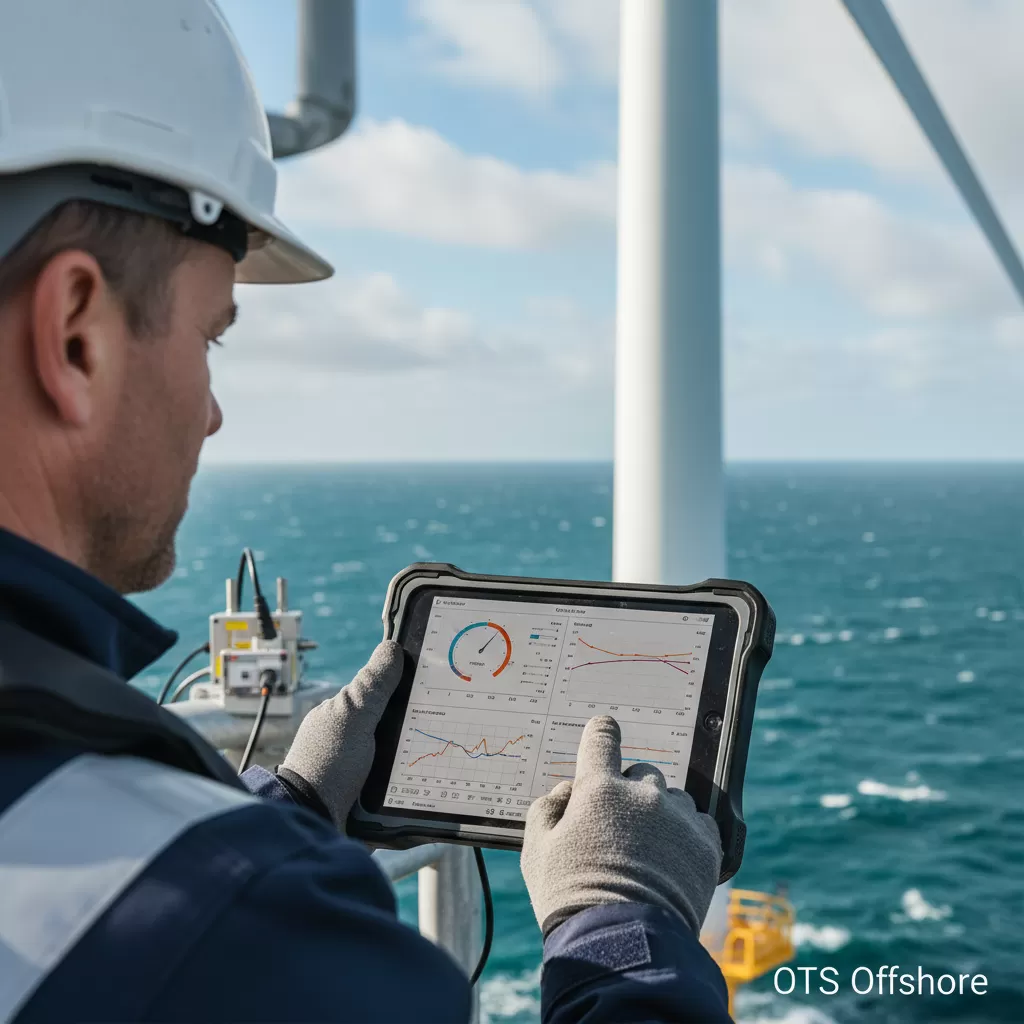
The efficacy of any Predictive Maintenance (PdM) strategy hinges on the quality and breadth of data acquired from the wind turbine’s operational parameters. This data is primarily collected through an array of sophisticated sensors strategically installed across critical components. These sensors monitor various aspects of turbine performance, providing real-time insights into the health of individual parts and the overall system. The types of data collected are diverse, ranging from vibration analysis and temperature monitoring to oil particle counting and acoustic emissions. The continuous stream of this data forms the bedrock upon which PdM algorithms are built and applied.
– Vibration sensors: These are crucial for detecting anomalies in rotating machinery such as gearboxes, bearings, and generators. Elevated vibration levels can indicate wear, imbalance, or misalignment.
– Temperature sensors: Monitoring the operating temperature of key components like bearings, transformers, and hydraulic systems can reveal issues such as increased friction, poor lubrication, or electrical faults.
– Oil condition sensors: These sensors analyze the lubrication oil for wear particles, contaminants, and changes in viscosity, providing early indications of internal component wear in gearboxes and hydraulic systems.
– Acoustic emission sensors: These sensors detect high-frequency sounds generated by friction, impacts, or crack propagation within components, offering a sensitive method for early fault detection.
– Strain gauges: Used to measure the stress and strain on structural components like blades and towers, especially in response to aerodynamic loads and environmental factors.
– Power output and performance monitoring: Analyzing electrical output, rotor speed, and pitch angle can reveal aerodynamic inefficiencies or issues with the control system.
The Role of Advanced Analytics and Machine Learning in PdM
Acquiring vast amounts of sensor data is only the first step; deriving actionable insights from this data is where the true power of Predictive Maintenance (PdM) lies. Advanced analytics and machine learning (ML) algorithms play a pivotal role in processing, interpreting, and predicting potential failures. These algorithms are trained on historical data, enabling them to identify subtle patterns and anomalies that might go unnoticed by human operators. Machine learning models can learn the normal operating behavior of a turbine and flag deviations that indicate an impending issue.
– Anomaly detection: ML algorithms identify deviations from established normal operating patterns.
– Pattern recognition: Identifying recurring patterns associated with specific failure modes.
– Predictive modeling: Forecasting the remaining useful life (RUL) of components based on current condition and historical degradation rates.
– Classification algorithms: Categorizing detected anomalies into specific types of potential faults.
– Root cause analysis: Assisting in the identification of the underlying cause of a detected anomaly or failure.
Implementing Predictive Maintenance (PdM): Challenges and Solutions
Despite the clear advantages, the implementation of Predictive Maintenance (PdM) in offshore wind farms is not without its challenges. These can range from technical hurdles related to data integration and cybersecurity to organizational and economic factors. Addressing these challenges proactively is crucial for successful PdM deployment.
– Data quality and standardization: Ensuring consistent, high-quality data from diverse sensor types and turbine models can be complex. Solutions involve robust data validation processes and the adoption of industry-wide data standards.
– Sensor reliability and maintenance: Sensors themselves can fail or require maintenance, particularly in harsh offshore environments. Redundancy in sensor networks and robust sensor health monitoring systems are key.
– Integration with existing SCADA systems: Seamless integration of PdM platforms with existing Supervisory Control and Data Acquisition (SCADA) systems is vital for efficient data flow and operational integration. This often requires custom middleware or API development.
– Cybersecurity threats: The increasing connectivity of offshore assets makes them vulnerable to cyberattacks. Robust cybersecurity protocols, including data encryption and access control, are paramount.
– Skill gap and training: A skilled workforce is required to manage, interpret, and act upon PdM data. Investing in training programs for engineers and technicians is essential.
– Cost of initial investment: Implementing a comprehensive PdM system requires significant upfront investment in sensors, software, and analytics platforms. Demonstrating a clear return on investment through pilot projects and phased implementation can help justify this cost.
– Environmental conditions: The corrosive, humid, and dynamic nature of the offshore environment can impact sensor performance and data transmission. Selecting ruggedized, marine-grade sensors and robust communication infrastructure is critical.
– Actionability of insights: Generating alerts is insufficient; the insights must be translated into clear, actionable maintenance recommendations. This requires well-defined workflows and decision-making processes.
Phased Approach to PdM Implementation for Optimal Results
A successful Predictive Maintenance (PdM) implementation often involves a phased approach, allowing for iterative learning and adaptation. This strategy minimizes initial risk and allows organizations to build confidence and expertise incrementally.
– Phase 1: Pilot project and baseline assessment. This involves selecting a subset of turbines or critical components for initial PdM implementation. Data collection, sensor deployment, and basic analytics are established. The focus is on understanding the data, validating the technology, and establishing baseline performance metrics.
– Phase 2: Expanding data sources and analytics capabilities. As confidence grows, more sensors are deployed, and more sophisticated ML algorithms are introduced. Integration with SCADA and other operational systems is deepened.
– Phase 3: Full-scale deployment and integration. The PdM system is rolled out across the entire wind farm. Advanced functionalities such as automated diagnostics, prognostics, and integration with maintenance scheduling systems are implemented. Continuous monitoring and model refinement become standard practice.
– Phase 4: Optimization and continuous improvement. The PdM system is continuously monitored and updated. Performance metrics are tracked, and algorithms are retrained and improved based on new data and operational feedback.

The Future of PdM in Offshore Wind: AI, Digital Twins, and Enhanced Autonomy
The evolution of Predictive Maintenance (PdM) in the offshore wind sector is inextricably linked to advancements in artificial intelligence (AI), the development of digital twins, and the increasing drive towards autonomous operations. These technologies are poised to further enhance the capabilities and efficiency of PdM strategies, ushering in a new era of asset management.
– AI-driven diagnostics and prognostics: Beyond basic anomaly detection, AI is enabling more nuanced and accurate fault diagnosis and prognosis. Deep learning models can interpret complex sensor patterns to identify specific failure modes with high precision and forecast component RUL with greater accuracy.
– Digital Twins: Creating a virtual replica of each wind turbine or the entire farm allows for sophisticated simulations and scenario testing. Digital twins can ingest real-time data from physical assets, enabling operators to predict the impact of operational changes or maintenance interventions without risking the actual equipment. This provides a powerful sandbox for PdM strategy development and validation.
– Enhanced automation: As PdM systems become more sophisticated, they will drive greater automation in maintenance processes. This could include automated generation of work orders, automated ordering of spare parts, and even autonomous inspection drones for offshore asset checks.
– Edge computing: Processing data closer to the source (at the edge of the network) reduces latency and bandwidth requirements, enabling faster real-time analysis and decision-making, particularly crucial in remote offshore locations with intermittent connectivity.
– Integration with broader grid management: PdM insights can be integrated with grid management systems to optimize power generation, predict availability, and contribute to grid stability.
The continuous refinement of these technologies promises to make offshore wind farms not only more efficient and reliable but also more resilient and cost-effective, solidifying their role as a cornerstone of the global energy transition. The sophisticated application of data science and AI within the framework of Predictive Maintenance (PdM) is transforming the operational landscape of offshore wind.