

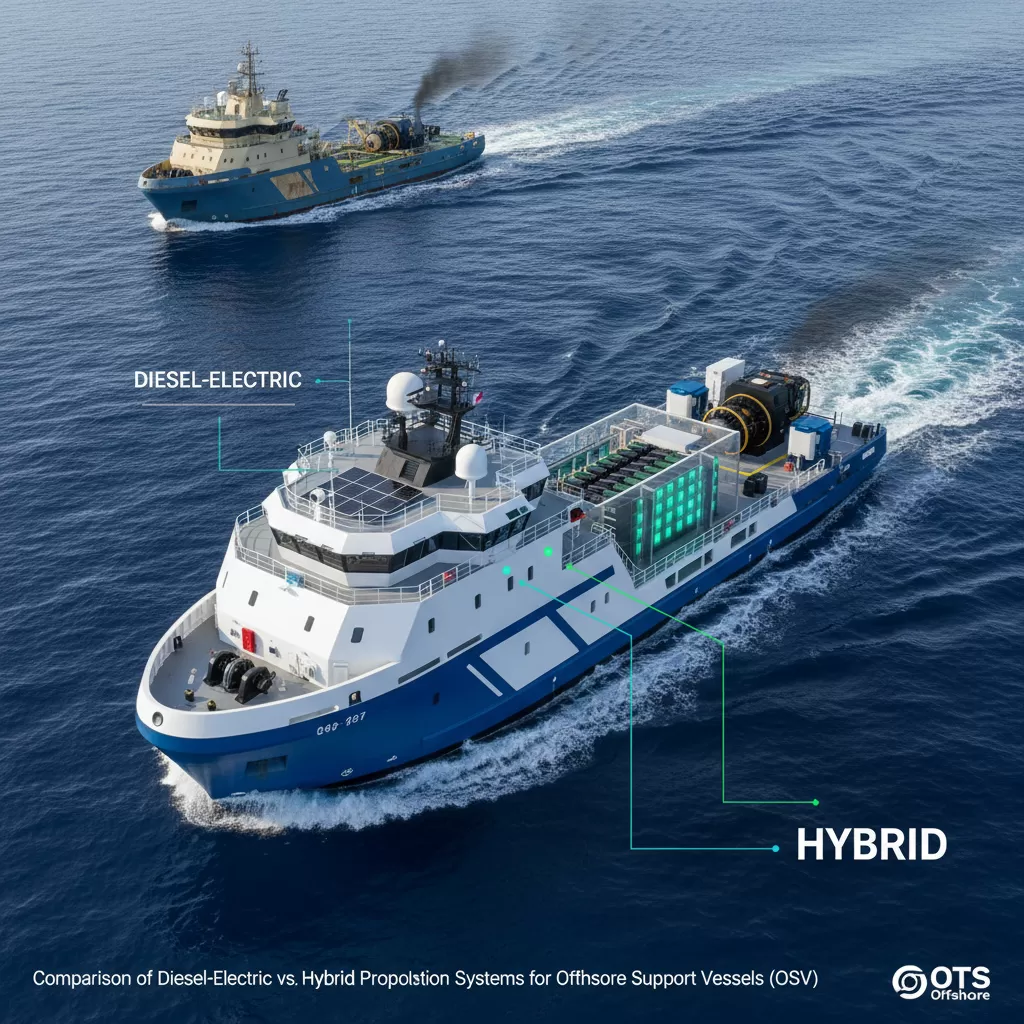
This article provides an in-depth Comparison of Diesel-Electric vs. Hybrid Propulsion Systems for Offshore Support Vessels (OSVs), analyzing their operational efficiencies, environmental impacts, and suitability for diverse offshore energy operations.
The Critical Comparison of Diesel-Electric vs. Hybrid Propulsion for Offshore Support Vessels
The marine industry, particularly the offshore sector, is undergoing a significant transformation driven by the imperative for enhanced operational efficiency, reduced environmental footprint, and improved vessel performance. Within this context, the ‘Comparison Diesel-Electric Hybrid’ of propulsion systems emerges as a paramount consideration for Offshore Support Vessels (OSVs). Traditional diesel-powered systems, while robust, often struggle to meet the increasingly stringent emissions regulations and the demand for fuel economy in the complex and demanding offshore environment. This analysis delves into the intricacies of diesel-electric and hybrid propulsion technologies, evaluating their distinct advantages and disadvantages in the OSV domain. Understanding this Comparison Diesel-Electric Hybrid is crucial for operators aiming to optimize their fleets for the evolving energy landscape, ensuring cost-effectiveness and sustainability. The selection of the appropriate propulsion system directly impacts operational expenditure, vessel uptime, and the overall environmental stewardship of offshore energy projects. This detailed Comparison Diesel-Electric Hybrid will equip stakeholders with the knowledge to make informed decisions.
Understanding the Core Technologies: Diesel-Electric vs. Hybrid Propulsion
At its heart, a Comparison Diesel-Electric Hybrid involves discerning the fundamental principles governing each propulsion architecture.
Diesel-Electric Propulsion Explained
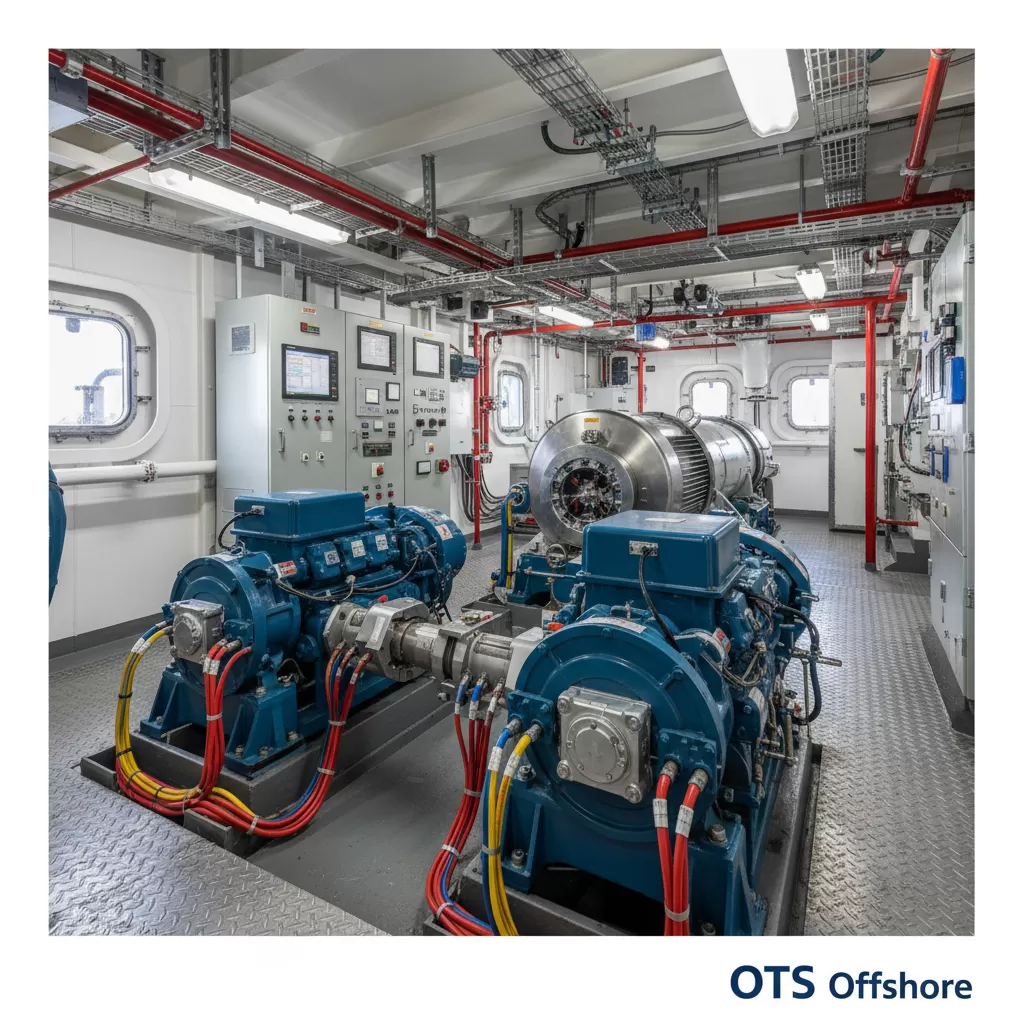
Diesel-electric propulsion replaces the direct mechanical connection between the prime mover (diesel engine) and the propulsion units (propellers or thrusters) with an electrical system. In this setup, diesel generators produce electricity, which is then used to power electric motors that drive the propellers.
– Key components include: Diesel generators, switchboards, inverters, electric motors, and often propeller nozzle systems.
– Benefits of this architecture:
– Enhanced fuel efficiency through optimized engine operation across a wider load range.
– Increased operational flexibility, allowing for independent speed and load control of engines and thrusters.
– Reduced noise and vibration levels, leading to improved crew comfort and operational precision.
– Simplified mechanical drivetrain, potentially reducing maintenance requirements.
– Improved maneuverability and dynamic positioning capabilities.
– Drawbacks to consider in a Comparison Diesel-Electric Hybrid:
– Higher initial capital expenditure compared to conventional diesel-mechanical systems.
– Complexity of the electrical system, requiring specialized maintenance personnel.
– Potential for energy losses within the electrical conversion stages.
Hybrid Propulsion Systems: The Best of Both Worlds?
Hybrid propulsion systems, a key element in our Comparison Diesel-Electric Hybrid, integrate multiple power sources to achieve optimal performance. For OSVs, this typically means a combination of diesel engines, electric motors, and often battery banks or other energy storage systems.
– Types of hybrid configurations:
– Parallel Hybrid: Both diesel engines and electric motors can independently or simultaneously propel the vessel.
– Serial Hybrid: Diesel engines act solely as generators to charge batteries or power electric motors, which in turn drive the propellers.
– Series-Parallel Hybrid: Offers the flexibility of both parallel and serial operation.
– Advantages highlighted in a Comparison Diesel-Electric Hybrid:
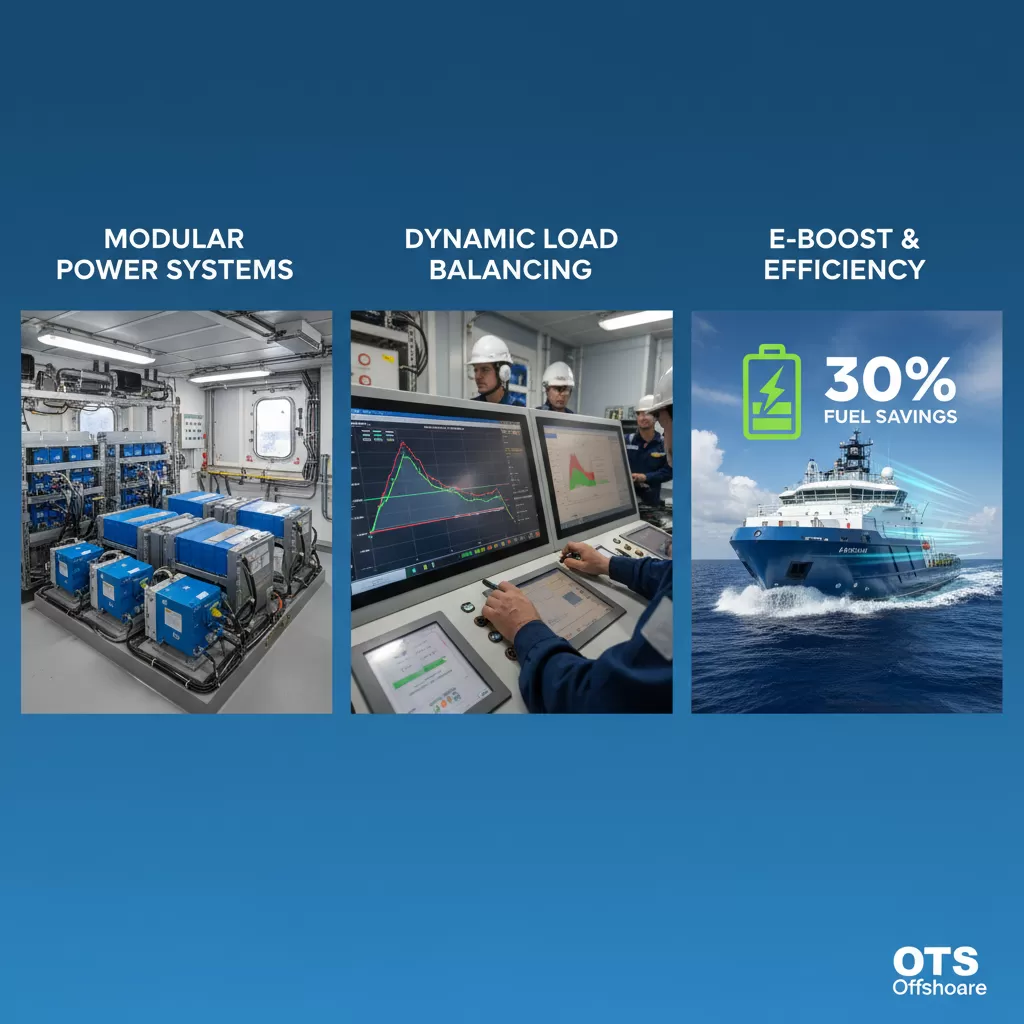
– Significant fuel savings by utilizing electric propulsion for low-speed operations or peak demand management.
– Reduced emissions, especially during port calls or in emission control areas, by operating solely on battery power or optimizing diesel engine use.
– Enhanced redundancy and reliability, as multiple power sources are available.
– Quieter operation during electric-only modes.
– Ability to recover and store energy, for example, through regenerative braking during maneuvering.
– Challenges in a Comparison Diesel-Electric Hybrid:
– Increased system complexity due to the integration of multiple power sources and control systems.
– Higher initial investment costs, particularly with large battery banks.
– Weight and space considerations for battery installations.
– The need for sophisticated energy management systems to optimize performance.
Operational Efficiency: A Deep Dive into Fuel Consumption and Performance
The operational phase is where the tangible benefits and drawbacks of each propulsion system in a Comparison Diesel-Electric Hybrid become most apparent, particularly concerning fuel consumption and overall vessel performance.
Fuel Consumption Analysis
Traditional diesel-mechanical systems often operate their engines at suboptimal loads for extended periods, leading to higher fuel consumption. Diesel-electric systems offer substantial improvements by allowing generators to run at their most efficient load points, regardless of the propulsion demand.
– Diesel-electric advantages in fuel savings:
– Constant engine speed operation, allowing for higher thermal efficiency.
– Elimination of the need for variable pitch propellers or complex gearboxes, reducing mechanical losses.
– Ability to shut down individual generators when demand is low, further reducing fuel burn.
– Hybrid systems’ contribution to fuel efficiency:
– Electric-only operation in harbors or during low-speed transit significantly cuts fuel use.
– Peak shaving: Electric motors can provide supplementary power during high-demand periods (e.g., dynamic positioning), allowing smaller diesel engines to be used or reducing the load on larger ones.
– Battery power utilization: Stored energy can power the vessel during periods of low power demand or when transitioning between operational modes.
– The impact on OSV operations: OSVs often experience highly variable power demands due to their dynamic positioning requirements, cargo operations, and transit phases. Both diesel-electric and hybrid systems are designed to address this variability more efficiently than conventional setups, leading to substantial fuel savings over the vessel’s lifecycle. A thorough Comparison Diesel-Electric Hybrid quantifies these savings based on typical operational profiles.
Performance Metrics and Maneuverability
The responsiveness and control offered by electric propulsion are significant advantages in the demanding offshore environment.
– Enhanced dynamic positioning (DP) capabilities:
– Electric thrusters can respond instantly to control commands, crucial for maintaining precise station-keeping in challenging weather conditions.
– Diesel-electric systems provide a stable and predictable power supply to DP thrusters.
– Hybrid systems can leverage battery power for instantaneous surge demand from DP thrusters, improving responsiveness and reducing reliance on engine load changes.
– Improved maneuverability:
– Azimuthing thrusters, common in modern OSVs, are seamlessly integrated with electric propulsion, offering superior directional control and agility.
– The ability to precisely control the speed and torque of each thruster individually enhances maneuverability, reducing the risk of operational incidents.
– Speed and power delivery:
– Electric motors can deliver full torque from zero RPM, providing excellent acceleration and bollard pull.
– Hybrid systems can utilize the combined power of diesel engines and electric motors to achieve higher transit speeds or meet peak power demands for specific operations like anchor handling.
Environmental Impact: Emissions Reduction and Sustainability
A crucial aspect of any Comparison Diesel-Electric Hybrid is its contribution to environmental sustainability, particularly in reducing harmful emissions and operational noise.
Emissions Compliance and Reduction Strategies
The International Maritime Organization (IMO) has set ambitious targets for reducing greenhouse gas (GHG) emissions and other pollutants from shipping. Propulsion systems play a vital role in achieving these targets.
– NOx and SOx reduction:
– Optimized engine operation in diesel-electric and hybrid systems leads to more complete combustion, reducing NOx formation.
– The ability to operate on battery power or shore power in emission control areas (ECAs) completely eliminates SOx and particulate matter emissions.
– GHG emissions (CO2):
– Fuel efficiency gains directly translate to lower CO2 emissions.
– Hybrid systems offer the potential for significant CO2 reductions through optimized power management and the use of stored energy.
– Integration with alternative fuels:
– Both diesel-electric and hybrid architectures are more amenable to integration with future alternative fuels (e.g., LNG, methanol, ammonia) compared to purely mechanical systems, as the prime movers can be adapted or replaced more readily.
– The future outlook: As regulations tighten, the environmental performance of propulsion systems will become an even more critical factor in vessel design and selection. This Comparison Diesel-Electric Hybrid underscores the move towards cleaner maritime operations.
Noise and Vibration Reduction
Reduced noise and vibration have dual benefits: improved crew welfare and enhanced operational effectiveness.
– Crew comfort and fatigue:
– Lower noise and vibration levels contribute to a more comfortable working environment, potentially reducing crew fatigue and improving safety.
– Operational advantages:
– For seismic survey vessels or vessels requiring sensitive acoustic equipment, reduced noise is paramount.
– Quieter operations can also be beneficial for environmental monitoring tasks or when operating in sensitive marine ecosystems.
– Battery power benefits:
– Operating solely on battery power offers near-silent operation, providing a significant reduction in noise and vibration for specific mission profiles.
Cost Considerations: Capital Expenditure vs. Operational Expenditure
A comprehensive Comparison Diesel-Electric Hybrid must meticulously analyze the financial implications, balancing initial investment against long-term operational savings.
Initial Capital Costs
The upfront investment for diesel-electric and hybrid propulsion systems is generally higher than for conventional diesel-mechanical setups.
– Factors influencing capital costs:
– Size and power rating of diesel generators.
– Number and capacity of electric motors and thrusters.
– Complexity of the power management and control system.
– Inclusion of battery banks and their capacity.
– Integration requirements with existing vessel systems.
– Comparison points:
– Diesel-electric systems typically have a higher upfront cost than diesel-mechanical but can be lower than complex hybrid systems with large battery arrays.
– Hybrid systems, especially those with substantial battery capacity, tend to have the highest initial capital expenditure due to the added components and integration challenges.
Operational Expenditure (OPEX) Savings
The higher initial cost of electric and hybrid propulsion is often offset by significant savings in operational expenditure over the vessel’s lifespan.
– Fuel savings:
– As discussed earlier, fuel efficiency gains are a primary driver of OPEX reduction. For OSVs operating thousands of hours annually, these savings can be substantial.
– Maintenance costs:
– Reduced wear and tear on diesel engines due to optimized operation can lead to lower maintenance requirements and extended service intervals.
– Fewer mechanical components in diesel-electric systems (e.g., clutches, gearboxes) can reduce maintenance complexity and cost.
– However, specialized maintenance for electrical components and battery systems needs to be factored in for hybrid and diesel-electric vessels.
– Downtime reduction:
– Enhanced reliability and redundancy in hybrid and diesel-electric systems can lead to less unplanned downtime, maximizing vessel utilization and revenue.
– The ability to continue operations using alternative power sources during maintenance of one component is a significant advantage.
Total Cost of Ownership (TCO)
When evaluating a Comparison Diesel-Electric Hybrid, the Total Cost of Ownership (TCO) is the most critical financial metric. This encompasses all costs associated with the vessel over its entire operational life, including purchase price, fuel, maintenance, crew, and potential refits.
– TCO analysis for OSVs:
– For OSVs with high operational hours and fluctuating power demands, the TCO for diesel-electric and hybrid systems often proves to be lower than for conventional diesel-mechanical systems, despite the higher initial investment.
– The payback period for the additional capital expenditure is typically achieved through fuel savings and reduced maintenance.
– Future operational requirements and evolving emissions regulations can further tip the balance in favor of more advanced propulsion systems.
Suitability for Different OSV Applications
The optimal choice in a Comparison Diesel-Electric Hybrid often depends on the specific mission profile and operational requirements of the OSV.
Anchor Handling Tug Supply (AHTS) Vessels
AHTS vessels require immense power for towing, anchor handling, and station keeping.
– Demands: High bollard pull, rapid response for dynamic positioning, and significant power for winches.
– Propulsion system fit:
– Diesel-electric systems provide the consistent and high-output power required for demanding AHTS operations.
– Hybrid systems can be beneficial for managing peak power demands during anchor handling while allowing for more efficient operation during transit or standby periods.
Platform Supply Vessels (PSV)
PSVs are primarily used for transporting supplies and personnel to offshore platforms.
– Demands: Efficient transit, precise maneuvering for cargo operations, and reliable station keeping.
– Propulsion system fit:
– Both diesel-electric and hybrid systems offer significant fuel savings for the long transit legs and efficient operation during cargo transfers.
– Hybrid systems can be particularly advantageous for PSVs that spend considerable time idling or operating at low speeds around platforms, utilizing battery power to minimize engine run time and emissions.
Construction and Installation Vessels
These vessels support complex offshore construction projects, requiring precise positioning and significant power for lifting and other operations.
– Demands: Advanced DP capabilities, high maneuvering precision, and substantial power for cranes and specialized equipment.
– Propulsion system fit:
– Diesel-electric propulsion is a standard choice due to its ability to provide stable, flexible, and high-power output for DP and heavy lifting.
– Hybrid systems can offer further advantages by optimizing power distribution between DP, cranes, and other onboard machinery, leading to enhanced efficiency and reduced emissions during extended offshore campaigns.
Specialized Offshore Vessels (e.g., Survey, ROV Support)
These vessels often have unique operational requirements related to low noise, precise positioning, and minimal environmental disturbance.
– Demands: Very low noise and vibration, highly accurate DP, and potentially extended periods of low-power operation.
– Propulsion system fit:
– Hybrid systems, particularly those with substantial battery capacity for silent running, are highly suitable for survey and ROV support vessels.
– Diesel-electric systems can also be configured to meet stringent noise and vibration requirements.
This extensive Comparison Diesel-Electric Hybrid aims to provide a comprehensive overview for industry professionals seeking to navigate the evolving landscape of offshore vessel propulsion.