

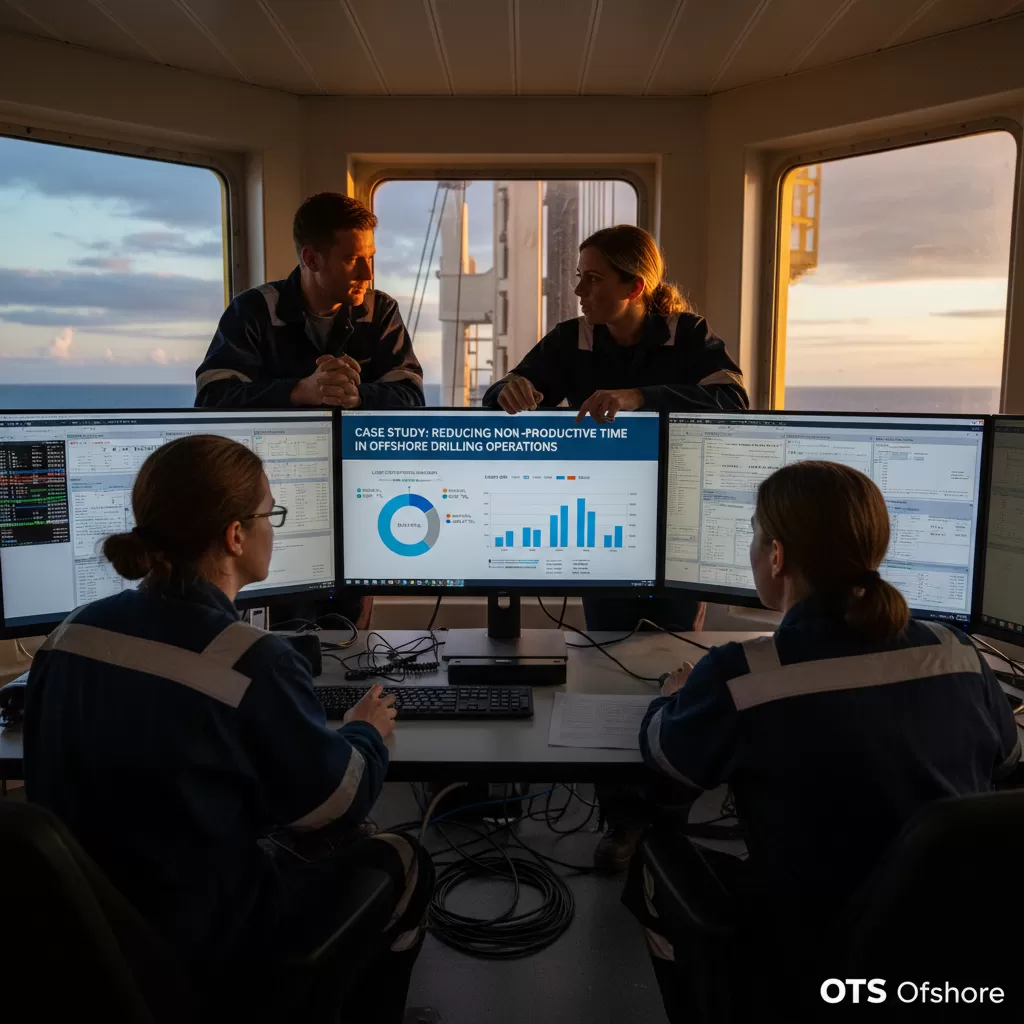
A case study on reducing non-productive time (NPT) in offshore drilling operations is presented, detailing a strategic approach to minimize downtime and enhance operational efficiency. This analysis explores the multifaceted challenges and the implementation of innovative solutions that led to significant improvements in daily drilling output and overall project economics.
Case Study: Reducing Non-Productive Time in Offshore Drilling Operations: A Deep Dive into Efficiency Gains
Offshore drilling operations are inherently complex and capital-intensive endeavors, where every hour of rig time translates directly to substantial financial implications. Non-productive time (NPT) represents any period during which drilling operations are halted for reasons other than planned downtime, such as equipment failure, weather delays, or logistical issues. The effective management and reduction of NPT are therefore paramount to achieving profitability and operational success in the offshore energy sector. This detailed case study examines a specific instance where a concerted effort to identify the root causes of NPT and implement targeted solutions resulted in a measurable decrease in downtime and a significant improvement in drilling performance. The focus of this analysis is to provide actionable insights and a framework for other operators seeking to optimize their own offshore drilling campaigns.
Understanding the Impact of Non-Productive Time
Non-productive time in offshore drilling is not merely an inconvenience; it is a substantial drain on resources and a direct impediment to achieving drilling objectives. The financial ramifications of NPT are multifaceted. Firstly, there is the direct cost associated with the idle rig, which includes day rates, personnel salaries, and support vessel expenses. These costs accrue regardless of whether drilling is actively progressing. Secondly, NPT can lead to significant delays in project timelines, impacting production start-up dates and potentially incurring penalties or lost revenue opportunities. Furthermore, extended NPT can negatively affect reservoir exposure, potentially leading to formation damage or increased wellbore instability issues. The cumulative effect of these factors can dramatically erode project profitability.
– The direct financial burden of idle offshore rigs.
– Project schedule slippage and delayed production commencement.
– Potential reservoir degradation and wellbore integrity concerns.
– Increased operational expenditure (OPEX) due to extended operational periods.
– Reputational damage and loss of stakeholder confidence.
The insidious nature of NPT lies in its often-unforeseen occurrences. While some NPT events are predictable and can be mitigated through robust planning, many are emergent and require swift, decisive action to minimize their duration. This necessitates a proactive approach to operational management, focusing on prevention, rapid response, and continuous improvement. The complexity of offshore environments, with their inherent logistical challenges, harsh weather conditions, and intricate subsurface geology, further amplifies the potential for NPT. Therefore, any successful strategy for reducing NPT must be comprehensive, addressing technical, logistical, and human factors.
Key Contributors to Offshore Drilling NPT
Identifying the primary drivers of NPT is the foundational step in any reduction strategy. While the specific causes can vary significantly between fields, rig types, and geological formations, several common themes emerge consistently across offshore drilling campaigns. A thorough analysis of historical data is crucial to pinpointing the most prevalent NPT categories for a given operation.
– Equipment Malfunctions: This is a pervasive category, encompassing failures in critical drilling machinery such as top drives, mud pumps, drawworks, BOPs (Blowout Preventers), and downhole tools. These failures can range from minor component issues to catastrophic system breakdowns, each with varying NPT durations.
– Well Control Incidents: Any loss of well control, including kicks, blowouts, or fluid losses, results in significant NPT. These events necessitate immediate cessation of drilling activities, deployment of specialized response teams, and extensive remedial measures.
– Formation-Related Issues: Subsurface challenges such as stuck pipe, lost circulation, wellbore instability, and unexpected pressure regimes can lead to prolonged NPT. These issues often require complex downhole interventions or changes in drilling parameters.
– Weather and Environmental Factors: Severe weather conditions, such as hurricanes, heavy seas, or fog, can force operations to be suspended for safety reasons. While often unavoidable, optimizing rig mobility and having robust weather forecasting capabilities can help minimize downtime.
– Logistics and Supply Chain Disruptions: Delays in the delivery of essential supplies, equipment, or personnel, whether due to port congestion, transportation issues, or inventory management failures, can halt drilling progress.
– Human Factors and Procedural Errors: Inadequate training, communication breakdowns, or deviation from established procedures can contribute to NPT. Accidents or injuries also necessitate immediate operational halts.
– Rig-Specific Issues: Maintenance requirements, anchor system problems, or issues with rig stability can also lead to planned or unplanned NPT.
The accurate categorization and quantification of these NPT events are essential. Without precise data, it is impossible to allocate resources effectively or to measure the impact of implemented solutions. This underscores the importance of robust data acquisition and reporting systems on the rig.

The Case Study: A Strategic Approach to Reducing NPT
This case study focuses on a deepwater drilling campaign in a challenging geological setting, where the operator was experiencing an unacceptably high rate of NPT, impacting both cost and schedule. The initial assessment revealed that over 20% of the planned rig time was being lost to various NPT categories, primarily stemming from equipment failures and formation-related issues. A multidisciplinary team was assembled, comprising drilling engineers, rig managers, maintenance specialists, and data analysts, to implement a comprehensive NPT reduction strategy. The core of this strategy revolved around a proactive and data-driven approach, moving away from a reactive stance to one of continuous improvement.
Phase 1: Data Analysis and Root Cause Identification
The first critical step was a granular analysis of all historical NPT data. This involved meticulously reviewing daily drilling reports, maintenance logs, incident reports, and operational parameters. Advanced statistical tools and data visualization techniques were employed to identify patterns and trends.
– Detailed breakdown of NPT by category, rig system, and crew.
– Correlation analysis between operational parameters and NPT occurrences.
– Identification of critical equipment with high failure rates.
– Analysis of wellbore trajectories and geological formations associated with NPT.
This rigorous data-driven approach allowed the team to move beyond anecdotal evidence and identify the true root causes of the excessive NPT. For instance, it was discovered that a particular type of downhole motor was failing prematurely, and that a significant portion of lost circulation events were occurring in a specific geological interval characterized by highly fractured shales.
Phase 2: Implementation of Targeted Solutions
Based on the findings from Phase 1, a series of targeted interventions were developed and implemented. These solutions were designed to address the identified root causes directly and to enhance the overall resilience of the drilling operation.
– Enhanced Maintenance Protocols: For the identified critical equipment prone to failure, a condition-based monitoring system was implemented. This involved the use of sensors to track vibration, temperature, pressure, and other parameters, allowing for predictive maintenance rather than time-based or reactive maintenance. Spare parts were strategically positioned to minimize lead times.
– Advanced Wellbore Stability Modeling and Mud Management: For the problematic geological intervals, advanced geomechanical models were used to predict potential instability and fluid loss zones. Drilling fluid formulations were optimized based on real-time pore pressure and stress gradient data. Techniques such as managed pressure drilling (MPD) were considered for particularly challenging sections.
– Crew Training and Empowerment: Recognizing the role of human factors, a comprehensive training program was initiated, focusing on best practices for equipment handling, troubleshooting, and emergency response. Crews were empowered to report potential issues early and were encouraged to participate in problem-solving sessions. Standardized operating procedures were reviewed and updated.
– Logistics Optimization: A review of supply chain management led to the establishment of better inventory control for critical spares and consumables. Agreements with key vendors were renegotiated to ensure prompt delivery of services and materials.
– Technology Integration: The integration of real-time data from various rig systems (e.g., downhole sensors, surface equipment, weather buoys) into a centralized platform provided a holistic view of operations. This enabled faster decision-making and a more proactive response to potential issues.
Phase 3: Performance Monitoring and Continuous Improvement
The implemented solutions were continuously monitored and evaluated. Key performance indicators (KPIs) for NPT reduction were tracked rigorously, including:
– Overall NPT percentage per well and per campaign.
– Mean Time Between Failures (MTBF) for critical equipment.
– Mean Time To Repair (MTTR) for common NPT events.
– Drilling efficiency metrics, such as feet drilled per day.
– Cost per barrel of oil equivalent (BOE) recovered.
Regular review meetings were held to assess the effectiveness of the implemented strategies. Lessons learned from each NPT event, however minor, were documented and used to refine procedures and training. This iterative process of monitoring, evaluating, and adapting is crucial for sustained NPT reduction.
Quantifiable Results: The Success of the Case Study
The impact of the implemented NPT reduction strategy was significant and measurable. Within 12 months of initiating the program, the operator achieved the following results:
– Reduction in overall NPT: The average NPT for the drilling campaign decreased from over 20% to less than 8%, representing a substantial improvement in operational efficiency.
– Improved Drilling Efficiency: The average rate of penetration (ROP) increased by 15% due to fewer interruptions.
– Cost Savings: The reduction in NPT translated into significant cost savings, primarily from reduced rig day rates and fewer unplanned operational expenditures. This resulted in a projected savings of millions of dollars over the life of the campaign.
– Schedule Adherence: The drilling program met its targeted milestones, enabling the operator to commence production according to the planned schedule.
– Enhanced Equipment Reliability: The predictive maintenance program led to a marked decrease in unscheduled equipment failures.
This case study demonstrates that a systematic and data-driven approach to reducing non-productive time in offshore drilling operations can yield substantial benefits. The focus on understanding root causes, implementing targeted solutions, and fostering a culture of continuous improvement is key to achieving these impressive results.

Leveraging Technology for NPT Reduction
The offshore energy industry is increasingly embracing advanced technologies to combat NPT. The case study highlighted the importance of data integration and condition-based monitoring. Beyond these, several other technological advancements are playing a crucial role in minimizing downtime.
– Artificial Intelligence (AI) and Machine Learning (ML): AI algorithms can analyze vast amounts of real-time operational data to predict potential equipment failures or geological hazards with a high degree of accuracy. This allows for preemptive interventions before they can cause NPT. ML can also optimize drilling parameters dynamically to avoid problematic zones.
– Internet of Things (IoT) Sensors: The proliferation of IoT sensors across all rig systems, from downhole tools to surface equipment, provides a continuous stream of data. This data is essential for condition monitoring, performance tracking, and early anomaly detection.
– Digital Twins: Creating digital replicas of critical equipment or even entire rigs allows for simulation-based testing and performance analysis. This can help identify potential failure points and optimize maintenance schedules in a virtual environment before they impact the physical operation.
– Advanced Robotics and Automation: The use of robots for inspection, maintenance, and even certain operational tasks can reduce human exposure to hazardous environments and minimize the risk of human error, thereby reducing NPT.
– Real-time Data Analytics Platforms: Sophisticated software platforms are capable of ingesting, processing, and visualizing data from disparate sources in real-time. This provides operators with immediate insights into the operational status and potential risks.
The successful implementation of these technologies requires not only investment but also a skilled workforce capable of leveraging them effectively. Training and upskilling personnel are therefore as critical as acquiring the technology itself. The synergy between advanced technology and human expertise is the ultimate driver of NPT reduction.
The Role of Collaboration and Communication
While technology and robust processes are essential, the human element remains central to minimizing NPT. Effective collaboration and clear communication channels are vital for a smooth and efficient offshore operation.
– Cross-functional Teamwork: Breaking down silos between departments (e.g., drilling, completions, maintenance, HSE) ensures that all stakeholders are aligned and working towards common goals. Regular interdisciplinary meetings are crucial.
– Open Reporting Culture: Fostering an environment where all personnel feel comfortable reporting potential issues, near misses, or concerns without fear of reprétail is paramount. This proactive reporting can prevent minor incidents from escalating into major NPT events.
– Knowledge Sharing: Implementing systems for capturing and disseminating lessons learned from NPT events across the organization ensures that mistakes are not repeated. This can involve post-incident reviews, best practice sharing sessions, and accessible knowledge databases.
– Effective Communication Protocols: Clear and concise communication, especially during critical operations or emergency situations, is essential. Standardized reporting formats and reliable communication systems (e.g., satellite phones, radio, digital messaging) are vital.
– Vendor and Service Provider Partnerships: Building strong relationships with equipment suppliers and service providers can improve response times for repairs and technical support, thereby reducing NPT. Collaborative problem-solving with these partners is key.
The human factor in NPT reduction cannot be overstated. Empowering the rig crew with the right training, tools, and a supportive operational environment is a cornerstone of any successful strategy. This case study underscores the importance of a holistic approach that integrates technological advancements with human-centric practices.