

Advanced blade repair techniques are crucial for extending the operational life of wind turbine components, significantly reducing maintenance costs, and optimizing energy generation efficiency. This article delves into the sophisticated methodologies and materials employed in modern blade maintenance to combat leading-edge erosion and other wear phenomena.
The Imperative of Advanced Blade Repair for Leading Edge Erosion Control
In the dynamic landscape of renewable energy, specifically within the wind power sector, the integrity and performance of wind turbine blades are paramount. Leading-edge erosion (LEE) stands as a persistent and formidable adversary, silently degrading aerodynamic efficiency and ultimately impacting power output. The relentless bombardment of rain, hail, dust, and atmospheric particles, coupled with the high-speed rotation of the blades, creates a harsh operational environment. Consequently, the development and application of advanced blade repair methodologies have become indispensable. These advanced solutions go beyond conventional patching, embracing cutting-edge materials science and application techniques to deliver robust, long-lasting protection. The focus on advanced blade repair is not merely about aesthetic restoration; it’s a strategic investment in the longevity, reliability, and economic viability of wind farms. Understanding and implementing these sophisticated repair strategies is key to maintaining optimal performance and achieving the ambitious renewable energy targets set globally. This discourse will illuminate the underlying principles, innovative approaches, and future trajectory of advanced blade repair in effectively mitigating leading-edge erosion.
Understanding Leading Edge Erosion (LEE) in Wind Turbine Blades
Leading-edge erosion is a significant operational challenge affecting wind turbine blades, leading to reduced aerodynamic performance and increased operational costs. The leading edge of a blade is the first point of contact with the airflow, making it susceptible to impact damage from various environmental agents.
– Rainfall, particularly heavy rain events and droplet impact at high velocities, is a primary culprit. The kinetic energy of these droplets can cause pitting and material degradation over time.
– Hail, though less frequent, can inflict more severe localized damage, creating chips and cracks that compromise the blade’s structural integrity and surface smoothness.
– Sand and dust particles, especially in arid or coastal environments, act as abrasive agents, continuously wearing down the blade’s surface.
– Insect impacts, while seemingly minor, can contribute to surface roughness and initial damage initiation points.
– Ultraviolet (UV) radiation from sunlight can degrade polymer-based composite materials used in blades, making them more brittle and susceptible to mechanical damage.
– Ice accumulation can alter aerodynamic profiles and, during shedding, can cause impact damage to other blades or the tower.
The cumulative effect of these factors results in a roughened, uneven leading edge. This increased surface roughness disrupts smooth laminar airflow, transitioning it prematurely into turbulent flow. This aerodynamic inefficiency leads to a decrease in lift and an increase in drag, directly translating to lower power generation and increased structural loads on the turbine. The loss in Annual Energy Production (AEP) due to LEE can be substantial, often ranging from 1-5% or more, depending on the severity of erosion and the wind regime. Therefore, proactive and effective repair strategies are essential to combat these detrimental effects and ensure optimal turbine performance.
The Economic Impact of Unchecked Leading Edge Erosion
The economic ramifications of failing to address leading-edge erosion are far-reaching and directly impact the profitability and sustainability of wind energy projects. The initial investment in wind farms is considerable, and operational expenditures, particularly maintenance, play a critical role in determining the return on investment (ROI).
– Reduced power output translates directly into lower revenue generation. Even a small percentage decrease in AEP over the lifespan of a turbine can amount to millions of dollars in lost revenue.
– Increased structural loads due to aerodynamic inefficiency can lead to premature fatigue damage of blades and other turbine components, necessitating more frequent and costly inspections and repairs.
– In severe cases, uncontrolled erosion can lead to catastrophic blade failure, resulting in extreme downtime, expensive replacement costs, and potential safety hazards.
– The cost of emergency repairs, often involving specialized aerial teams and equipment, is significantly higher than planned, preventative maintenance.
– Degradation of blade performance can also affect the turbine’s grid compliance and dispatchability, leading to penalties or reduced operating hours.
– The reputation of a wind farm operator can be affected by consistent performance issues, potentially impacting future project financing and development.
Therefore, implementing advanced blade repair techniques is not just a technical necessity but a sound financial strategy to maximize asset value and ensure the long-term economic viability of wind energy infrastructure.
Evolution of Blade Repair Technologies: From Conventional to Advanced
The journey of wind turbine blade repair has evolved significantly, driven by the increasing demand for efficiency, durability, and cost-effectiveness. Early repair methods were often reactive and focused on cosmetic fixes, while modern approaches integrate advanced materials and methodologies for superior performance.
Traditional Repair Methods and Their Limitations
Initial repair strategies for wind turbine blades were often based on existing composite repair techniques used in other industries, such as aerospace and marine. These methods, while offering some remediation, often fell short in addressing the specific challenges of high-speed aerodynamic surfaces and the harsh marine or onshore environments.
– Patching with standard fiberglass or epoxy resins: This involved applying layers of fiberglass cloth saturated with epoxy resin over the damaged area. While effective for minor surface damage, these patches could be prone to delamination, cracking, and uneven surfaces, which negatively impacted aerodynamics.
– Use of off-the-shelf repair kits: These kits often contained generic materials that were not always optimized for the specific composite materials and structural loads of wind turbine blades.
– Surface sanding and recoating: This was a common practice for superficial erosion, but it provided only a temporary solution as the new coating would eventually wear away.
– Adhesion issues: Achieving strong, durable adhesion between the repair material and the original blade composite, especially on a weathered surface, was often problematic.
– Aerodynamic discontinuity: Many traditional repairs created a rough or uneven surface profile, disrupting airflow and negating some of the repair’s intended benefits.
– Limited lifespan: Repairs performed with older technologies often required frequent reapplication, increasing maintenance costs and downtime.
– Difficulty in matching material properties: Replicating the exact mechanical and aerodynamic properties of the original blade material was challenging with conventional methods.
These limitations highlighted the need for more sophisticated and specialized repair solutions that could provide lasting protection and restore or even enhance aerodynamic performance.
The Rise of Advanced Blade Repair Techniques
The development of advanced blade repair techniques has been a game-changer for the wind energy industry. These methods leverage advancements in material science, polymer chemistry, and application engineering to deliver superior durability, performance, and cost-efficiency. Advanced blade repair focuses on creating a seamless, integrated repair that closely matches the original blade’s properties.
– High-performance polymer composites: Utilizing advanced resins like specialized polyurethanes, epoxies, and silicones, which offer enhanced flexibility, abrasion resistance, and UV stability.
– Nanotechnology integration: Incorporating nanomaterials (e.g., carbon nanotubes, graphene) into repair composites to improve mechanical strength, toughness, and wear resistance.
– Pre-impregnated materials (Pre-pregs): Using pre-impregnated composite fabrics that offer precise resin-to-fiber ratios and controlled curing processes for consistent, high-quality repairs.
– Spray-applied protective coatings: Developing specialized, highly resilient coatings that can be applied using advanced spray techniques, allowing for uniform coverage and efficient application, even on complex blade geometries.
– Infusion techniques: Employing vacuum infusion or resin transfer molding (RTM) for larger repairs to ensure complete saturation of reinforcement fabrics and void-free structures.
– Laser and plasma surface preparation: Utilizing these advanced techniques for thorough cleaning and activation of the blade surface, ensuring optimal adhesion of repair materials.
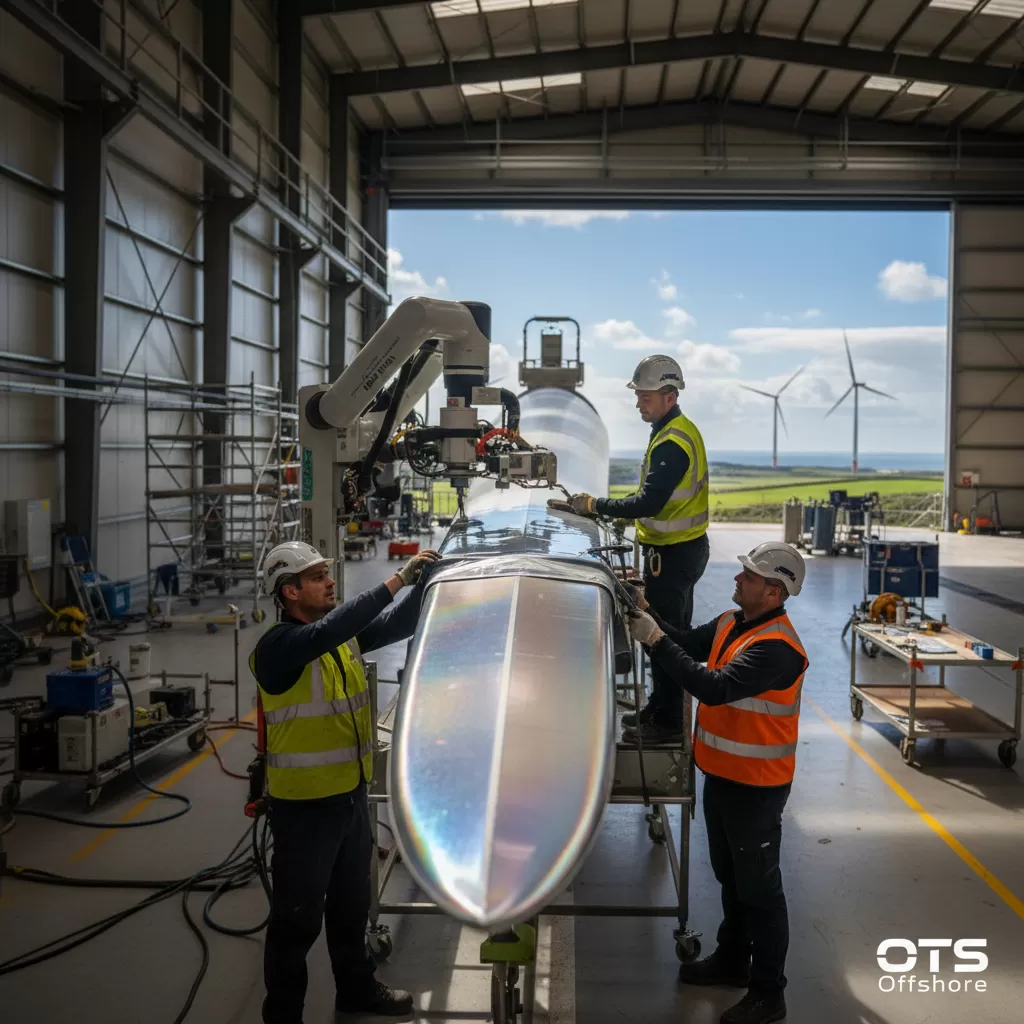
– Robotic application systems: Employing automated or semi-automated systems for precise and consistent application of repair materials, reducing human error and improving efficiency, particularly for high-volume repair campaigns.
– In-situ curing technologies: Developing rapid curing systems (e.g., induction heating, UV curing) that minimize downtime and allow for repairs to be performed under varying environmental conditions.
– Bio-inspired and self-healing materials: Exploring the integration of materials with inherent self-healing capabilities, which can autonomously repair minor damage, further reducing maintenance needs.
These advanced techniques represent a paradigm shift, moving from reactive, short-term fixes to proactive, long-term solutions that significantly enhance blade longevity and turbine performance.
Key Advanced Blade Repair Methodologies for Leading Edge Erosion
Several cutting-edge methodologies are currently at the forefront of combating leading-edge erosion. These techniques are designed for optimal adhesion, durability, and aerodynamic restoration, ensuring that the repaired blades perform at their peak.
Polyurethane-Based Protective Coatings
Polyurethane (PU) coatings have emerged as a highly effective solution for protecting wind turbine blade leading edges from erosion. Their inherent flexibility, toughness, and excellent abrasion resistance make them ideal for withstanding the constant impact of environmental particles.
– Material composition: Advanced PU formulations are engineered with specific molecular structures to optimize adhesion to composite substrates and provide superior resistance to wear, impact, and UV degradation. They often incorporate fillers or reinforcements to enhance hardness and abrasion resistance.
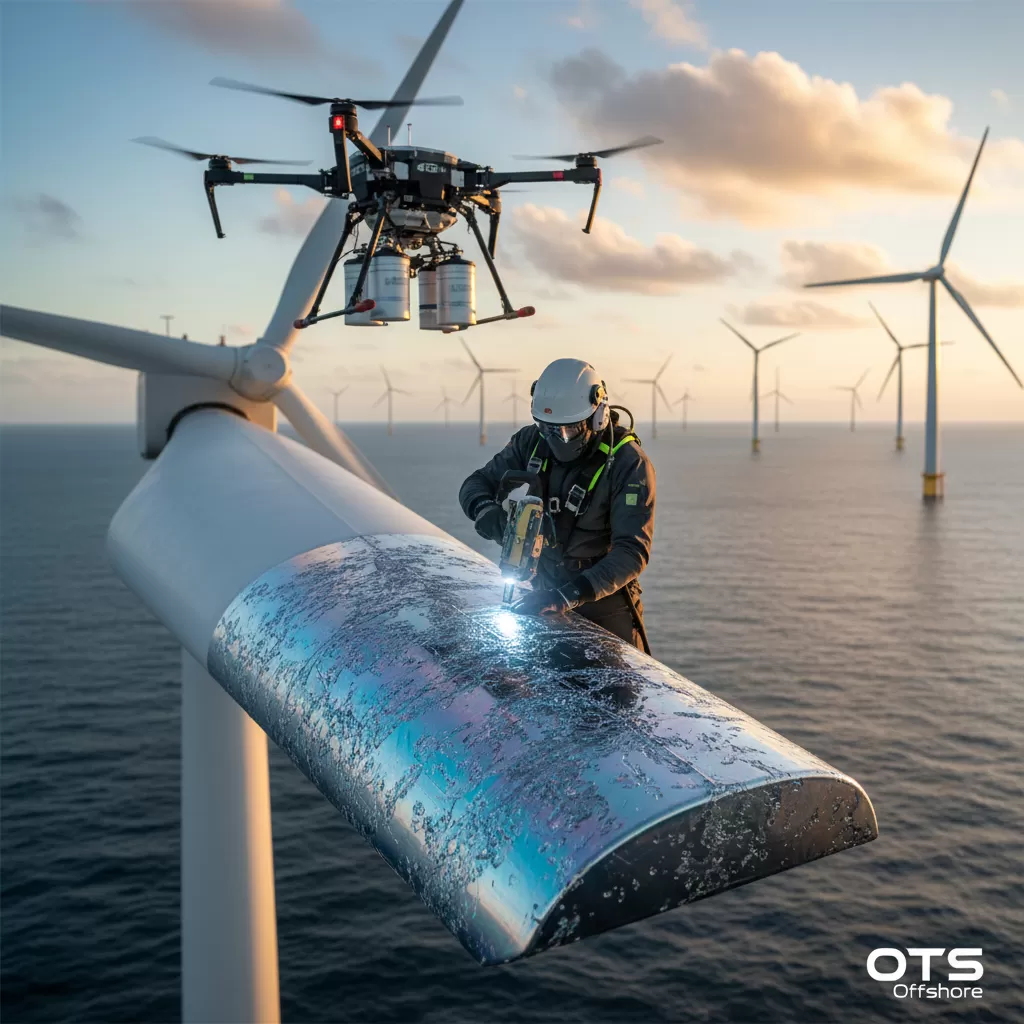
– Application methods: These coatings can be applied using various methods, including brush, roller, airless spray, or specialized robotic spray systems. Spray application is often preferred for achieving a smooth, uniform finish and minimizing aerodynamic disruption.
– Curing process: PU coatings typically cure through a chemical reaction, often requiring ambient temperature or slightly elevated temperatures for optimal cure. Some formulations are designed for rapid curing to minimize turbine downtime.
– Durability and longevity: Properly applied PU coatings can offer several years of protection, significantly extending the service life of the leading edge and reducing the frequency of repairs. They can withstand millions of impact cycles from rain droplets and abrasive particles.
– Aerodynamic profile maintenance: The smooth, continuous surface created by PU coatings helps maintain the blade’s intended aerodynamic profile, preventing performance degradation associated with eroded surfaces.
– Flexibility: The inherent flexibility of polyurethanes allows them to accommodate the minor flexing and vibration of the blades without cracking or delaminating.
This class of materials represents a significant advancement over traditional paint-based solutions, offering a robust and reliable barrier against erosion.
Epoxy and Advanced Composite Overlays
For more severe erosion damage that penetrates the surface gel coat or even the underlying composite structure, advanced epoxy-based overlay techniques are employed. These methods involve rebuilding the damaged area with specialized composite materials to restore the blade’s structural integrity and aerodynamic profile.
– Material selection: High-performance epoxy resins are selected for their excellent adhesion, mechanical strength, and chemical resistance. They are typically used in conjunction with reinforcing fabrics such as carbon fiber or specialized glass fibers.
– Pre-impregnated (Pre-preg) materials: For critical repairs requiring precise control over resin content and fiber orientation, pre-preg carbon fiber or glass fiber laminates are often utilized. These materials are cured under controlled conditions (heat and pressure) to achieve optimal mechanical properties.
– Vacuum-assisted resin transfer molding (VARTM): This technique is used for larger repairs or when a very high-quality, void-free laminate is required. A dry fiber reinforcement is laid up, and then the vacuum bag is sealed, and resin is drawn through the reinforcement via vacuum pressure.
– Surface preparation: Thorough cleaning, abrasion, and sometimes chemical etching of the damaged area are crucial to ensure a strong bond between the original blade material and the new overlay.
– Shaping and finishing: After curing, the overlay is meticulously shaped and sanded to perfectly match the original aerodynamic profile of the blade. This often involves using advanced sanding and profiling tools.
– Integration with coatings: Following the composite overlay repair, a protective coating, such as polyurethane, is typically applied to the entire leading edge to provide long-term erosion resistance.
These overlay techniques are essential for restoring blades that have suffered significant material loss, ensuring their continued safe and efficient operation.
Specialized Adhesives and Bonding Agents
The success of any advanced blade repair, whether it involves coatings or overlays, hinges on the quality of adhesion between the repair material and the original blade substrate. Specialized adhesives play a critical role in this regard.
– High-strength structural adhesives: These are typically two-part epoxy or polyurethane-based adhesives engineered to provide exceptional bond strength, flexibility, and resistance to environmental factors like moisture, temperature fluctuations, and UV radiation.
– Surface activators and primers: To ensure maximum adhesion, specialized primers and surface activators are often used. These treatments clean, prepare, and enhance the surface energy of the blade material, promoting a stronger chemical bond with the adhesive.
– Gap-filling capabilities: Some adhesives are designed to fill small gaps and irregularities on the blade surface, ensuring complete contact and uniform stress distribution across the bond line.
– Fatigue resistance: The adhesives must be capable of withstanding the dynamic loads and vibrations experienced by the blades during operation without degradation of the bond.
– Compatibility with composite materials: The adhesives are formulated to be compatible with the specific composite materials (e.g., epoxy, polyester resins, fiberglass, carbon fiber) used in wind turbine blades, preventing any adverse chemical reactions.
The correct selection and application of these advanced adhesives are fundamental to the long-term success and durability of wind turbine blade repairs.
Innovative Applications and Future Trends in Blade Repair
The field of advanced blade repair is continuously evolving, with ongoing research and development focused on enhancing efficiency, sustainability, and performance. Emerging technologies promise even more sophisticated solutions for blade maintenance.
Robotics and Automation in Blade Repair
The adoption of robotics and automation is revolutionizing the efficiency and precision of blade repair operations. These technologies are particularly valuable for repetitive tasks and for accessing hard-to-reach areas.
– Automated surface preparation: Robotic systems can precisely clean, sand, and abrade blade surfaces, ensuring consistent preparation for coating or overlay application.
– Robotic spray coating: Automated spray systems deliver uniform coating thickness and coverage, reducing material waste and ensuring a smooth aerodynamic finish.
– Drone-based inspection and repair: Drones equipped with high-resolution cameras and specialized sensors can conduct detailed inspections, identifying even minor defects. In the future, drones may also be equipped with application tools for minor repairs.
– Laser-based defect detection and removal: Advanced laser systems can be used for highly precise cleaning and, in some cases, removal of damaged material, followed by automated application of repair materials.
– Real-time monitoring and data acquisition: Robotic systems can collect real-time data on application parameters and material properties, contributing to quality control and predictive maintenance.
Robotics and automation are key to scaling up repair operations, reducing turnaround times, and improving the overall quality and consistency of repairs.
Nanotechnology-Enhanced Repair Materials
The integration of nanotechnology into composite repair materials offers the potential for significantly enhanced mechanical properties and performance.
– Increased strength and toughness: Nanoparticles like carbon nanotubes (CNTs) and graphene can be incorporated into epoxy or polyurethane resins to dramatically improve tensile strength, flexural modulus, and fracture toughness.
– Improved abrasion and wear resistance: Nanomaterials can create a more robust surface that is less susceptible to particle impact and erosion.
– Enhanced UV and environmental resistance: Specific nanoparticles can improve the resistance of repair materials to degradation from sunlight, moisture, and chemical exposure.
– Self-healing capabilities: Research is ongoing into incorporating microcapsules containing healing agents that can rupture upon damage, releasing agents to repair cracks autonomously.
– Reduced material usage: With enhanced properties, less material may be required for a given level of protection, leading to lighter and more cost-effective repairs.
Nanotechnology represents a frontier in developing repair materials that are not only stronger and more durable but also possess novel functionalities.
Sustainable and Environmentally Friendly Repair Solutions
As the renewable energy sector grows, there is an increasing focus on developing sustainable repair practices and materials.
– Bio-based resins and composites: Research is exploring the use of resins derived from renewable resources, such as plant oils or sugars, to reduce the carbon footprint of repair materials.
– Recyclable repair materials: Developing repair composites that can be more easily recycled at the end of their service life.
– Low-VOC (Volatile Organic Compound) coatings: Formulating coatings with reduced VOC emissions to minimize environmental impact during application.
– Energy-efficient curing processes: Exploring curing methods that require less energy, such as ambient temperature curing or UV curing powered by renewable energy sources.
– Extended component lifespan: By implementing effective advanced blade repair, the overall lifespan of wind turbine blades is extended, reducing the need for premature replacement and the associated environmental impact of manufacturing new blades.
The drive towards sustainability in advanced blade repair aligns with the broader environmental goals of the wind energy industry.
Challenges and Considerations in Implementing Advanced Blade Repair
While advanced blade repair techniques offer significant benefits, their successful implementation requires careful consideration of various factors. Addressing these challenges is crucial for maximizing the effectiveness and ROI of repair programs.
– Skill and training requirements: Advanced repair methodologies often require highly skilled technicians trained in specific composite repair techniques, material handling, and the operation of specialized equipment.
– Material compatibility and certification: Ensuring that repair materials are fully compatible with the original blade composite and have undergone rigorous testing and certification for wind turbine applications is essential.
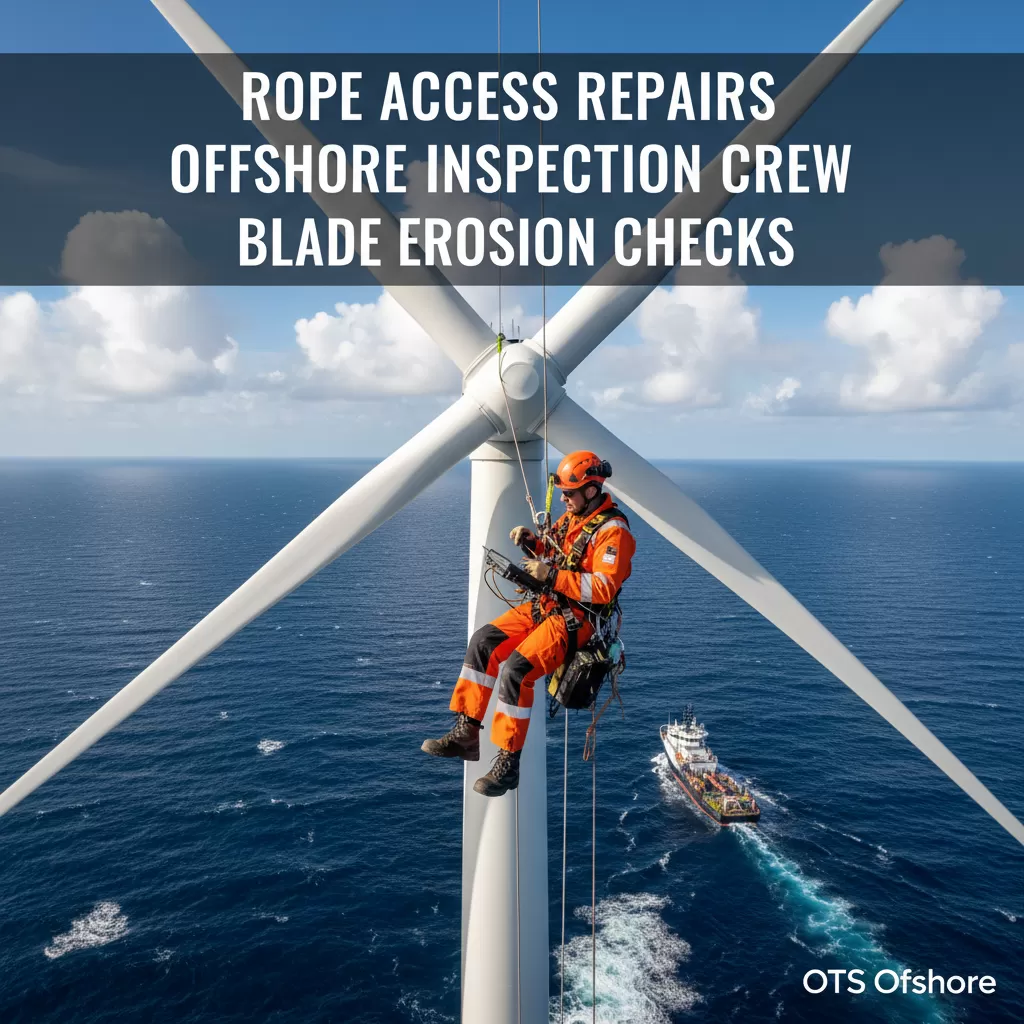
– Environmental conditions: Repair work, especially on offshore turbines, can be highly dependent on weather conditions. Finding windows for safe and effective repair can be challenging, requiring specialized logistics and planning.
– Cost-benefit analysis: While advanced repairs offer long-term benefits, the initial investment can be higher than traditional methods. A thorough cost-benefit analysis is necessary to justify the adoption of these techniques.
– Quality control and assurance: Implementing robust quality control measures throughout the repair process is critical to ensure that repairs are performed correctly and meet performance standards. This includes rigorous inspection at various stages.
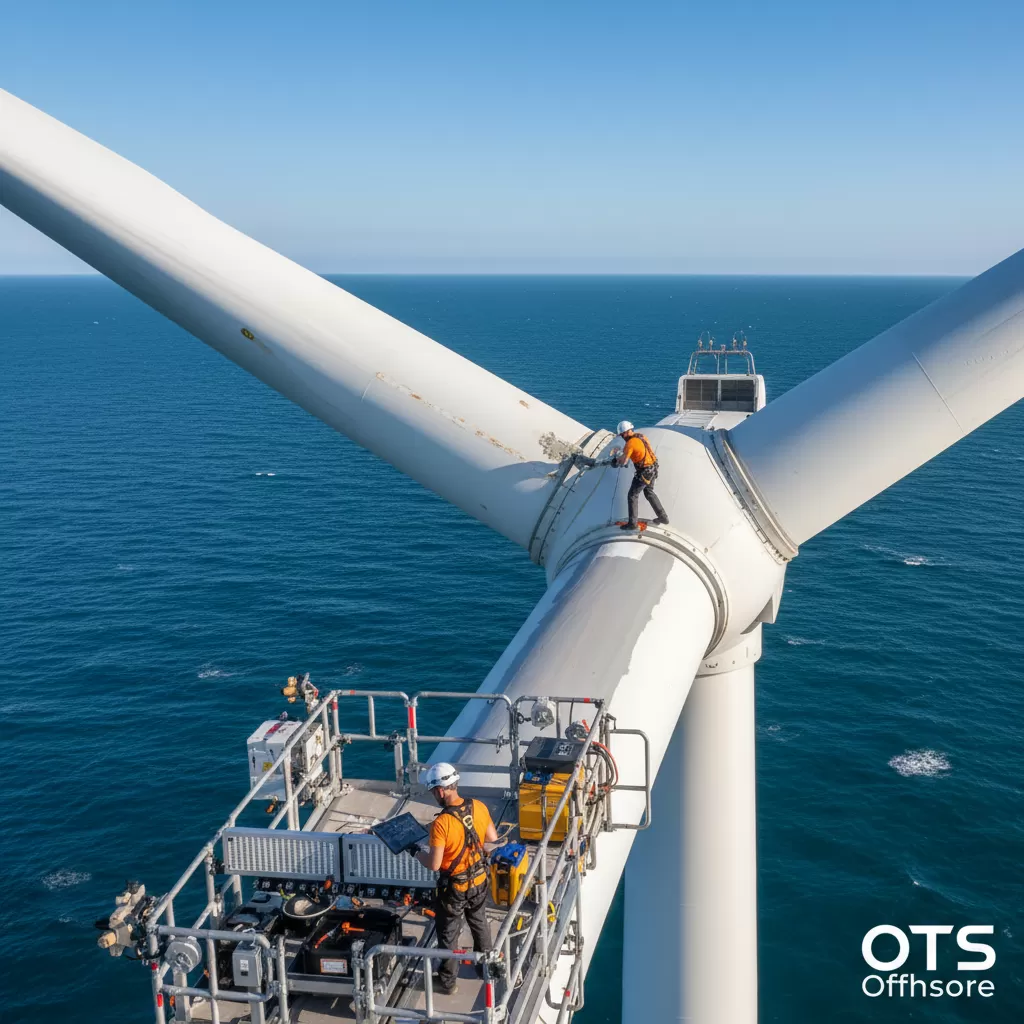
– Accessibility and logistics: Especially for offshore wind farms, the logistics of transporting personnel, equipment, and materials to the turbine site can be complex and costly. Advanced repair solutions may require specialized access equipment or vessels.
– Standardization and regulation: The lack of universally standardized repair procedures and material specifications can sometimes pose challenges for operators and service providers. Industry-wide standards are crucial for ensuring consistency and reliability.
– Downtime minimization: The primary objective of any repair is to minimize turbine downtime. Advanced techniques must be efficient in terms of application and curing to reduce the period the turbine is offline.
Overcoming these challenges requires a collaborative approach involving turbine manufacturers, repair service providers, material suppliers, and wind farm operators to develop best practices and drive continuous improvement in the field of advanced blade repair.