


Designing Ballast Stability for semi-submersible drilling rigs is a critical engineering discipline, ensuring safe and efficient operation in harsh offshore environments. This process involves meticulous calculations and system design to maintain the structural integrity and operational readiness of these complex vessels.
The Paramount Importance of Designing Ballast Stability for Semi-submersible Drilling Rigs
Designing Ballast Stability is not merely an operational consideration; it forms the bedrock of safe and effective offshore exploration. For semi-submersible drilling rigs, vessels designed to operate in deep water and challenging weather conditions, the ability to maintain a stable platform is paramount. This stability is achieved through a sophisticated ballast system, meticulously designed to counteract external forces and ensure the rig’s integrity throughout its operational life. A robust approach to Designing Ballast Stability directly impacts safety, operational efficiency, and the economic viability of offshore projects. The consequences of neglecting this aspect can be catastrophic, leading to potential loss of life, significant environmental damage, and immense financial repercussions.
Understanding the Fundamentals of Semi-submersible Rig Stability
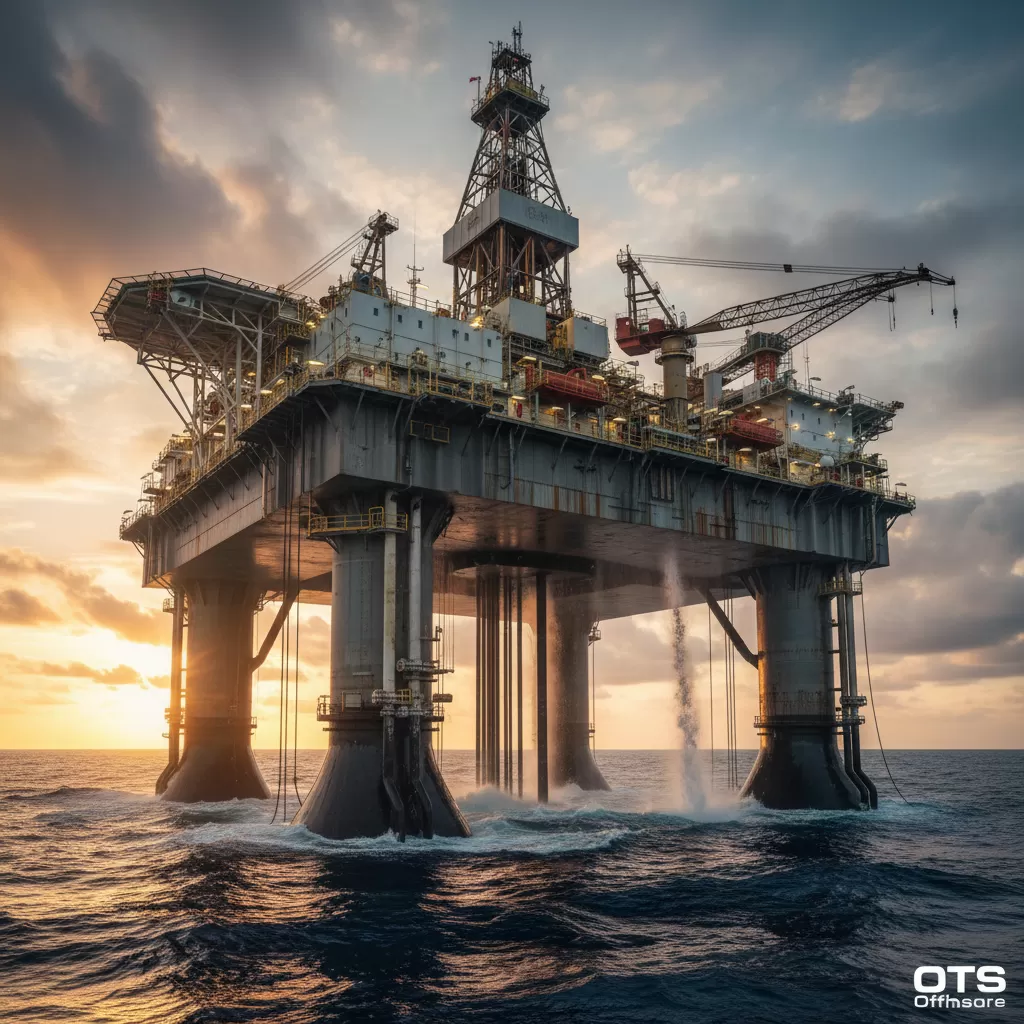
Semi-submersible drilling rigs, also known as semisubs, are a cornerstone of modern offshore hydrocarbon exploration. Their unique design, featuring submerged pontoons and vertical columns, provides inherent stability by lowering the center of gravity and increasing the moment of inertia. However, this inherent stability must be actively managed and augmented through a well-designed ballast system. The primary goal of Designing Ballast Stability is to ensure the rig remains upright and within safe operational parameters under various loading conditions and environmental exposures.
Key Hydrostatic Principles at Play
The stability of any floating structure, including a semi-submersible rig, is governed by fundamental hydrostatic principles. These principles revolve around the interplay of the center of gravity (G) and the center of buoyancy (B).
– Center of Gravity (G): The point where the entire weight of the rig is considered to act. It is influenced by the weight of the structure, equipment, supplies, and personnel.
– Center of Buoyancy (B): The centroid of the submerged volume of the rig. It represents the point where the buoyant force acts.
When a vessel is heeled (tilted), the center of buoyancy shifts, creating a righting lever arm that attempts to restore the vessel to its upright position. The effectiveness of this righting lever is crucial for maintaining stability. The distance between G and B, known as the metacenter (M) when the heel angle is small, dictates the initial stability. A higher metacenter generally indicates greater initial stability.
Metacentric Height (GM) and its Significance
Metacentric height (GM) is a direct measure of a vessel’s initial stability. It is the vertical distance between the center of gravity (G) and the metacenter (M). A positive GM indicates that the vessel is stable and will tend to return to its upright position when disturbed. Conversely, a negative GM signifies inherent instability, where any disturbance will cause the vessel to capsize.
In the context of Designing Ballast Stability, maintaining an adequate GM is a primary objective. This involves careful consideration of the rig’s weight distribution and the strategic use of ballast to adjust the position of G. The ballast system allows operators to actively control the rig’s GM to suit different operational phases and environmental conditions, thereby enhancing overall safety.
Components of a Semi-submersible Rig Ballast System
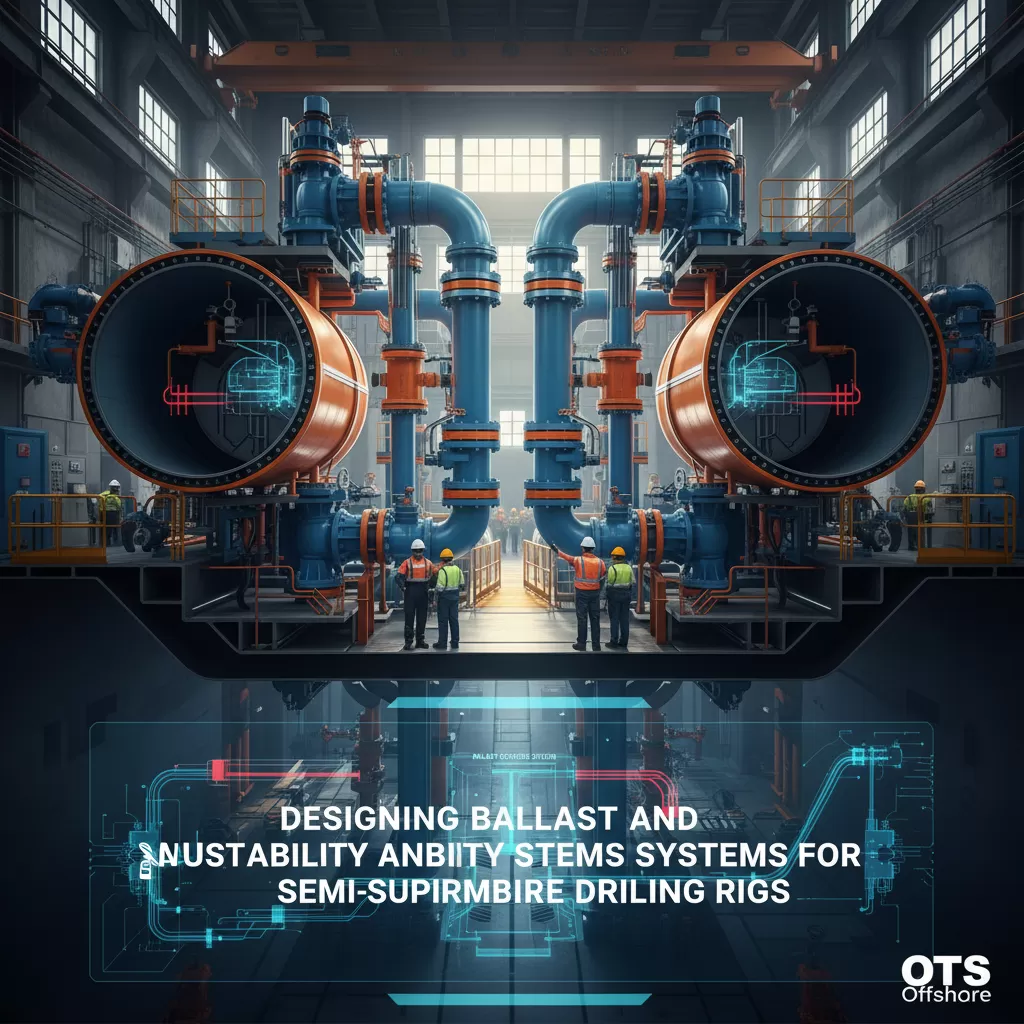
A semi-submersible drilling rig’s ballast system is a complex network of tanks, pumps, piping, valves, and control systems designed to manipulate the distribution of weight onboard. The primary function is to control the rig’s buoyancy and trim. Designing Ballast Stability ensures these components work harmoniously.
Ballast Tanks: The Workhorses of Stability Control
Ballast tanks are the primary means by which weight is added to or removed from the rig to influence its stability and draft. These tanks are strategically located within the rig’s structure, often in the pontoons and columns, to optimize their effect on stability.
– Types of Ballast Tanks:
– Main Ballast Tanks: Large tanks used for significant weight adjustments.
– Trim Tanks: Smaller tanks designed to adjust the rig’s fore-and-aft trim.
– List Tanks: Tanks used to correct any transverse list (side-to-side tilt).
– Auxiliary Tanks: Used for various purposes, including potable water and fuel storage, which also contribute to the overall weight and stability calculations.
The capacity, location, and configuration of these tanks are critical design parameters. They are sized to provide the necessary range of weight adjustment for various operational scenarios, from transit to drilling operations and storm survival.
Pumping and Piping Network: The Arteries of the System
A robust pumping and piping network is essential for efficiently transferring ballast water into and out of the tanks. This network must be designed for reliability and redundancy, as failure can have severe consequences.
– Key elements include:
– Ballast Pumps: High-capacity pumps capable of moving large volumes of water quickly.
– Piping: Corrosion-resistant piping designed to withstand seawater and the pressures involved.
– Valves: A comprehensive array of valves, including manual and automatic types, to control the flow of water between tanks and to/from the sea.
The design of this network prioritizes swift and precise control over ballast distribution, a crucial aspect of Designing Ballast Stability during dynamic operational changes.
Control and Monitoring Systems: The Brains of the Operation
Modern semi-submersible rigs are equipped with sophisticated control and monitoring systems that allow operators to manage the ballast system effectively. These systems provide real-time data on tank levels, pressures, and the rig’s stability characteristics.
– Key functionalities:
– Automated Ballast Control: Systems that can automatically adjust ballast to maintain desired trim and stability.
– Stability Monitoring: Continuous calculation and display of key stability parameters, such as GM and GZ curves.
– Alarm Systems: Alerts to operators in case of deviations from safe operating limits.
These advanced systems are integral to the modern approach to Designing Ballast Stability, enabling proactive management of the rig’s stability profile.
The Process of Designing Ballast Stability
The process of Designing Ballast Stability for a semi-submersible drilling rig is a multi-faceted engineering endeavor that begins in the conceptual design phase and continues throughout the rig’s lifecycle. It requires a deep understanding of naval architecture, hydrodynamics, and structural engineering.
Load Definition and Analysis
The initial step involves a comprehensive definition of all possible loads the rig will encounter. This includes fixed weights (structure, permanent equipment), variable loads (consumables like fuel, water, mud, drill pipe, supplies), and operational loads (drilling equipment, lifted weights). Dynamic loads from wind, waves, and currents are also crucial considerations.
Stability Criteria and Regulatory Compliance
Designing Ballast Stability must adhere to stringent international and national stability criteria. These criteria, set by organizations like the IMO (International Maritime Organization) and classification societies (e.g., DNV, ABS, Lloyd’s Register), define the minimum acceptable levels of stability under various conditions.
– Key criteria include:
– Intact Stability: Ensuring the rig remains stable with undamaged hull integrity.
– Damaged Stability: Evaluating the rig’s ability to remain afloat and stable in the event of hull damage and flooding.
Compliance with these regulations is non-negotiable and forms the basis for all stability calculations and design decisions.
Hydrodynamic and Environmental Load Calculations
Accurate assessment of environmental forces is vital for Designing Ballast Stability. This involves analyzing wind, wave, and current data for the intended operating areas.
– Wave Loads: The dynamic forces exerted by waves on the rig’s structure, particularly the columns and deck.
– Wind Loads: The forces generated by wind acting on the exposed surfaces of the rig.
– Current Loads: The drag forces from ocean currents.
These loads are used to determine the most critical operational scenarios and to design the ballast system to counteract their effects effectively.
Weight Estimation and Center of Gravity Calculation
Accurate estimation of the rig’s total weight and the precise location of its center of gravity (G) in all foreseeable configurations is a cornerstone of Designing Ballast Stability. This is an iterative process, refined as the design progresses.
– Fixed Weight Items: Structural steel, machinery foundations, decks, etc.
– Variable Weight Items: Fuel, potable water, drill water, drilling mud, cement, casing, drill pipe, provisions, personnel.
The calculation of G is performed by summing the moments of all individual weights about a reference point, typically the keel.
Ballast System Design and Optimization
Based on the load analysis, stability criteria, and environmental considerations, the ballast system is designed. This involves determining the capacity, location, and distribution of ballast tanks.
– Tank Arrangement: Strategic placement of tanks to provide maximum righting moments when ballasting or deballasting.
– Pump Sizing: Ensuring pumps can transfer ballast water at sufficient rates to respond to changing conditions.
– Piping Design: Minimizing pressure losses and ensuring reliable flow paths.
Optimization aims to achieve the required stability margins with a minimal increase in weight and complexity, a key aspect of efficient Designing Ballast Stability.
Operational Considerations and Dynamic Stability Management
Designing Ballast Stability is not a static exercise. The system must be managed dynamically throughout the rig’s operations to ensure continuous safety and efficiency.
Drilling Operations: Dynamic Weight Changes
Drilling operations introduce significant and often rapid changes in the rig’s weight. As drill pipe is run into or retrieved from the well, the total weight on the rig fluctuates considerably. This requires constant adjustment of the ballast system to maintain stability.
– Running and Pulling Casing: Large quantities of casing can be added to or removed from the rig, necessitating substantial ballast adjustments.
– Mud and Cement Operations: The consumption and replenishment of drilling mud and cement also alter the rig’s weight profile.
Effective Designing Ballast Stability accounts for these transient loads by ensuring the ballast system can respond quickly and precisely.
Transit and Towing: Unique Stability Challenges
When a semi-submersible rig is moved from one location to another, often under tow, its stability characteristics change dramatically. The rig may be in a “transit draft” which is shallower than its operational draft, and the absence of dynamic positioning systems requires careful management of its inherent stability.
– Ballast for Towing: Specific ballast configurations are determined to ensure safe towing speeds and stability in varying sea states.
– Reduced Freeboard: The distance between the waterline and the main deck (freeboard) is often reduced during transit, increasing the risk of wave ingress if stability is compromised.
Designing Ballast Stability for transit phases requires specialized analysis to ensure the rig can withstand towing forces and environmental conditions.
Storm Survival: Maximizing Resilience
During severe weather, the rig’s stability is put to the ultimate test. The ballast system plays a critical role in ensuring the rig can survive extreme conditions.
– Increased Draft: Often, the rig’s draft is increased during storm conditions to reduce wave action on the structure.
– Strategic Ballasting: Ballast is strategically added to increase the rig’s mass and lower its center of gravity, thereby increasing its metacentric height and resilience.
The ability of the ballast system to rapidly and reliably adjust ballast is paramount for storm survival. Robust Designing Ballast Stability protocols are in place for such scenarios.
Emergency Procedures and Contingency Planning
Contingency planning for emergencies is an integral part of Designing Ballast Stability. This includes procedures for dealing with leaks, equipment failures, and unexpected flooding.
– Redundancy in Systems: Critical components like ballast pumps and valves often have redundancy to ensure operation even if one unit fails.
– Emergency Ballasting: Procedures for rapidly flooding specific tanks to counteract a list or prevent sinking in dire situations.
Well-defined emergency procedures and crew training are essential to complement the design of the ballast system in ensuring overall safety.
Advanced Concepts in Ballast and Stability Design
The field of offshore engineering is constantly evolving, with continuous advancements in the design and operation of semi-submersible rigs. Modern approaches to Designing Ballast Stability incorporate cutting-edge technologies and methodologies.
Computational Fluid Dynamics (CFD) and Finite Element Analysis (FEA)
CFD and FEA are powerful computational tools that have revolutionized the way naval architects and engineers approach Designing Ballast Stability. These tools allow for highly detailed simulations of fluid flow and structural response.
– CFD Applications: Simulating wave-structure interactions, predicting loads from wind and waves, and analyzing the behavior of the rig in complex sea states.
– FEA Applications: Analyzing the structural integrity of the rig under various loading conditions, including those imposed by ballast operations and environmental forces.
These simulations provide invaluable insights that enhance the accuracy and reliability of stability calculations and system designs.
Dynamic Positioning (DP) Systems Integration
Many modern semi-submersible rigs are equipped with Dynamic Positioning systems. These systems use thrusters to maintain the rig’s position, reducing reliance on anchors. While DP systems assist in station-keeping, the ballast system remains fundamental for overall stability.
– Synergistic Operation: The DP system and ballast system work in tandem. The ballast system manages the rig’s fundamental stability, while the DP system fine-tunes its position against environmental drift.
Integrated Designing Ballast Stability and DP system management offers enhanced operational control and safety.
Automated Ballast Control and Smart Systems
The trend towards automation is evident in ballast system design. Smart systems can autonomously monitor stability parameters and adjust ballast distribution in real-time to optimize performance and safety.
– Predictive Analytics: Utilizing historical weather data and operational patterns to anticipate stability challenges and proactively adjust ballast.
– Sensor Networks: Extensive networks of sensors provide continuous, high-fidelity data for the control system.
These advancements in automated Designing Ballast Stability are leading to more efficient and safer offshore operations.
Tham khảo thêm: Thông tin chi tiết về Designing Ballast Stability trên Wikipedia.
The Future of Designing Ballast Stability for Offshore Units
The continuous drive for deeper water exploration, harsher operating environments, and enhanced safety standards means that the principles of Designing Ballast Stability will only grow in importance. Future developments are likely to focus on:
– Increased automation and artificial intelligence for more sophisticated stability management.
– Lighter and more efficient materials for ballast tanks and associated systems.
– Enhanced integration with other rig systems, such as DP and drilling control, for holistic operational optimization.
– Further refinement of predictive modeling to anticipate and mitigate stability risks proactively.