

Dynamic Positioning (DP) systems are critical for offshore drilling operations, enabling vessels to maintain precise station-keeping without the need for traditional anchors. This technology is indispensable for exploration, development, and production activities in deep and challenging marine environments. This article delves into the operational principles, core components, and reliability considerations of DP systems on drilling vessels, highlighting their significance in modern offshore energy exploration.
Understanding Dynamic Positioning (DP) Systems: Operation and Reliability for Drilling Vessels
Dynamic Positioning (DP) is a state-of-the-art automated technology that allows a marine vessel to maintain its position and orientation automatically, without the need for conventional mooring systems like anchors. For drilling vessels, the accurate station-keeping provided by DP systems is paramount. These vessels operate in some of the most demanding environments on Earth, where environmental forces such as wind, waves, and currents can exert significant pressure. The ability of a DP system to counteract these forces and hold a precise location is fundamental to the safety and efficiency of drilling operations. Without reliable DP, activities like drilling relief wells, conducting subsea interventions, or performing seismic surveys in deep water would be either impossible or prohibitively dangerous. The continuous advancement in DP technology, including integrated sensor suites and sophisticated control algorithms, has significantly enhanced the operational envelope and safety standards in the offshore oil and gas industry.
The core function of a Dynamic Positioning (DP) system is to automatically control the vessel’s thrusters and propulsion units to counteract external environmental forces. This ensures the vessel remains on a pre-determined geographical position and heading. The system continuously monitors the vessel’s position, heading, and the environmental conditions. Using complex algorithms, it calculates the necessary thrust from the thrusters to maintain the desired position. This automated process allows for remarkable precision, often within a few meters of the target location, even in harsh weather conditions. The development of DP systems has been driven by the increasing complexity of offshore operations, the need to operate in deeper waters, and the imperative to minimize environmental impact by avoiding the seabed disturbance associated with anchoring.
The Essential Components of a DP System for Drilling Vessels
A robust Dynamic Positioning (DP) system on a drilling vessel comprises several interconnected components, each playing a vital role in its overall functionality and reliability. These components work in synergy to ensure the vessel maintains its precise location.
1. Position Reference Systems (PRS)
The accuracy of a DP system is directly dependent on the quality and redundancy of its position reference systems. These systems provide the DP control computer with continuous, real-time data about the vessel’s position and heading relative to a fixed point or a target location. For drilling operations, multiple independent PRS are essential to ensure reliability and accuracy. Common types include:
– Hydroacoustic positioning systems: These systems utilize transponders placed on the seabed and hydrophones mounted on the vessel. They are particularly effective in deep water and provide highly accurate positioning. The range and accuracy depend on factors like water depth, seabed conditions, and interference from other acoustic sources.
– Differential GPS (DGPS) and Global Navigation Satellite Systems (GNSS): GNSS, including GPS, GLONASS, Galileo, and BeiDou, offers a global positioning solution. DGPS enhances the accuracy by using a fixed ground station to correct for satellite signal errors. For DP applications, multiple GNSS receivers are typically employed to provide redundancy and a more robust position solution.
– Inertial Navigation Systems (INS): INS provides highly accurate short-term position and heading data by integrating data from accelerometers and gyroscopes. While INS can drift over time, it serves as an excellent backup and provides data during GNSS outages or when other PRS are temporarily unavailable.
– Artemis systems: These are short-range radio-based systems that provide relative position and range measurements between the vessel and a fixed shore-based beacon or another vessel. They are useful for operations requiring precise relative positioning.
– Fanbeam systems: This laser-based system measures the range and bearing to a transponder on a fixed structure, such as a platform or another vessel. It offers high accuracy at relatively short ranges.
2. Environmental Sensors
To effectively counteract environmental forces, the DP system requires accurate data on the prevailing conditions. Environmental sensors provide this crucial information to the control system, allowing it to anticipate and respond to changes.
– Wind sensors: Anemometers measure wind speed and direction. This data is essential for calculating the wind’s heeling and forcing effect on the vessel.
– Wave sensors: Wave radar or other wave measurement devices provide information about wave height, period, and direction. This helps the DP system to estimate the vessel’s motion due to wave action.
– Current sensors: Acoustic Doppler Current Profilers (ADCPs) or other current meters measure the speed and direction of water currents. This is vital for understanding the forces exerted by the moving water mass on the vessel’s hull.
3. Control System (DP Computer)
The heart of the DP system is the control computer. This sophisticated unit processes data from all the PRS and environmental sensors, along with vessel characteristics and operational parameters. It then calculates the required thrust from the thrusters and propulsion units to maintain the desired position and heading. Advanced algorithms are employed to ensure smooth and efficient operation, minimizing unnecessary thruster activity and fuel consumption. Modern DP computers often include features for load monitoring, power management, and integration with other vessel systems.
4. Thrusters and Propulsion Units
These are the actuators that translate the commands from the DP computer into physical forces on the water. Drilling vessels typically employ a combination of azimuth thrusters (also known as azimuthing pods or steerable thrusters) and conventional fixed propellers with rudders. Azimuth thrusters can pivot 360 degrees, providing thrust in any direction, which is critical for precise station-keeping. The number, size, and type of thrusters are carefully designed to provide sufficient thrust to overcome the maximum expected environmental forces and to ensure redundancy. The DP system controls the speed and direction of each thruster independently.
5. Power Generation and Distribution System
The DP system requires a substantial and reliable source of electrical power to operate the thrusters and control systems. Drilling vessels typically have multiple diesel generators to ensure sufficient power is available, even if one or more generators fail. The power management system ensures that power is distributed efficiently and reliably to the thrusters and other onboard systems. Redundancy in power generation and distribution is a key aspect of DP system reliability.
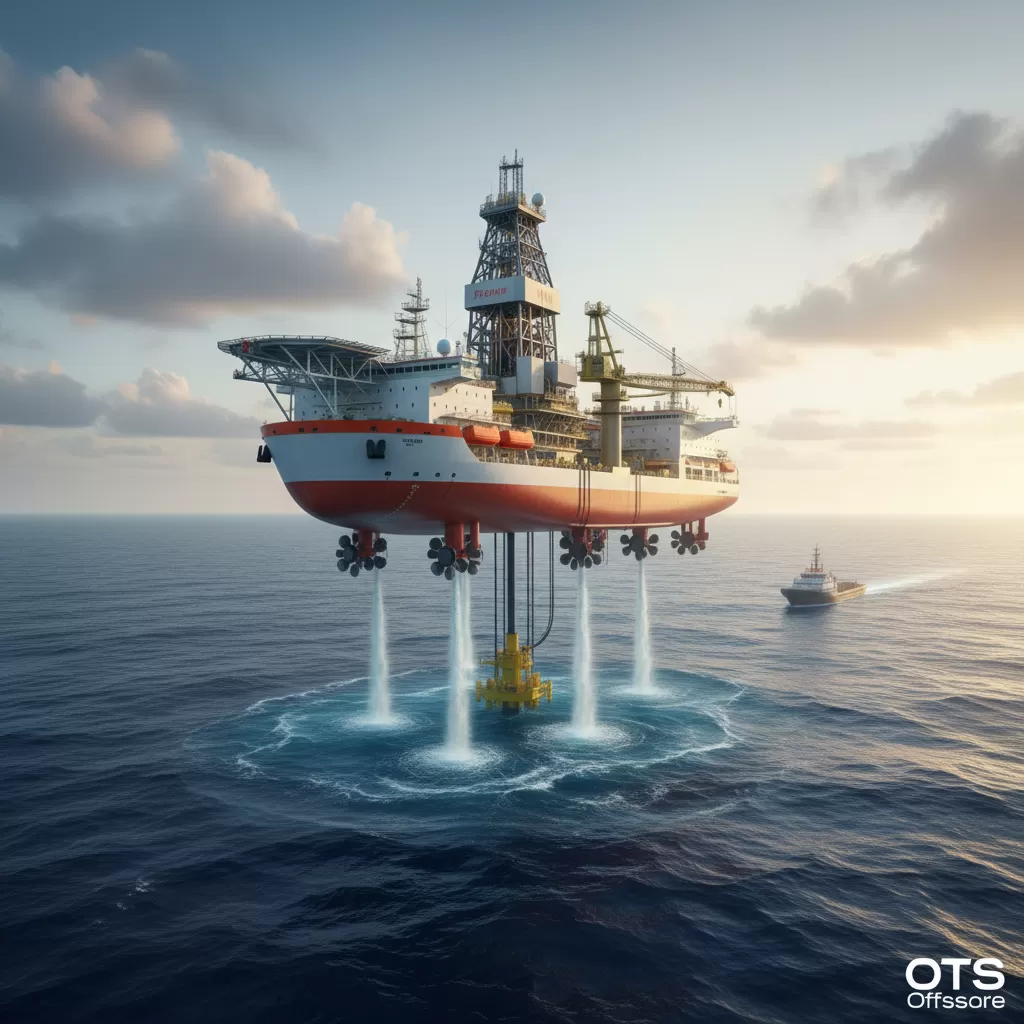
The Operational Principles of Dynamic Positioning (DP) on Drilling Vessels
The operation of a Dynamic Positioning (DP) system on a drilling vessel is a continuous cycle of sensing, calculating, and actuating. This intricate dance of technology allows the vessel to perform its critical functions safely and precisely.
1. Station Keeping
The primary operational principle is maintaining a fixed position relative to a target. For a drilling vessel, this target is typically the wellhead on the seabed. The DP system constantly compares the vessel’s actual position (obtained from PRS) with the desired position. Any deviation triggers corrective action.
2. Heading Control
In addition to position, the DP system also controls the vessel’s heading (orientation). This is important for several reasons, including optimizing the drilling operation, minimizing resistance to environmental forces, and aligning the vessel’s structure for safe operations with subsea equipment. The system adjusts thruster directions to maintain the set heading.
3. Environmental Force Compensation
Wind, waves, and currents exert forces on the vessel that tend to push it off its desired position and heading. The DP system uses data from environmental sensors to estimate these forces. It then calculates the counteracting thrust required from the thrusters to negate these forces. This is a dynamic process, as environmental conditions are constantly changing.
4. PID Control and Advanced Algorithms
The control algorithms within the DP computer are sophisticated. A common control method is Proportional-Integral-Derivative (PID) control, which uses the error between the desired and actual position to calculate the corrective thrust. More advanced algorithms may incorporate Kalman filters for sensor data fusion and predictive models to anticipate environmental changes. These algorithms aim to minimize thruster activity while maintaining precise control, thereby optimizing fuel efficiency and reducing wear and tear on the equipment.
5. Redundancy and Fail-Safe Operation
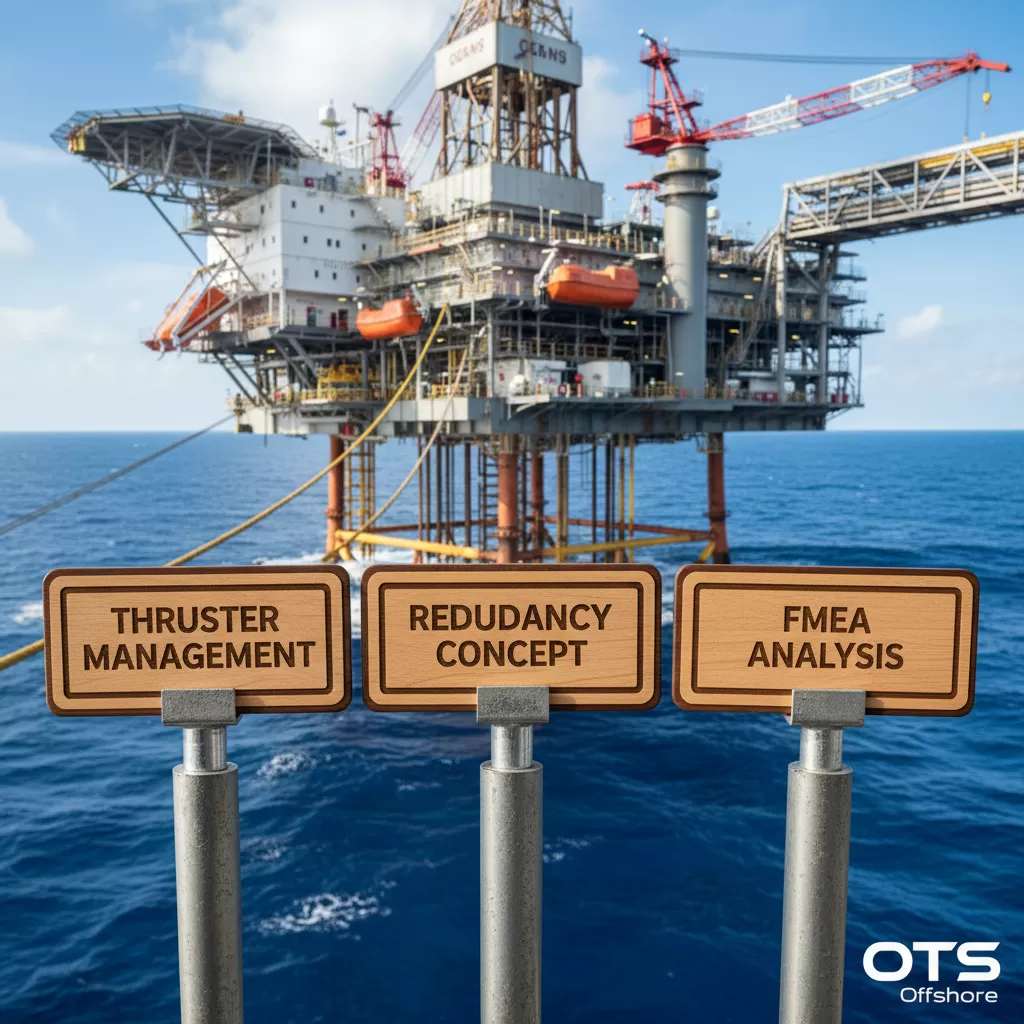
Given the critical nature of drilling operations, DP systems are designed with significant redundancy. This means that key components (PRS, computers, power supplies, thrusters) have backups. If a component fails, the system can seamlessly switch to the backup without significant disruption to operations. Different DP classes (DP Class 1, DP Class 2, DP Class 3) dictate the level of redundancy required, with higher classes offering greater reliability and safety.
Ensuring Reliability in Dynamic Positioning (DP) Systems for Drilling Operations
The reliability of a Dynamic Positioning (DP) system is paramount for the safety and operational success of any drilling vessel. A failure in the DP system can lead to significant financial losses, environmental damage, and, in the worst-case scenario, catastrophic accidents. Therefore, rigorous measures are in place to ensure and maintain its reliability.
1. DP Classifications and Standards
International classification societies, such as DNV, ABS, and Lloyd’s Register, define DP classes based on the level of redundancy required. DP Class 1 means that a single fault can cause loss of position. DP Class 2 requires that a single fault can cause loss of position, but there are sufficient redundancies to prevent this. DP Class 3 requires that a single fault can cause loss of position, but the vessel can still maintain its position even if a complete compartment is flooded. Drilling vessels, especially those operating in harsh environments or in safety-critical locations, are typically equipped with DP Class 2 or DP Class 3 systems.
2. Regular Maintenance and Testing
Proactive maintenance is crucial for ensuring the long-term reliability of DP systems. This includes regular inspections of all components, calibration of sensors, testing of thrusters, and diagnostic checks of the control computers. Many operators conduct periodic DP trials, both at sea and in port, to verify the system’s performance and its ability to handle various operational scenarios and environmental conditions.
3. Operator Training and Competency
The human element is critical in the reliable operation of DP systems. Highly trained and competent DP operators are essential. They must understand the principles of DP operation, the capabilities and limitations of the system, and how to respond effectively to alarms and system failures. Continuous training and competency assessments are standard practice in the offshore industry.
4. Software and Hardware Integrity
The software and hardware of the DP control system must be robust and well-maintained. Regular software updates and patches are applied to address any known issues and improve performance. Hardware components are typically of marine-grade quality, designed to withstand the harsh offshore environment, including vibration, salt spray, and extreme temperatures.
5. Contingency Planning and Procedures
Despite all preventive measures, the possibility of DP system failure always exists. Therefore, robust contingency plans and emergency procedures are developed and regularly practiced. These plans outline the steps to be taken in the event of a DP system failure, including the transition to manual control, the deployment of backup positioning systems, and the safe aborting of drilling operations if necessary.
6. Independent Verification and Validation
Before deployment, and periodically thereafter, DP systems undergo rigorous independent verification and validation processes. This ensures that the system meets all design specifications, regulatory requirements, and operational needs. Third-party surveys and audits play a vital role in maintaining the integrity of DP systems.
Tham khảo thêm: Thông tin chi tiết về Dynamic Positioning (DP) trên Wikipedia.
The complexity and criticality of Dynamic Positioning (DP) systems on drilling vessels underscore the importance of a holistic approach to their design, operation, and maintenance. The integration of advanced sensor technology, sophisticated control algorithms, robust propulsion systems, and comprehensive redundancy measures ensures that these vessels can operate safely and efficiently in some of the world’s most challenging offshore environments, facilitating vital energy exploration and production activities.