

Effective Corrosion Protection strategies are paramount for the longevity and operational integrity of coastal and offshore wind assets, facing relentless challenges from harsh marine environments. This article delves into advanced methodologies and best practices for safeguarding these critical structures against degradation.
Key Considerations for Effective Corrosion Protection in Marine Wind Energy Infrastructure
The escalating demand for renewable energy has propelled the growth of offshore wind farms, bringing with it unique engineering challenges. Coastal and offshore wind turbines, subjected to constant battering from saltwater, humidity, wind-borne particles, and electrochemical reactions, are particularly susceptible to corrosion. Implementing robust and Effective Corrosion Protection strategies is not merely a maintenance concern but a fundamental requirement for ensuring the safety, reliability, and economic viability of these multi-billion dollar investments. Failure to adequately address corrosion can lead to structural compromise, costly repairs, extended downtime, and ultimately, a shortened asset lifespan. This necessitates a comprehensive understanding of the corrosive mechanisms at play and the adoption of sophisticated protection systems tailored to the specific operational conditions.
Understanding the Corrosive Landscape of Marine Wind Farms
The marine environment presents a complex and aggressive cocktail of corrosive agents. Understanding these elements is the first step towards implementing truly Effective Corrosion Protection.
Saline Water and Electrochemical Reactions
Saltwater, with its high ionic conductivity due to dissolved salts like sodium chloride (NaCl), acts as a potent electrolyte. This facilitates electrochemical corrosion processes, where metal surfaces can act as anodes and cathodes, leading to the dissolution of metallic components. The presence of chloride ions (Cl-) is particularly aggressive, breaking down passive oxide layers on metals like steel, accelerating pitting corrosion, and compromising the integrity of protective coatings. The continuous immersion or tidal exposure of offshore wind turbine foundations, submerged structures, and even the lower sections of monopiles exposes these critical components to this relentless electrochemical attack.
Atmospheric Corrosion and Splash Zones
The splash zone, the area between the high and low tide marks, experiences a particularly severe corrosive regime. Here, structures are repeatedly wetted and dried, concentrating salts and creating a highly aggressive environment. Atmospheric corrosion, driven by humidity and pollutants, also affects the upper sections of towers and nacelles. Sulfur dioxide (SO2) and nitrogen oxides (NOx) present in the atmosphere, especially near coastal industrial areas, can dissolve in moisture to form acidic solutions, exacerbating corrosion. The combination of airborne salts and atmospheric pollutants creates a dual threat that demands layered protection.
Microbiological Influences
Sulfate-reducing bacteria (SRB) are often found in marine sediments and can proliferate in anaerobic conditions beneath biofilms. These microorganisms produce hydrogen sulfide (H2S) as a metabolic byproduct, which is highly corrosive to steel, leading to a phenomenon known as microbiologically influenced corrosion (MIC). MIC can be insidious, occurring beneath protective coatings or within crevices, making it difficult to detect and manage without specialized monitoring.
Wave Action and Abrasion
The relentless force of waves can cause mechanical damage, eroding protective coatings and exposing underlying metal to direct corrosive attack. Suspended sediments and debris carried by waves can act as abrasives, further degrading protective layers and creating stress concentration points that can initiate cracking and failure. This physical degradation significantly compromises the effectiveness of any corrosion protection system.
Advanced Strategies for Effective Corrosion Protection
Achieving robust and long-lasting Effective Corrosion Protection for offshore wind assets requires a multi-faceted approach, integrating various technologies and methodologies.
High-Performance Coating Systems
Coatings form the primary barrier between the metal substrate and the corrosive environment. For marine wind farms, these are not standard paints but sophisticated, multi-layer systems designed for extreme durability and adhesion.
– Surface preparation is paramount. Achieving a clean, dry surface with the correct anchor profile is critical for coating adhesion. Methods like abrasive blasting (e.g., grit blasting, sandblasting) are employed to remove mill scale, rust, and contaminants.
– Primers provide initial corrosion resistance and adhesion. Zinc-rich primers, either inorganic or organic, are commonly used. Inorganic zinc primers offer excellent galvanic protection, acting as a sacrificial anode, while organic zinc primers offer good adhesion and flexibility.
– Intermediate coats enhance film thickness and barrier properties. Epoxy-based coatings are widely used for their excellent adhesion, chemical resistance, and mechanical strength. Polyurethane or polysiloxane coatings can be applied as topcoats, offering UV resistance, abrasion resistance, and aesthetic appeal.
– Specialized coatings for splash zones and subsea applications are essential. These may include high-build epoxies, polyurethanes, or even rubberized coatings designed to withstand constant immersion and abrasion. Thermal spray coatings, such as zinc-aluminum alloys, can provide long-term galvanic protection in highly aggressive zones.
Cathodic Protection Systems
Cathodic protection is a crucial supplementary method for Effective Corrosion Protection, particularly for submerged structures and areas where coatings may be compromised. It works by making the metal structure the cathode of an electrochemical cell, thereby preventing it from corroding.
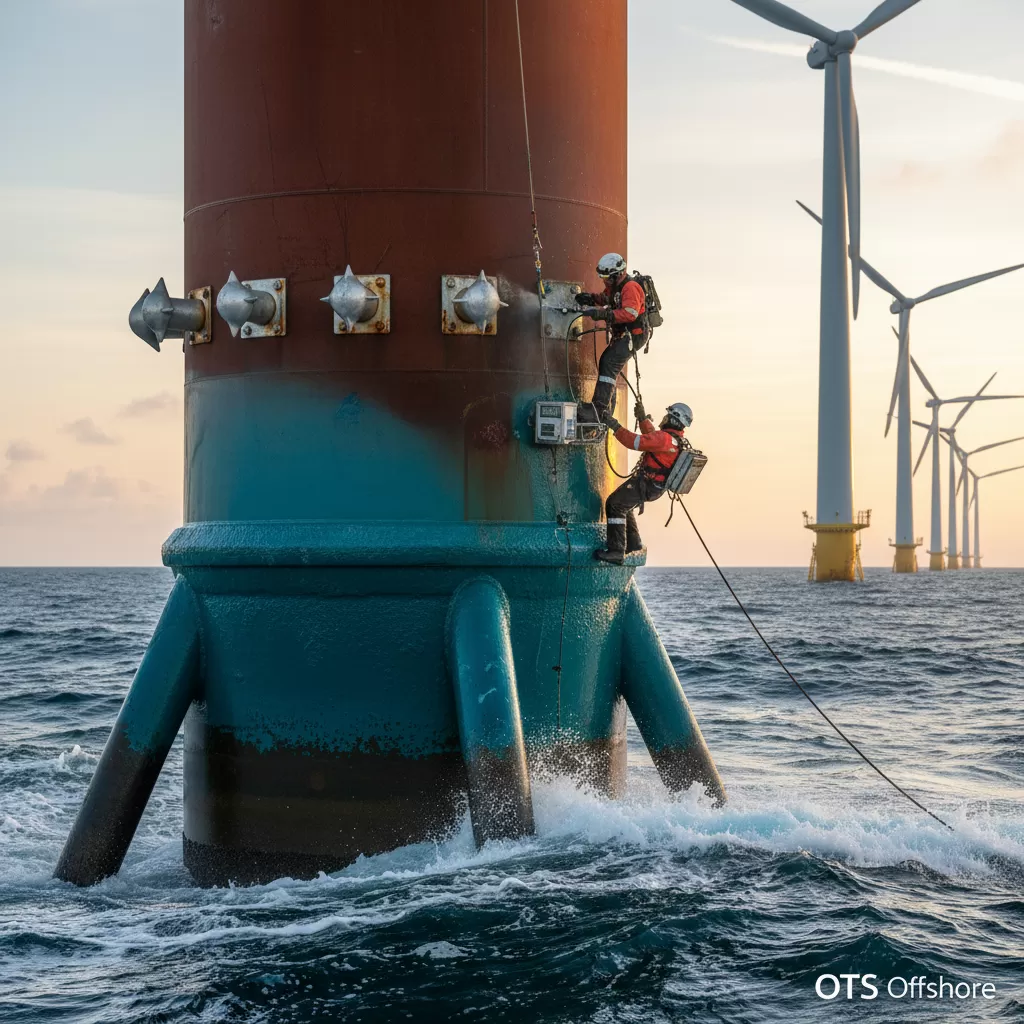
– Sacrificial Anode Cathodic Protection (SACP). This involves attaching blocks of a more electrochemically active metal (e.g., zinc, aluminum, or magnesium alloys) to the steel structure. These “anodes” corrode preferentially, supplying electrons to the steel and protecting it. SACP is relatively simple to install but has a finite lifespan and requires periodic replacement of the anodes.
– Impressed Current Cathodic Protection (ICCP). This system uses an external DC power source to drive current from inert anodes (e.g., platinum-coated titanium or mixed metal oxide) to the structure. ICCP offers greater control over the protection level and can provide protection for much longer periods. However, it requires a reliable power supply and more complex monitoring systems.
Materials Selection and Design Considerations
Proactive material selection and intelligent design can significantly enhance Effective Corrosion Protection from the outset.
– Corrosion-resistant alloys. For highly critical components or in extremely aggressive zones, utilizing corrosion-resistant alloys such as stainless steels, duplex steels, or specialized nickel-based alloys can offer superior performance, albeit at a higher initial cost.
– Galvanic series management. When dissimilar metals are in contact in an electrolyte, galvanic corrosion can occur. Careful design, consideration of the galvanic series of metals, and the use of insulating materials or appropriate coatings can mitigate this risk.
– Design for drainage and ventilation. Structures should be designed to prevent water accumulation and allow for adequate airflow, reducing the potential for crevice corrosion and moisture trapping.
– Minimizing crevices. Crevices can trap moisture and contaminants, leading to accelerated corrosion. Design details should aim to eliminate or seal potential crevice locations.
Inspection, Monitoring, and Maintenance
Effective Corrosion Protection is an ongoing process, not a one-time fix. Regular inspection and proactive maintenance are essential.
– Visual inspections. Routine visual checks can identify signs of coating damage, rust staining, or the presence of marine growth.
– Non-destructive testing (NDT). Techniques such as ultrasonic thickness gauging, magnetic particle inspection, and eddy current testing can detect subsurface defects, coating delamination, and corrosion pits without damaging the structure.
– Electrical potential measurements. For cathodic protection systems, measuring the potential difference between the structure and reference electrodes helps determine if adequate protection is being provided.
– Coating adhesion testing. Periodically, samples can be taken or tests performed to verify the integrity and adhesion of protective coatings.
– Cleaning and repair. Prompt cleaning of deposited salts and debris, followed by timely repair of any damaged coating or structural elements, is crucial to prevent further degradation.
Emerging Technologies in Corrosion Mitigation
The field of corrosion science and engineering is constantly evolving, with new technologies offering promising avenues for enhanced Effective Corrosion Protection.
– Smart coatings. These coatings incorporate sensors or active agents that can detect early signs of corrosion and initiate a repair mechanism, such as releasing corrosion inhibitors or forming a protective layer.
– Nanotechnology. Nanomaterials can be incorporated into coatings to enhance their barrier properties, mechanical strength, and corrosion resistance. For instance, nano-clays or graphene can create more tortuous pathways for corrosive agents to penetrate the coating.
– Advanced monitoring systems. The integration of sensors with IoT (Internet of Things) technology allows for real-time, continuous monitoring of environmental conditions and structural integrity, providing early warnings of potential corrosion issues.
The Economic Imperative of Proactive Corrosion Management
Investing in robust Effective Corrosion Protection strategies is not an expense, but a critical investment that yields significant returns. The costs associated with delayed or inadequate corrosion management far outweigh the initial outlay for preventative measures.
– Reduced maintenance and repair costs. Proactive protection minimizes the need for frequent and extensive repairs, which are often costly and disruptive.
– Extended asset lifespan. By preventing premature degradation, corrosion protection ensures that wind turbines operate for their designed lifespan, maximizing the return on investment.
– Minimized downtime. Corrosion-induced failures can lead to prolonged shutdowns, resulting in lost energy production and revenue. Effective protection helps maintain operational continuity.
– Enhanced safety. Structural integrity is paramount for safety. Corrosion can weaken critical components, posing a significant risk to personnel and the surrounding environment.
– Improved environmental performance. By extending the life of assets and preventing failures, corrosion protection indirectly contributes to the sustainability of renewable energy generation.
The challenges of protecting coastal and offshore wind assets from the relentless forces of corrosion are substantial, but with a strategic, science-based approach to Effective Corrosion Protection, these vital renewable energy structures can be safeguarded for decades to come.