


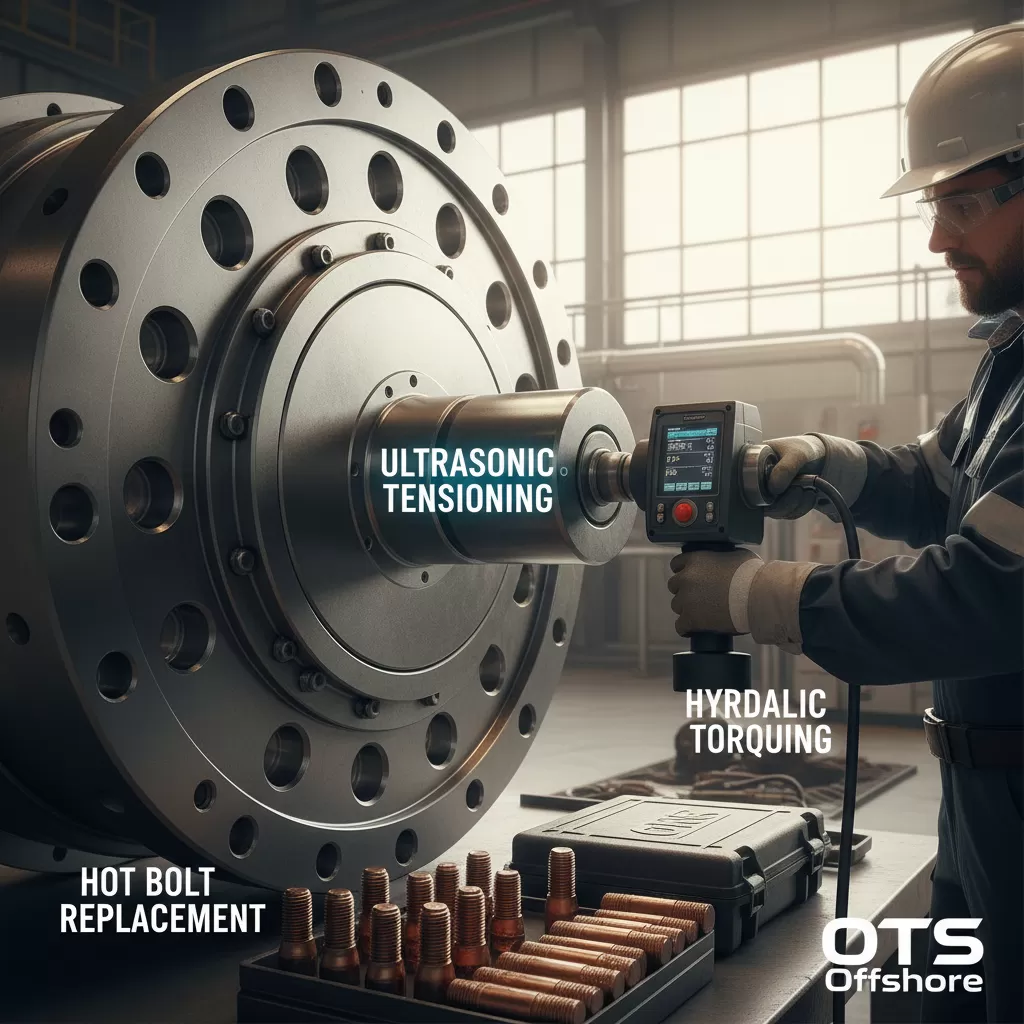
Effective Methods Bolt are crucial for ensuring the integrity and safety of critical connections in the oil and gas industry, particularly in high-pressure turbine flange applications. This article delves into best practices for bolt replacement and tensioning, vital for preventing leaks and structural failures.
Effective Methods Bolt Replacement and Tensioning in Turbine Flanges
Maintaining the integrity of turbine flanges is paramount in the oil and gas sector, where the consequences of joint failure can be severe, ranging from environmental damage to significant operational downtime. The performance and longevity of these critical connections heavily rely on the proper implementation of Effective Methods Bolt replacement and tensioning procedures. This article will explore the intricate aspects of these processes, emphasizing their importance in ensuring seal integrity, preventing leaks, and guaranteeing the overall safety and efficiency of turbine operations. We will examine the nuances of bolt selection, the critical steps involved in their removal and installation, and the sophisticated techniques employed for precise bolt tensioning. Understanding and applying these Effective Methods Bolt strategies are not merely best practices; they are fundamental requirements for safe and reliable operation in demanding industrial environments.
Understanding Turbine Flange Connections
Turbine flanges, integral components in power generation and hydrocarbon processing, are designed to connect various sections of piping, vessels, and machinery. These connections are subjected to extreme conditions, including high temperatures, significant pressure variations, and corrosive environments. The bolted joint is the heart of this connection, responsible for creating a leak-proof seal by exerting controlled force between mating flange faces. The reliability of this seal directly impacts operational safety, environmental compliance, and economic efficiency. Therefore, any work involving the bolts within these flanges, whether replacement or tensioning, demands meticulous attention to detail and adherence to stringent protocols. The selection of appropriate materials for bolts and gaskets, the condition of the flange faces, and the precise application of tension are all critical factors that contribute to the overall success of the bolted joint.
– Flange types commonly found in turbine systems.
– The role of gaskets in achieving a seal.
– The impact of operational conditions on flange integrity.
The Criticality of Proper Bolt Installation
Improper bolt installation can lead to a cascade of failures. Overtightening can cause bolt yielding, flange distortion, or even fracture. Undertightening, conversely, results in insufficient clamping force, leading to leaks and potential fretting corrosion between flange faces. Both scenarios compromise the seal and can result in catastrophic failure. The choice of bolt material is also a significant consideration, as it must be compatible with the service fluid, temperature, and pressure to prevent corrosion or hydrogen embrittlement. Furthermore, the thread condition of both the bolt and the tapped hole, or the nut, plays a vital role in achieving uniform tension. Any damage or contamination can impede the smooth engagement of threads, leading to inaccurate tension readings and uneven load distribution.
– Common bolt materials used in oil and gas applications.
– Thread inspection and cleaning procedures.
– The importance of lubrication in bolt installation.
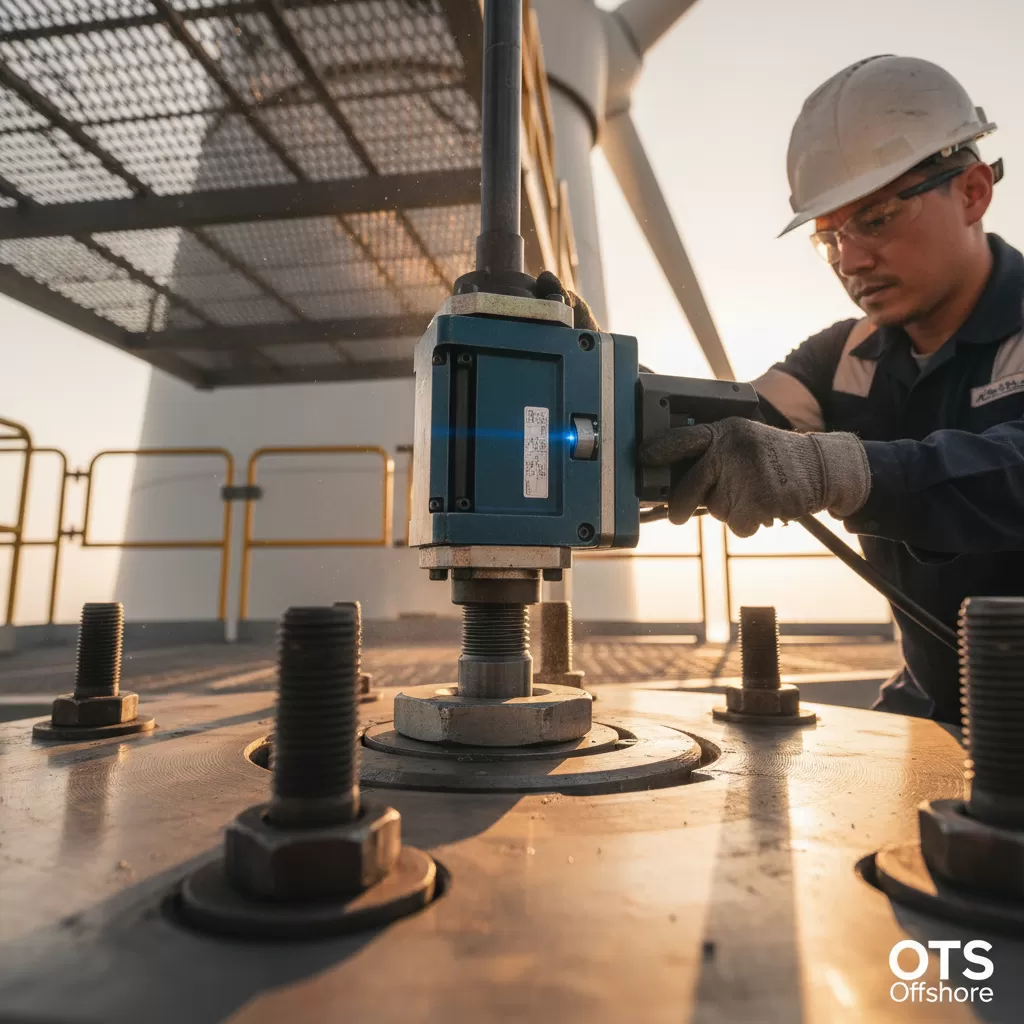
Effective Methods Bolt Replacement: A Step-by-Step Approach
Replacing bolts in turbine flanges is a task that requires a systematic and careful approach to ensure that the new bolts are installed correctly and provide the necessary clamping force for a reliable seal. This process involves more than just unscrewing old bolts and screwing in new ones; it encompasses preparation, careful execution, and post-installation verification. Adherence to these Effective Methods Bolt procedures minimizes the risk of leaks and extends the service life of the flange joint.
Pre-Replacement Preparations
Before any work begins on the turbine flange bolts, thorough preparation is essential. This includes safety protocols, identifying the correct replacement parts, and ensuring the necessary tools are available.
– Hazard identification and risk assessment.
– Verifying bolt specifications (material, grade, size, length).
– Ensuring availability of compatible lubricants and anti-seize compounds.
– Inspection of flange faces for damage or contamination.
– Isolation and depressurization of the system.
Bolt Removal Techniques
The removal of bolts, especially those that have been in service for extended periods under harsh conditions, can be challenging. Techniques must be employed to avoid damaging the flange or the bolt holes.
– Gradual and alternating removal of bolts to relieve stress evenly.
– Use of appropriate torque wrenches or impact wrenches with controlled settings.
– Techniques for dealing with seized or broken bolts, such as heat application or bolt extractors.
– Cleaning of bolt holes to remove debris and old thread locker.
Installation of New Bolts
Installing new bolts requires precision to ensure uniform load distribution and prevent premature failure.
– Lubricating bolt threads with appropriate compounds to ensure consistent torque application.
– Hand-starting all bolts to ensure proper thread engagement.
– Installing bolts in a staggered pattern to gradually introduce load.
– Avoiding overtightening during the initial installation phase.
Post-Installation Checks
After the new bolts are installed, a series of checks are performed to confirm the integrity of the installation.
– Visual inspection of all installed bolts.
– Verification of bolt protrusion (if applicable).
– Initial leak testing of the flange joint.
Advanced Bolt Tensioning Techniques
Achieving the correct bolt tension is arguably the most critical aspect of ensuring a leak-free and structurally sound flange connection. Simply tightening a bolt to a specified torque value can be misleading due to factors like friction. Therefore, advanced tensioning techniques are employed to achieve accurate and uniform clamping force. These Effective Methods Bolt strategies are vital for high-pressure and high-temperature applications.
Understanding Torque vs. Tension
It is crucial to understand the relationship between applied torque and actual bolt tension. Friction in the threads and under the bolt head accounts for a significant portion of the applied torque, often between 80-90%. This means only a small percentage of the torque translates into useful clamping force. Therefore, relying solely on torque specifications can lead to inconsistent tensioning.
– The impact of thread condition on torque-tension relationships.
– Factors influencing friction in bolted joints.
Torque-Tension Methods
While torque alone can be inaccurate, it remains a widely used method when properly understood and applied.
– Single-stage and multi-stage torque tightening.
– The use of calibrated torque wrenches.
– The importance of following manufacturer-specified torque values.
Turn-of-Nut Method
This is a relatively simple but effective method that relies on rotating the nut or bolt head a specific fraction of a turn after snug tightening.
– Determining the correct turn percentage based on bolt length and diameter.
– Ensuring consistent snug tightening before applying the turn.
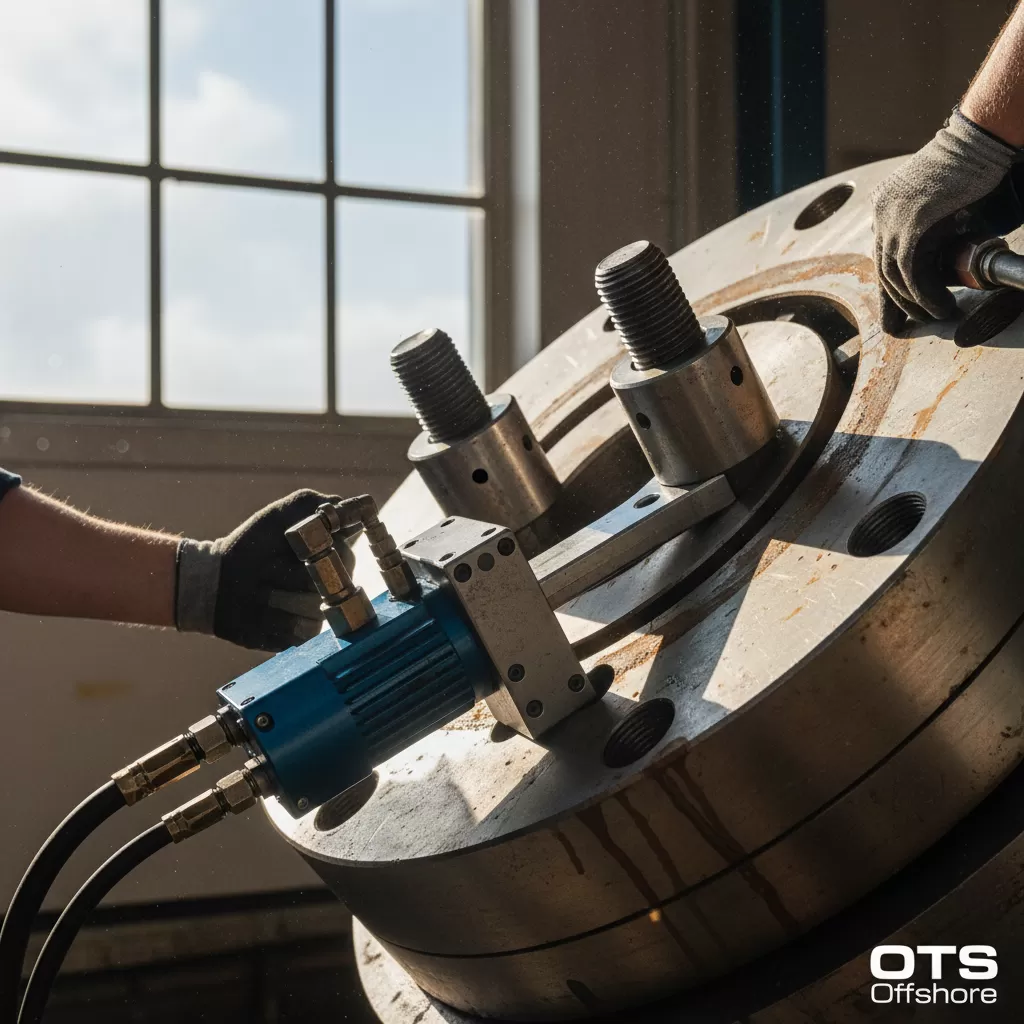
Hydraulic Bolt Tensioning
This is one of the most accurate and effective methods for achieving precise bolt tension, especially in critical applications. Hydraulic tensioners apply a controlled axial load to the bolt, stretching it to the desired elongation, which directly corresponds to the required tension.
– Description of hydraulic tensioning tools and their operation.
– Benefits of hydraulic tensioning for achieving uniform load.
– Applications in high-pressure and critical flange joints.
Stretching Measurement (Direct Tension Indicators)
Direct Tension Indicators (DTIs) are devices installed under the bolt head or nut that provide a visual indication of bolt tension by deforming.
– How DTIs work and their different types.
– Advantages of using DTIs for verifying tension.
Ultrasonic Bolt Tension Measurement
Ultrasonic methods measure the elongation of a bolt by sending ultrasonic waves through it and measuring the time it takes for them to return. This provides a highly accurate, non-destructive way to determine bolt tension.
– The principle behind ultrasonic bolt tension measurement.
– Its application in critical and high-value assets.
Factors Influencing Effective Bolt Tensioning
Several external and internal factors can influence the effectiveness of bolt tensioning and the long-term performance of the flange joint.
Bolt Material and Grade
The mechanical properties of the bolt material, such as its yield strength and elasticity, dictate the amount of tension it can withstand without permanent deformation. Different grades of bolts are designed for specific load requirements.
– Understanding bolt grades and their strength characteristics.
– Compatibility of bolt material with flange material and service conditions.
Thread Condition and Lubrication
As mentioned earlier, the condition of the bolt and flange threads significantly impacts friction. Proper lubrication can reduce friction by 15-50%, allowing for more accurate tensioning and preventing galling. The type of lubricant used is critical and must be compatible with the service environment.
– The role of anti-seize compounds and thread lubricants.
– Recommended lubricants for different operating temperatures and media.
Flange Face Condition and Gasket Selection
The flatness, surface finish, and parallelism of the flange faces are crucial for creating a good seal. Any imperfections can lead to uneven load distribution and leaks. The correct gasket material and type must be chosen based on the pressure, temperature, and chemical compatibility with the fluid.
– Importance of flange face flatness and parallelism.
– Gasket types and their suitability for different applications.
Environmental Conditions
Temperature fluctuations, vibration, and external forces can affect the clamping force over time. Cyclic loading can lead to fatigue, and thermal expansion can cause bolts to loosen or over-tighten.
– The impact of thermal cycling on bolt tension.
– Mitigating the effects of vibration.
Maintenance and Inspection of Bolted Flange Joints
Regular inspection and maintenance are essential to ensure the continued integrity of bolted flange joints. This proactive approach helps identify potential issues before they lead to failures.
– Scheduled visual inspections for leaks, corrosion, or damage.
– Periodic re-tensioning of bolts as per maintenance schedules.
– Monitoring of bolt elongation or tension where applicable.
– Documentation of all maintenance and inspection activities.
The commitment to employing Effective Methods Bolt for replacement and tensioning in turbine flanges is not merely an operational task but a fundamental aspect of ensuring safety, reliability, and environmental stewardship in the oil and gas industry. The careful selection of bolts, meticulous installation procedures, and the application of advanced tensioning techniques all contribute to robust and leak-free flange connections. This detailed understanding and rigorous application of these principles are what underpin the successful and enduring operation of critical industrial assets.