


Overview
Equipment dependability is a safety necessity as well as a performance component in the offshore oil and gas sector. On an offshore site, every hour of downtime can lead to increased safety hazards, financial losses, and operational delays. Preventive maintenance (PM) has emerged as one of the most important tactics for maintaining safe and effective operations as offshore settings become increasingly demanding.
The importance of preventative maintenance, how it lowers long-term expenses, and what offshore businesses should focus on while maintaining mechanical and structural assets are all covered in this article.

The Significance of Preventive Maintenance in Offshore Operations
Exposure to saltwater, high humidity, continuous vibration, and tremendous mechanical loads are among the challenging environments that offshore installations must deal with. These elements hasten the deterioration of equipment.
A strong PM program benefits businesses:
-
Reduce Unexpected Downtime
Unplanned shutdowns are frequently caused by corrective maintenance, which fixes equipment after it malfunctions. By spotting problems early, preventive maintenance reduces interruptions and maintains consistent output.
- Improve Equipment Safety
Frequent inspections aid in the detection of early-stage defects such as anomalous vibration, corrosion, and structural cracks. This reduces the possibility of dangerous situations, safeguarding both people and property.
- Extend Equipment Lifespan
Offshore gear can run smoothly for years longer than its typical lifecycle with routine maintenance and wear component replacement.
- Lower Operational Costs
PM is far less expensive than equipment replacement, emergency repairs, or output losses brought on by unexpected outages, even though it does require periodic investment.
Tham khảo thêm: Thông tin chi tiết về Practical Application: Steel trên Wikipedia.
Essential Elements of a Successful Offshore Preventive Maintenance Program
- Scheduled Inspections
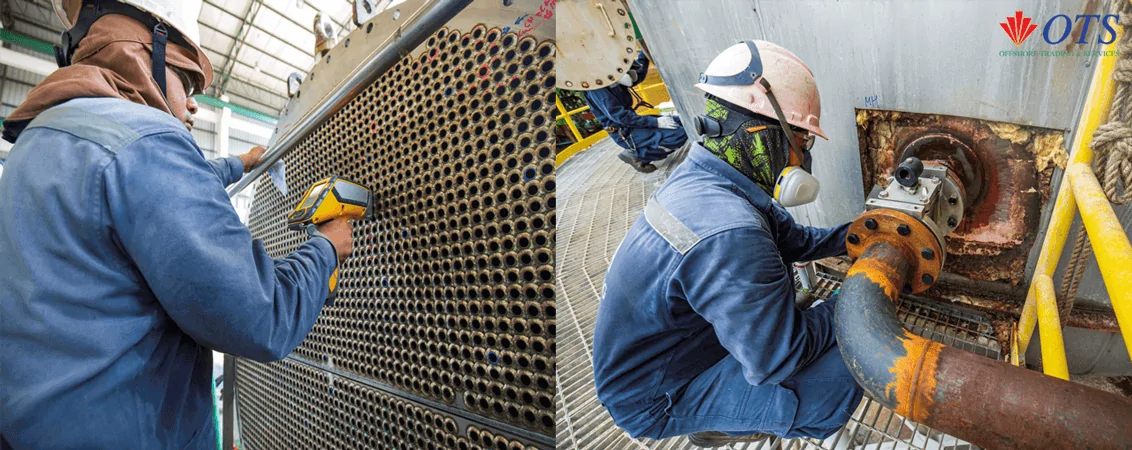
Technicians can assess the state of vital parts such rotating machinery, lifting apparatus, pumps, valves, and pressure systems through routine inspections.
Non-destructive testing (NDT) methods, such as MT, PT, UT, and visual inspection, are used to find concealed flaws that are invisible to the unaided eye.
- Environmental Monitoring
One of the most prevalent problems offshore is corrosion. Maintenance crews can apply coatings, replace damaged components, or use corrosion-resistant materials ahead of time by monitoring temperature, humidity, and exposure levels.
- Performance Tracking
Vibration, noise levels, pressure, and temperature patterns can all be monitored to assist anticipate breakdowns before they happen. These days, a lot of offshore operators use digital tools for predictive analytics.
- Regular Overhauls and Refurbishment
Periodic overhauls are very beneficial for parts like drilling tools, diesel engines, hoisting systems, and hydraulic equipment. For a fraction of the cost of replacement, refurbishment frequently restores outdated equipment to “like-new” condition.
Common Offshore Equipment That Requires Routine Maintenance
- Lifting equipment (cranes, winches, hoists)
- Pressure vessels and piping systems
- Diesel engines and mechanical rotating machinery
- Drilling equipment and tools
- Valves, pumps, and hydraulic systems
- Structural frames, walkways, and support beams
These assets need to be tracked carefully and serviced proactively to ensure safe operation due to their exposure to hostile marine environments.
How OTS Offshore Supports Preventive Maintenance Programs
OTS Offshore offers crucial services that complement preventive maintenance plans because to its vast experience in offshore engineering and maintenance:
- NDT inspection (MT, PT, UT) for structural and mechanical components
- Hydrostatic, pneumatic, and load testing to verify integrity and capacity
- Equipment refurbishment and mechanical repair
- Fabrication and machining of replacement parts
- On-site support and field services for offshore platforms
OTS Offshore assists operators in minimizing downtime and maintaining safe, continuous offshore operations by combining highly qualified specialists, ISO-certified procedures, and high-precision equipment.
Conclusion
Preventive maintenance is essential to safe and effective offshore operations; it is not merely an optional duty. In order to protect employees, cut expenses, and sustain productivity, businesses must engage in proactive maintenance solutions as offshore projects get more complicated and environmental regulations tighten.
Offshore operators may greatly increase the lifespan of their equipment and stop severe breakdowns before they happen with the correct inspections, monitoring systems, and refurbishment plans.