


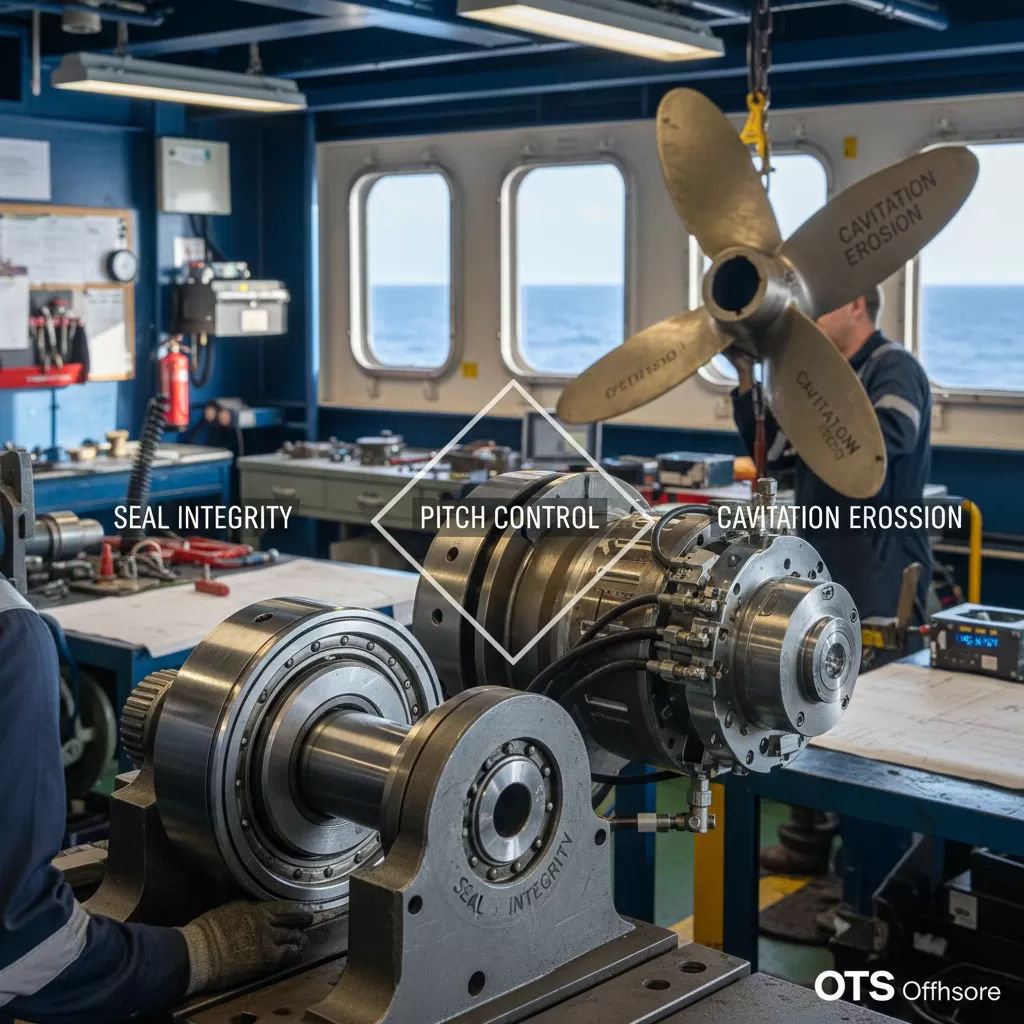
Maintenance and repair of thrust bearings and propellers on offshore support vessels (OSVs) are critical for ensuring operational reliability, safety, and efficiency in the demanding marine environment. This comprehensive guide delves into the specialized procedures, common challenges, and best practices associated with maintaining these vital propulsion components. Proper attention to Maintenance Repair Thrust systems directly impacts vessel uptime and the successful execution of offshore operations.
Optimizing Maintenance Repair Thrust Systems on Offshore Support Vessels
The intricate systems that power offshore support vessels (OSVs) rely heavily on the robust performance of thrust bearings and propellers. Effective maintenance and repair of these components are paramount for maintaining operational integrity. Understanding the nuances of Maintenance Repair Thrust is not merely about addressing failures but about proactive strategies that minimize downtime and maximize the lifespan of these critical marine assets. This article explores the multifaceted aspects of Maintenance Repair Thrust, covering inspection protocols, repair methodologies, and preventative measures essential for OSVs operating in challenging maritime conditions.
Understanding Thrust Bearings in OSV Propulsion
Thrust bearings are fundamental to the propulsion system of any vessel, including OSVs. Their primary function is to absorb the axial thrust generated by the propeller and transmit it to the hull. Without a properly functioning thrust bearing, the propeller’s forward or backward motion would exert immense force directly onto the propeller shaft and, consequently, the vessel’s structure, leading to catastrophic failure.
Types of Thrust Bearings Utilized in OSVs
OSVs commonly employ several types of thrust bearings, each with specific advantages and applications depending on the vessel’s size, power, and operational profile.
– Single-direction thrust bearings: These are designed to handle thrust in one direction only. They are typically used in simpler propulsion systems.
– Double-direction thrust bearings: Capable of handling thrust in both directions, these are more common in OSVs where frequent maneuvering and reversal of propeller direction are required.
– Ball thrust bearings: These use balls to reduce friction. They are suitable for moderate loads and high speeds but can be susceptible to contamination.
– Roller thrust bearings: Employing cylindrical or tapered rollers, these offer higher load-carrying capacity than ball bearings and are often preferred for heavy-duty applications on OSVs.
– Hydrodynamic thrust bearings (e.g., Kingsbury bearings): These rely on a film of lubricating oil to separate the rotating and stationary surfaces, creating a hydrodynamic lift. They are highly efficient and suitable for very high loads and speeds, making them a prevalent choice for larger OSVs.
Critical Components of a Thrust Bearing Assembly
A typical thrust bearing assembly comprises several key components, each requiring diligent inspection and maintenance.
– Bearing races (stationary and rotating): These are the surfaces that make contact or operate in close proximity. Wear, pitting, or scoring on the races are immediate indicators of potential problems.
– Rolling elements (balls or rollers): The integrity and smooth operation of these elements are crucial for load distribution and friction reduction.
– Retainers or cages: These hold the rolling elements in place and ensure proper spacing. Damage to the retainer can lead to element misalignment and premature failure.
– Seals: Effective seals are vital for preventing ingress of contaminants like water and debris, and for retaining lubricant.

Propeller Dynamics and Their Impact on Thrust Bearings
The propeller is the direct force generator that propels the OSV. Its design, condition, and operational parameters significantly influence the load and stress experienced by the thrust bearing.
Propeller Blade Design and Loading
The shape, pitch, and number of blades on a propeller are engineered to optimize thrust for specific vessel types and operating conditions. During operation, water flow over the propeller blades creates complex pressure distributions. Variations in water density, vessel speed, and engine load can alter these pressure distributions, leading to fluctuating thrust loads.
Cavitation and Its Detrimental Effects
Cavitation occurs when the pressure on the propeller blades drops below the vapor pressure of the water, forming vapor bubbles. As these bubbles collapse, they generate localized shockwaves that can erode propeller material and create vibrations. These vibrations can be transmitted to the thrust bearing, causing fretting, wear, and eventual failure. Monitoring for signs of cavitation and taking corrective actions, such as adjusting propeller pitch or speed, is an essential part of Maintenance Repair Thrust.
Propeller Damage and Imbalance
Impacts with debris, submerged objects, or ice can cause damage to propeller blades, leading to imbalance. An imbalanced propeller generates significant vibrations, which are directly transmitted to the thrust bearing and shafting. This can accelerate wear and damage to the bearing elements and races. Regular visual inspections and dynamic balancing are crucial to mitigate these risks.
Essential Maintenance and Inspection Protocols for Thrust Bearings
Proactive maintenance and regular inspections are the cornerstones of ensuring the longevity and reliability of thrust bearings on OSVs. A well-defined inspection schedule prevents minor issues from escalating into costly breakdowns.
Routine Visual Inspections
These are the first line of defense. They should be conducted frequently, ideally during routine vessel checks.
– Check for external signs of leakage: Any lubricant leakage from the bearing housing can indicate seal failure or damage.
– Inspect the bearing housing for signs of overheating: Discoloration or heat-sensitive paint changes can signal excessive friction.
– Examine the shaft and surrounding area for any debris or signs of wear.
Lubrication Management: A Critical Aspect of Maintenance Repair Thrust
Proper lubrication is paramount for reducing friction, dissipating heat, and preventing wear.
– Lubricant type and viscosity: The correct lubricant, specified by the manufacturer, must be used. Viscosity is critical for forming a protective film under varying operating temperatures and loads.
– Lubrication intervals: Following the manufacturer’s recommended lubrication schedule is vital. Over-lubrication can be as detrimental as under-lubrication, leading to churning and overheating.
– Lubricant analysis: Regularly analyzing the used lubricant can reveal valuable information about the bearing’s internal condition. Elevated levels of wear metals (e.g., iron, chromium, copper) can indicate abnormal wear patterns. Changes in viscosity or the presence of water and contaminants are also critical indicators.
Temperature Monitoring
Thrust bearings generate heat due to friction. Monitoring bearing temperatures provides a direct indication of its operational health.
– Thermocouples or RTDs: These sensors can be permanently installed to provide real-time temperature data, often integrated into the vessel’s monitoring systems.
– Infrared thermography: This non-contact method allows for quick and safe temperature checks of the bearing housing. Elevated temperatures on specific points can indicate localized issues.
Vibration Analysis
Vibration monitoring is a powerful diagnostic tool for detecting early signs of bearing degradation and imbalance.
– Baseline readings: Establishing baseline vibration levels when the bearing is in good condition allows for the detection of deviations.
– Frequency analysis: Different types of bearing damage and imbalances generate specific vibration frequencies. Analyzing these frequencies can pinpoint the exact problem. Common issues include bearing element defects, race defects, and shaft imbalance.
Operational Parameter Monitoring
Observing how the thrust bearing performs under different operational conditions provides further insights.
– Load monitoring: Understanding the thrust loads the bearing experiences during various maneuvers and transit speeds.
– Speed monitoring: Correlating bearing temperature and vibration with propeller shaft speed.
Propeller Maintenance and Its Interplay with Thrust Bearings
The health of the propeller directly influences the performance and longevity of the thrust bearing. Neglecting propeller maintenance inevitably leads to increased stress on the bearing.
Propeller Cleaning and Polishing
Marine growth (barnacles, algae) on propeller blades disrupts water flow, reduces efficiency, and can lead to uneven loading.
– Regular cleaning: Scheduled cleaning removes marine growth and inspects for damage.
– Propeller polishing: This ensures a smooth surface, minimizing drag and optimizing hydrodynamic performance.
Propeller Blade Repair and Refinishing
Damage to propeller blades, even minor chips, can cause imbalance and increased vibration.
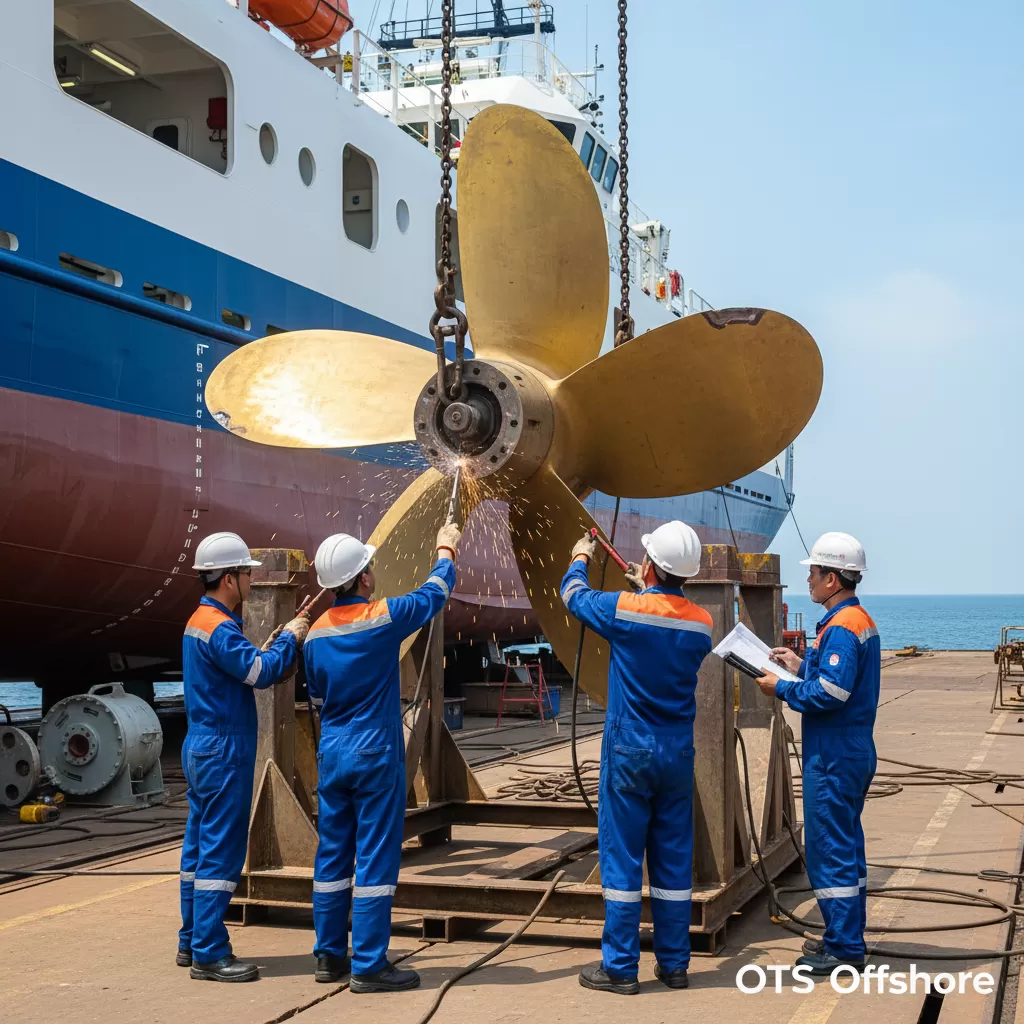
– Minor repairs: Small nicks and chips can often be repaired through specialized welding and grinding techniques by certified propeller repair shops.
– Major repairs: Significant damage may require blade replacement.
– Propeller balancing: After any repair, dynamic or static balancing is crucial to restore the propeller’s equilibrium.
Inspection for Fatigue and Cracking
Propeller blades are subjected to cyclic stresses. Over time, fatigue cracks can develop, particularly at the root of the blade.
– Magnetic particle inspection (MPI) or dye penetrant testing (PT): These non-destructive testing methods can detect surface and near-surface cracks.
– Ultrasonic testing (UT): This method can detect internal flaws.
Troubleshooting Common Issues with Thrust Bearings on OSVs
When problems arise, a systematic approach to troubleshooting is essential for effective Maintenance Repair Thrust.
Excessive Heat Generation
– Possible causes: Insufficient lubrication, incorrect lubricant viscosity, contamination, excessive load, bearing misalignment, damaged rolling elements.
– Troubleshooting steps:
– Verify lubrication levels and type.
– Check lubricant for contaminants and perform analysis.
– Inspect bearing for signs of wear or damage.
– Evaluate operational loads and speeds.
– Check for shaft and bearing alignment.
Unusual Noises (Grinding, Knocking, Humming)
– Possible causes: Damaged rolling elements, worn races, debris within the bearing, improper lubrication, shaft imbalance.
– Troubleshooting steps:
– Perform vibration analysis to identify the source and nature of the noise.
– Inspect lubricant for wear particles.
– Carefully examine the bearing components for pitting, spalling, or scoring.
– Ensure propeller is balanced.
Vibration Issues
– Possible causes: Propeller imbalance, damaged propeller blades, worn or damaged thrust bearing components, shaft misalignment, hull vibration.
– Troubleshooting steps:
– Isolate vibration to the propeller shaft line.
– Perform propeller balancing.
– Inspect propeller blades for damage.
– Conduct detailed vibration analysis of the thrust bearing.
– Check shaft alignment.
Lubricant Leakage
– Possible causes: Damaged or worn seals, loose housing components, cracked housing.
– Troubleshooting steps:
– Inspect and replace seals if damaged.
– Tighten housing bolts to manufacturer specifications.
– Check housing for cracks.
Advanced Repair and Replacement Strategies
In cases where routine maintenance is insufficient, advanced repair or replacement strategies become necessary.
Bearing Reconditioning
Some thrust bearings, especially larger hydrodynamic types, can be reconditioned rather than fully replaced. This involves disassembling the bearing, cleaning components, inspecting for wear, and potentially replacing worn parts like bearing pads or seals.
Shaft and Bearing Alignment Correction
Misalignment between the propeller shaft and the engine is a significant cause of premature thrust bearing failure. Specialized laser alignment tools are used to achieve precise alignment. This is a critical step in any major overhaul or repair of the propulsion system.
Propeller Repair and Recasting
For severely damaged propellers, advanced repair techniques may be employed, including welding and grinding to restore the original profile. In extreme cases, the propeller may need to be recast or replaced entirely.
Full Bearing Replacement
When a thrust bearing is beyond repair, a complete replacement is necessary. This is a significant undertaking that requires careful planning, including sourcing the correct replacement part and scheduling dry-docking if necessary.
The Role of Technology in Maintenance Repair Thrust
Modern technology plays an increasingly vital role in optimizing Maintenance Repair Thrust strategies for OSVs.
Condition Monitoring Systems (CMS)
Integrated CMS provide continuous data on vibration, temperature, pressure, and lubricant condition. This allows for early detection of anomalies and enables predictive maintenance, shifting from a reactive to a proactive approach.
Remote Diagnostics and Expert Systems
With the advent of advanced communication, experts can remotely access data from vessel systems, assisting onboard personnel with diagnostics and troubleshooting, thereby reducing response times and minimizing the need for immediate physical intervention.
Advanced Lubricant Analysis Techniques
Sophisticated laboratory analysis of lubricant samples can identify even minute wear particles and subtle changes in lubricant chemistry, providing detailed insights into bearing health.
3D Scanning and Laser Alignment
These technologies enable highly accurate measurements for shaft alignment, ensuring that the propulsion system components are perfectly integrated, thereby reducing stress on the thrust bearing and other critical parts.
The proactive and meticulous approach to Maintenance Repair Thrust on OSVs is not an optional expenditure but a strategic investment. By understanding the complex interplay between thrust bearings, propellers, and operational dynamics, and by implementing rigorous inspection, maintenance, and repair protocols, vessel operators can ensure the unwavering reliability and safety of their offshore support fleets.