

Offshore construction vessels (OSCVs) are indispensable assets in the marine energy sector, facilitating complex subsea operations. This article delves into the diverse capabilities and intricate propulsion configurations that define these sophisticated maritime platforms, essential for modern offshore infrastructure development.
Unveiling Offshore Construction Vessel Capabilities and Propulsion Configurations
The offshore construction vessel (OSCV) stands as a cornerstone of the global energy industry, playing a pivotal role in the exploration, development, and maintenance of offshore hydrocarbon fields and renewable energy installations. These highly specialized marine units are engineered to perform a multitude of demanding tasks in some of the planet’s harshest marine environments. Their capabilities span the entire lifecycle of an offshore project, from initial subsea infrastructure installation, such as pipelines and umbilicals, to the deployment of large, heavy structures like jackets, topsides, and wind turbine foundations. The operational efficiency, safety, and success of these projects are intrinsically linked to the advanced technological features and propulsion systems of the OSCVs deployed. Understanding the nuances of their capabilities and the sophisticated engineering behind their propulsion configurations is crucial for anyone involved in the offshore energy sector.
The Multifaceted Capabilities of Modern Offshore Construction Vessels
The operational scope of an Offshore Construction Vessel is remarkably broad, reflecting the complexity and scale of modern offshore engineering projects. These vessels are not merely floating work platforms; they are integrated mobile construction yards, equipped with specialized machinery and systems to execute intricate subsea tasks with precision.
– Pipeline Laying Operations:
A primary function of many OSCVs is the installation of subsea pipelines. This involves advanced systems for welding, inspection, and controlled lowering of pipelines from the vessel to the seabed. The J-lay and S-lay methods are common, each requiring specific vessel configurations and tensioning systems to manage the pipeline effectively. The precision required in maintaining the correct tension and trajectory prevents damage and ensures the integrity of the installed infrastructure.
– Heavy Lifting and Installation:
OSCVs are often equipped with heavy-lift capabilities, featuring powerful cranes capable of lifting and positioning massive offshore structures. These can include wellhead platforms, jackets for oil and gas platforms, wind turbine towers, and substructures. The dynamic positioning (DP) systems are critical here, allowing the vessel to maintain a fixed position relative to the seabed, even in the face of strong currents and wave action, ensuring safe and accurate placement of these enormous components.
– Subsea Construction and Maintenance:
Beyond installation, OSCVs are vital for subsea construction and ongoing maintenance. This includes the deployment and recovery of remotely operated vehicles (ROVs) and autonomous underwater vehicles (AUVs) for inspection, intervention, and repair (I&R) tasks. They also facilitate the installation and connection of subsea production equipment, manifolds, and flowlines, requiring intricate maneuvering and precise control.
– Accommodation and Support:
Many OSCVs are designed to accommodate large crews, often numbering in the hundreds. They provide living quarters, mess halls, recreational facilities, and medical services, allowing for extended offshore missions and providing a self-sufficient base for project teams. This integrated support capability minimizes the need for frequent crew transfers and enhances project continuity.
– Advanced Survey and Geotechnical Operations:
Some OSCVs are equipped with advanced survey equipment, including multibeam echo sounders, side-scan sonar, and sub-bottom profilers, to conduct detailed seabed mapping and site surveys. This information is crucial for planning and executing construction activities safely and effectively. Geotechnical capabilities, such as the deployment of cone penetration test (CPT) rigs or piston corers, are also found on specialized vessels to assess seabed soil conditions.
The Role of ROVs and AUVs in Offshore Construction
Remotely Operated Vehicles (ROVs) and Autonomous Underwater Vehicles (AUVs) have become indispensable tools for offshore construction vessels. These unmanned systems extend the reach and capabilities of the OSCV, performing tasks in areas that are too deep, too hazardous, or too complex for human divers.
– ROV functions include:
– Visual inspection of subsea structures and pipelines.
– Manipulating tools for connection and disconnection of subsea equipment.
– Performing minor repairs and interventions.
– Assisting in pipeline laying and trenching operations.
– Installation and recovery of smaller components.
– AUVs offer:
– Autonomous survey and mapping missions.
– Data acquisition in large areas with high efficiency.
– Pre-programmed navigation for specific tasks.
– Reduced operational footprint compared to ROVs in certain survey applications.
The integration of these advanced underwater technologies with the OSCV’s onboard systems, including sophisticated launch and recovery systems (LARS), significantly enhances the overall efficiency and safety of offshore operations.
Propulsion Configurations: The Driving Force Behind OSCV Performance
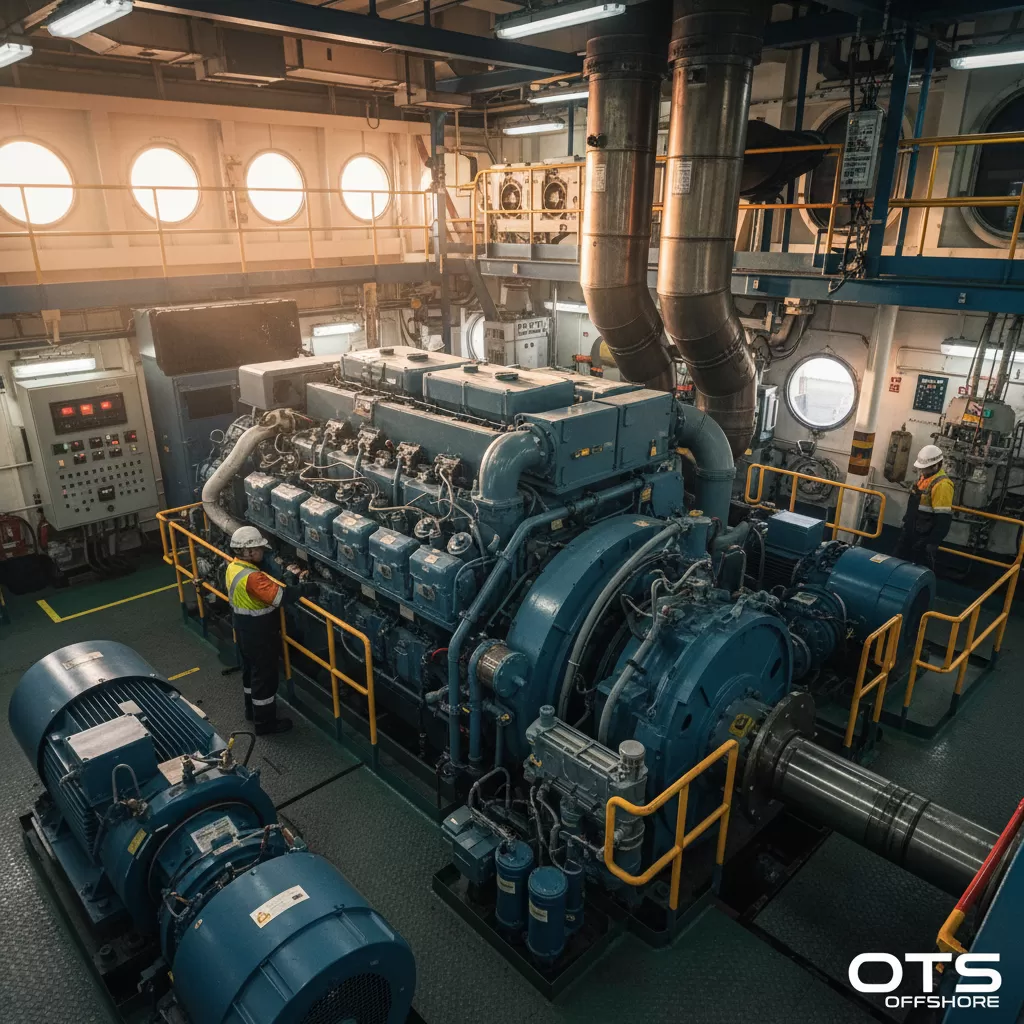
The propulsion system of an Offshore Construction Vessel is a critical determinant of its operational performance, maneuverability, and ability to undertake complex tasks in challenging marine environments. Modern OSCVs typically employ sophisticated propulsion arrangements that combine powerful main engines with advanced control systems to achieve optimal station-keeping and transit capabilities.
– Azimuthing Thrusters (Azipods):
A hallmark of advanced OSCVs is the widespread use of azimuthing thrusters, often referred to as Azipods. These are electric propulsion units where the propeller is mounted on a steerable pod that can rotate 360 degrees. This configuration offers exceptional maneuverability, allowing the vessel to move sideways, rotate on its own axis, and maintain precise station-keeping without the need for traditional rudders or stern thrusters. This is particularly vital for dynamic positioning operations, where maintaining a fixed position is paramount.
– Diesel-Electric Propulsion Systems:
Many large OSCVs utilize diesel-electric propulsion. In this setup, diesel generators produce electrical power, which is then distributed to the azimuthing thrusters and other onboard systems. This offers several advantages, including:
– Optimized engine operation: Generators can run at their most efficient load, regardless of the vessel’s speed or maneuver requirements.
– Redundancy and reliability: The system can tolerate the failure of one or more generators without significant loss of power.
– Fuel efficiency: The ability to optimize engine operation leads to reduced fuel consumption and lower emissions.
– Flexibility: Electrical power can be easily distributed to various onboard consumers, including winches, cranes, and accommodation.
– Dynamic Positioning (DP) Systems:
Propulsion configurations on OSCVs are intrinsically linked to their Dynamic Positioning (DP) capabilities. DP systems use a complex network of sensors (GPS, acoustic positioning, taut wires) and sophisticated software to automatically maintain the vessel’s position and heading against environmental forces like wind, waves, and currents. The azimuthing thrusters are the primary actuators that respond to the DP system’s commands, providing precise thrust in any direction to counteract external forces. DP systems are classified into DP classes (DP1, DP2, DP3), with higher classes offering greater redundancy and reliability for safety-critical operations.
– Hybrid Propulsion Solutions:
Emerging trends in OSCV propulsion include the adoption of hybrid systems. These might combine diesel engines with battery storage or fuel cells, further enhancing fuel efficiency, reducing emissions, and providing additional power redundancy. Such solutions are driven by increasing environmental regulations and the industry’s commitment to sustainability.
Key considerations in OSCV Propulsion Configuration
The selection of a specific propulsion configuration for an Offshore Construction Vessel is a critical engineering decision influenced by a multitude of factors, each with direct implications for operational effectiveness and economic viability.
– Operational Requirements:
The type of operations the OSCV is designed for heavily dictates its propulsion needs. Vessels primarily engaged in heavy lifting and deepwater installation will require more powerful thrusters and a highly robust DP system compared to those focused on lighter construction or survey tasks. The required bollard pull for towing and station-keeping also plays a significant role.
– Environmental Conditions:
The typical operating environment is a crucial factor. Vessels deployed in harsh weather regions with strong currents and high winds will necessitate more powerful propulsion and advanced DP capabilities to maintain positional accuracy and operational uptime. This includes considerations for wave impact and vessel motion compensation.
– Fuel Efficiency and Emissions:
With growing environmental awareness and stricter regulations, fuel efficiency and emission reduction are paramount. Diesel-electric systems, often combined with optimized engine management and newer generation thruster units, offer significant advantages in this regard. The potential for integrating alternative fuels and energy storage solutions is also a key consideration for future vessel designs.
– Redundancy and Reliability:
The safety-critical nature of offshore operations demands high levels of redundancy and reliability in propulsion systems. DP2 and DP3 rated vessels, for instance, must be able to maintain position even if one or more propulsion units or power sources fail. This necessitates careful design with multiple independent systems.
– Maneuverability and Station-Keeping Precision:
The ability to precisely maneuver and maintain position is fundamental to most OSCV operations. Azimuthing thrusters are vital for achieving the required agility and control, especially in confined offshore fields or when working in close proximity to existing structures. The precision required for subsea connections and component placement cannot be overstated.
– Cost and Maintenance:
While advanced propulsion systems offer superior performance, their initial capital cost and ongoing maintenance requirements are significant considerations. Engineers must balance performance requirements with economic realities to select a propulsion solution that provides the best long-term value. The availability of spare parts and skilled technicians for specialized propulsion systems is also important.
The propulsion configuration of an offshore construction vessel is a sophisticated interplay of power generation, thrust generation, and advanced control systems. The evolution towards diesel-electric propulsion, coupled with the dominance of azimuthing thrusters, has revolutionized the capabilities of these vessels. This technological advancement enables them to undertake increasingly complex and demanding offshore projects with enhanced safety, efficiency, and precision. As the energy sector continues to evolve, so too will the propulsion technologies employed by these vital maritime assets, driving further innovation in offshore construction.