



This article delves into the critical role of oil analysis and robust lubrication programs in extending the operational life of turbine bearings. It explores how proactive monitoring and strategic fluid management directly contribute to enhanced reliability, reduced maintenance costs, and optimized performance in demanding industrial environments.
The Imperative of Advanced Oil Analysis and Lubrication Programs for Enhanced Turbine Bearing Longevity
In the realm of industrial operations, particularly within the energy and oil & gas sectors, turbine reliability is paramount. The continuous, high-speed rotation of turbine bearings subjects them to immense mechanical stress, thermal loads, and potential contamination. Failure of these critical components can lead to catastrophic downtime, significant financial losses, and safety hazards. Therefore, implementing comprehensive oil analysis and effective lubrication programs is not merely a best practice; it is an absolute necessity for ensuring extended bearing life and maintaining peak operational efficiency. Proactive analysis of lubricant condition and effective management of the lubrication program are central to achieving these objectives. The focus keyword “Analysis Lubrication Programs” will be integrated throughout this discussion to emphasize its significance.
Understanding the Fundamentals: Turbine Bearings and Their Operational Demands
Turbines, whether used for power generation, mechanical drive, or within the oil and gas extraction and processing industries, are characterized by high rotational speeds and significant power transmission. The bearings supporting these rotating shafts are designed to minimize friction and wear. Common types include journal bearings (also known as fluid film bearings) and rolling element bearings, each with distinct failure mechanisms.
Journal bearings rely on a hydrodynamic oil film to separate the rotating shaft from the stationary bearing surface. The integrity of this film is directly dependent on the lubricant’s viscosity, cleanliness, and thermal stability. Any degradation in these properties can lead to metal-to-metal contact, scoring, and ultimately, bearing failure.
Rolling element bearings, such as ball or roller bearings, depend on the lubricant to reduce friction, dissipate heat, and prevent corrosion. Contamination within the lubricant, lubricant film breakdown, or inadequate lubrication can lead to premature wear of the rolling elements and raceways.
The operational environment of turbines often involves extreme temperatures, high pressures, and potential exposure to corrosive substances. These factors place considerable stress on both the bearings and the lubricants, making rigorous monitoring and maintenance essential. An effective oil analysis program acts as an early warning system, detecting subtle changes that precede catastrophic failure.
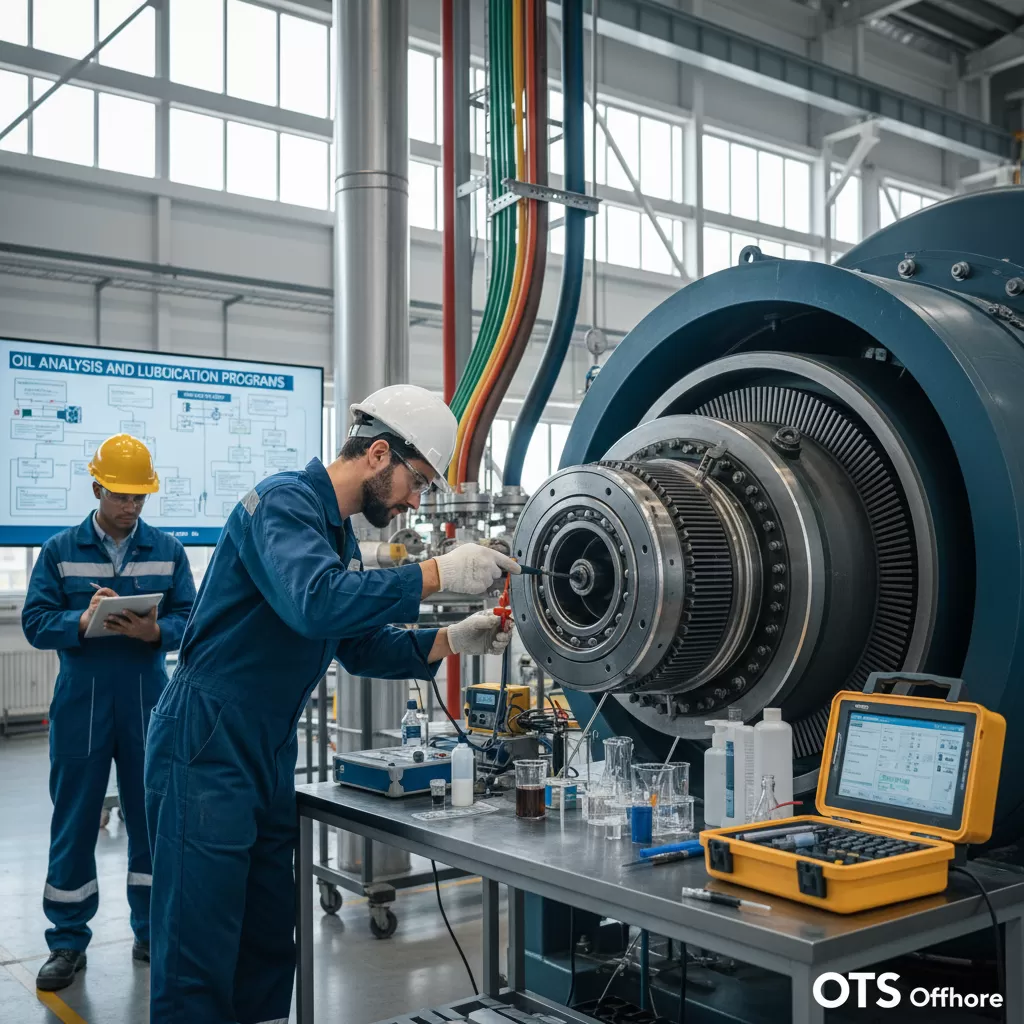
The Synergy of Oil Analysis and Lubrication Programs
An integrated approach to oil analysis and lubrication programs offers a powerful combination for safeguarding turbine bearings. Oil analysis provides the diagnostic data, while the lubrication program dictates the corrective actions and preventative strategies.
Oil analysis involves the laboratory examination of used lubricant samples. This process goes far beyond simple viscosity checks. It encompasses a suite of tests designed to evaluate:
– Lubricant condition: Assessing properties such as viscosity, oxidation levels, total acid number (TAN), and additive depletion.
– Contamination: Identifying the presence and type of wear debris (metals from the machine), particulate matter (dirt, sand), water, and other foreign substances.
– Wear mechanisms: Analyzing the elemental composition to determine which machine components are experiencing abnormal wear.
Based on the findings of the oil analysis, the lubrication program can be adapted and optimized. This might involve:
– Adjusting lubricant type or viscosity.
– Modifying lubrication intervals or methods.
– Implementing enhanced filtration strategies.
– Revising maintenance schedules.
– Investigating and addressing root causes of contamination or wear.
This proactive, data-driven approach, underpinned by robust Analysis Lubrication Programs, is fundamental to extending bearing life.
Key Benefits of Comprehensive Analysis Lubrication Programs for Turbine Bearings
Implementing a well-structured program that integrates oil analysis with strategic lubrication practices yields a multitude of benefits for turbine operations. These benefits translate directly into improved operational efficiency, reduced costs, and enhanced safety.
– Extended Bearing Service Life: This is the primary objective. By identifying and rectifying potential issues before they cause significant damage, the operational lifespan of bearings can be dramatically increased. Oil analysis allows for early detection of wear, contamination, or lubricant degradation, enabling timely interventions that prevent accelerated damage.
– Reduced Unscheduled Downtime: Turbine failures are costly, not only in terms of repair expenses but also lost production. Proactive maintenance informed by oil analysis significantly minimizes the risk of unexpected breakdowns, ensuring higher equipment availability.
– Minimized Maintenance Costs: Early detection of problems often allows for less invasive and less expensive repairs. Instead of a complete bearing replacement due to catastrophic failure, a minor intervention might suffice if the issue is caught early. Furthermore, optimized lubrication practices can reduce lubricant consumption.
– Optimized Performance: A well-lubricated and properly functioning bearing operates with less friction, leading to improved energy efficiency. This is particularly critical in large-scale power generation turbines where even small improvements in efficiency can result in substantial cost savings.
– Enhanced Safety: Bearing failures can sometimes lead to catastrophic events, posing significant safety risks to personnel. By ensuring the integrity of these critical components, the overall safety of the operating environment is enhanced.
– Improved Lubricant Management: Oil analysis provides insights into the effectiveness of the lubricant and the overall lubrication system. This data can inform decisions about lubricant selection, re-lubrication intervals, and filtration strategies, leading to more efficient and cost-effective lubricant management.

The Pillars of Effective Oil Analysis in Turbine Operations
Effective oil analysis for turbine bearings is built upon several key pillars that ensure the accuracy and actionable nature of the data.
– Sample Port Selection and Collection: The integrity of the analysis begins with the sample. Sample ports should be strategically located to represent the lubricant as it circulates through the bearing. Clean sampling techniques are crucial to prevent introducing external contamination into the sample, which could lead to erroneous conclusions. Proper flushing of the sample port and the use of clean sample containers are essential.
– Test Parameter Selection: The suite of tests performed must be tailored to the specific type of turbine, its operating conditions, and the lubricant used. For turbine bearings, common and critical tests include:
– Viscosity at operating temperature: A fundamental property for hydrodynamic lubrication.
– Elemental analysis (spectrometry): Identifies wear metals (iron, copper, chromium, aluminum), indicating which components are wearing, and also detects contaminants like silicon (from dirt).
– Particle counting: Quantifies the number and size of particulate contaminants.
– Water content: Water can degrade lubricant properties and promote corrosion.
– Total Acid Number (TAN): Indicates lubricant oxidation and the depletion of alkaline reserve additives.
– Oxidation levels (e.g., FTIR analysis): Assesses the degradation of the lubricant due to high temperatures and oxygen.
– Additive package analysis: Checks for the depletion of critical additives like anti-wear agents and rust inhibitors.
– Trend Analysis: The true power of oil analysis lies in tracking trends over time. A single oil sample provides a snapshot, but analyzing a series of samples taken at regular intervals allows for the identification of gradual degradation or the onset of abnormal wear. Establishing baseline values from new lubricant and healthy machinery is critical for effective trend analysis.
– Expert Interpretation: Oil analysis data, while objective, requires expert interpretation. An experienced analyst understands the nuances of different lubricants, machine types, and operating environments. They can correlate findings from various tests and provide actionable recommendations rather than just raw data.
Developing a Robust Lubrication Program for Turbine Bearings
A robust lubrication program is the practical implementation of the insights gained from oil analysis, coupled with best practices in lubricant management.
– Lubricant Selection: Choosing the correct lubricant is fundamental. Factors to consider include:
– Viscosity grade: Must be appropriate for the operating temperature range and bearing design to ensure adequate film strength.
– Base oil type: Mineral oils, synthetic oils, and semi-synthetics offer different performance characteristics. Synthetics often provide superior thermal stability and wider operating temperature ranges.
– Additive package: The additives must be suitable for the demands placed on the lubricant, providing anti-wear, anti-corrosion, oxidation inhibition, and other protective properties.
– Lubrication Intervals and Methods: Re-lubrication schedules should be based on manufacturer recommendations, operating conditions, and data from oil analysis. Over-lubrication or under-lubrication can both be detrimental. Lubrication methods, whether manual greasing, automatic lubricators, or flood lubrication systems, must be appropriate for the bearing type and environment.
– Filtration and Oil Flushing: Maintaining lubricant cleanliness is paramount. High-efficiency filtration systems are essential to remove wear debris and particulate contaminants. Regular oil flushing might be necessary during maintenance or if significant contamination is detected to remove accumulated debris.
– Storage and Handling: Proper storage of lubricants in clean, dry conditions prevents contamination before the lubricant is even introduced into the machine. Using dedicated, clean dispensing equipment further minimizes contamination risks.
– Training and Awareness: Personnel responsible for lubrication tasks must be adequately trained in proper techniques, hygiene, and the importance of their role in maintaining equipment reliability.
The Role of Advanced Technologies in Oil Analysis and Lubrication Programs
The field of oil analysis and lubrication management is continuously evolving with the integration of advanced technologies. These innovations enhance the speed, accuracy, and depth of insights available to maintenance teams.
– Online Sensors: Real-time monitoring of key lubricant parameters directly on the turbine can provide immediate alerts for deviations from normal operating conditions. Sensors can measure parameters like viscosity, temperature, and particulate levels, enabling a more responsive approach to potential issues.
– Spectrometric Oil Analysis Program (SOAP) Advancements: Modern spectroscopic techniques offer faster and more precise elemental analysis, allowing for the identification of very low concentrations of wear metals.
– Ferrographic Analysis: This technique separates magnetic and non-magnetic particles in the oil, allowing for the identification of wear particle morphology and size. This can provide valuable clues about the specific type of wear occurring (e.g., cutting, rolling fatigue) and the component responsible.
– Artificial Intelligence (AI) and Machine Learning (ML): AI and ML algorithms are increasingly being used to analyze vast datasets from oil analysis, sensor readings, and operational parameters. These systems can identify complex patterns and predict potential failures with higher accuracy, leading to more effective predictive maintenance strategies.
– Digitalization and Cloud-Based Platforms: Cloud-based platforms facilitate the centralized management of oil analysis data, trend analysis, and the generation of reports. This accessibility and data integration support more informed decision-making and streamlined maintenance workflows within Analysis Lubrication Programs.
Challenges and Considerations in Implementing Analysis Lubrication Programs
While the benefits are clear, establishing and maintaining effective Analysis Lubrication Programs for turbines presents certain challenges.
– Initial Investment: Implementing a comprehensive oil analysis program, including laboratory services or in-house equipment, and investing in quality lubricants and filtration systems, requires an initial financial outlay. However, this investment is typically recouped many times over through reduced downtime and repair costs.
– Expertise Requirement: Developing and managing these programs requires skilled personnel with expertise in tribology, lubricant technology, and maintenance practices. Training and ongoing professional development are crucial.
– Data Management and Integration: Effectively managing and integrating data from various sources (oil analysis, sensor data, maintenance logs) can be complex. Robust data management systems are necessary.
– Cultural Shift: Moving towards a proactive, condition-based maintenance philosophy requires a cultural shift within an organization. This involves buy-in from all levels, from management to front-line operators.
– Specificity for Different Turbine Types: The optimal oil analysis and lubrication program will vary depending on the specific type of turbine (e.g., steam, gas, hydro), its operating environment (e.g., offshore, onshore, high temperature), and the manufacturer’s recommendations. A one-size-fits-all approach is unlikely to be effective.
The Future of Turbine Bearing Maintenance: Predictive and Prescriptive Analytics
The evolution of Analysis Lubrication Programs is moving towards more sophisticated predictive and prescriptive analytics. Instead of simply reacting to data or predicting a failure, the goal is to understand the underlying causes of wear and degradation and to prescribe specific actions to prevent them from occurring or escalating. This involves a deeper integration of:
– Advanced sensor technology providing granular, real-time data.
– Sophisticated algorithms that can identify subtle anomalies and predict failure modes with high confidence.
– Integration with other asset management systems to provide a holistic view of equipment health.
– The ability to learn from past events and continuously improve prediction and prescription models.
This future-oriented approach ensures that lubrication programs are not static but dynamic and adaptive, constantly optimizing for the longest possible bearing life and the highest levels of turbine reliability.
Oil analysis and lubrication programs are indispensable tools for ensuring the longevity and reliability of turbine bearings. By adopting a proactive, data-driven approach, organizations can significantly mitigate risks, reduce operational costs, and maximize the performance of their critical assets.