


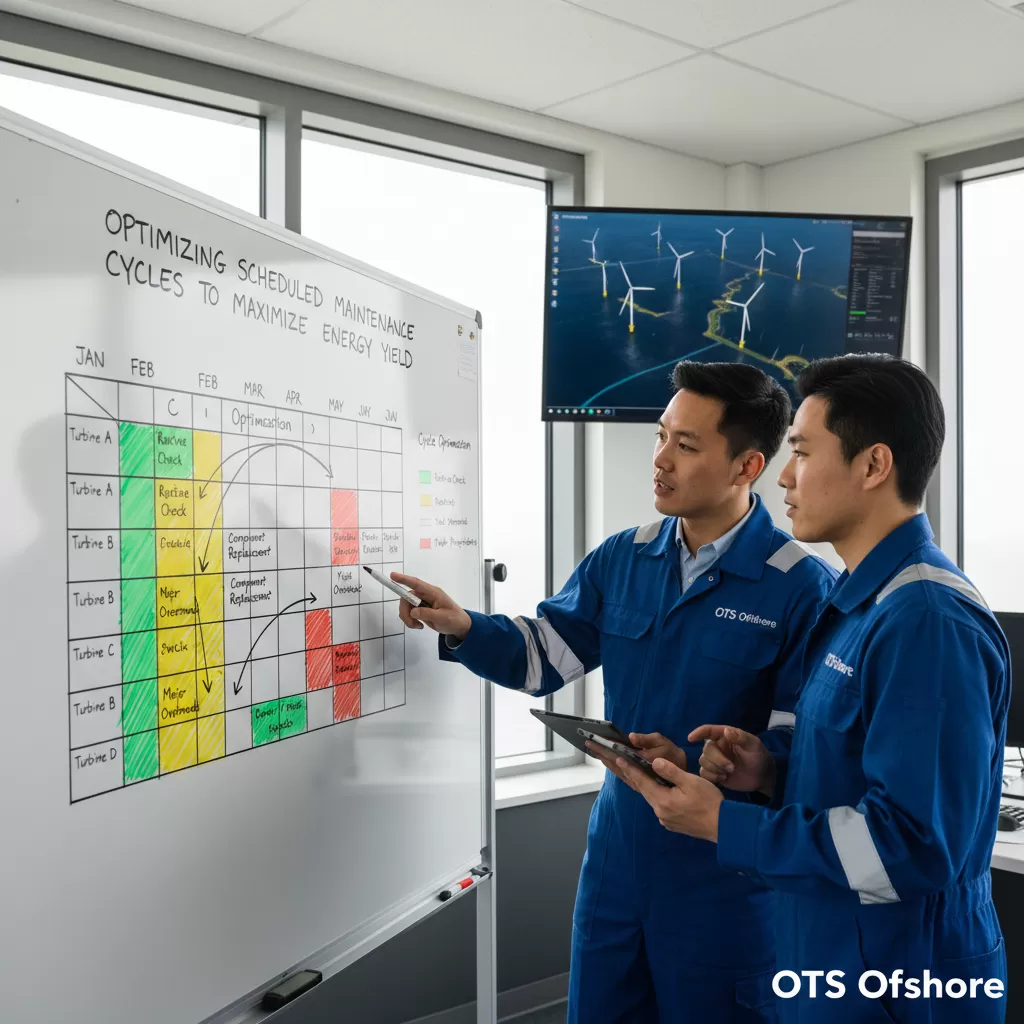
This article delves into the critical aspects of Optimizing Scheduled Maintenance for energy assets, focusing on strategic approaches to enhance operational efficiency and maximize energy yield. We will explore how a well-defined maintenance schedule, incorporating predictive analytics and advanced diagnostics, can significantly reduce downtime and improve overall asset performance in the oil and gas and broader energy sectors.
The Strategic Imperative of Optimizing Scheduled Maintenance for Maximizing Energy Yield
Optimizing Scheduled Maintenance is no longer a mere operational task but a strategic imperative for any entity involved in energy production. In the dynamic and highly competitive oil and gas industry, as well as the rapidly evolving renewable energy landscape, ensuring the consistent and efficient generation of energy is paramount. Unexpected equipment failures and prolonged downtimes can lead to substantial financial losses, environmental risks, and a significant reduction in overall energy yield. Therefore, a proactive and intelligently designed approach to scheduled maintenance is fundamental to achieving sustained operational excellence and maximizing the return on investment for critical energy infrastructure. This article will explore the multifaceted strategies and technologies that underpin successful optimizing scheduled maintenance, examining its impact on everything from hydrocarbon extraction to renewable power generation.
Understanding the Core Principles of Optimizing Scheduled Maintenance
At its heart, Optimizing Scheduled Maintenance is about shifting from a reactive or purely time-based maintenance model to a more intelligent, condition-based, and predictive approach. This paradigm shift recognizes that assets have unique operating characteristics and degradation patterns. Traditional methods, such as fixed interval servicing, often lead to either premature component replacement or catastrophic failures due to undetected issues. Optimizing scheduled maintenance seeks to align maintenance activities precisely with the actual condition and performance of the equipment, thereby minimizing unnecessary interventions and preventing critical failures.
This involves a deep understanding of asset criticality, failure modes, and the cost implications of both maintenance activities and asset downtime. It’s a holistic process that integrates data from various sources to inform decision-making. Key to this process is the establishment of robust data collection systems that capture real-time operational parameters, historical performance data, and environmental conditions. This data then forms the foundation for sophisticated analysis and the development of optimized maintenance schedules.
The goal is not simply to perform maintenance, but to perform the *right* maintenance, at the *right* time, by the *right* personnel, using the *right* resources. This nuanced approach ensures that maintenance activities are targeted, efficient, and directly contribute to the sustained high performance of energy assets.
The Evolution from Traditional to Optimized Maintenance
Historically, maintenance strategies in the energy sector often relied on either:
– Reactive maintenance: Fixing equipment after it breaks down. This approach is costly due to unplanned downtime, potential for secondary damage, and safety risks.
– Preventive maintenance: Performing scheduled maintenance at fixed intervals, regardless of the actual condition of the equipment. While better than reactive maintenance, it can lead to over-maintenance or under-maintenance.
Optimizing Scheduled Maintenance represents a significant leap forward, leveraging advancements in technology and data analytics. This evolution is driven by the increasing complexity of energy assets, the relentless pressure to improve operational efficiency, and the growing awareness of the economic and environmental consequences of asset failure. The modern approach emphasizes understanding the intrinsic health of each asset, rather than relying on generalized maintenance plans.

Key Pillars Supporting Optimizing Scheduled Maintenance
Successful implementation of Optimizing Scheduled Maintenance hinges on several interconnected pillars, each contributing to a more efficient and effective maintenance strategy.
Advanced Data Acquisition and Monitoring
The foundation of any optimized maintenance program is the continuous and accurate collection of data. This involves deploying a network of sensors and monitoring systems across critical assets.
– Real-time sensor data: This includes parameters such as temperature, pressure, vibration, flow rates, electrical current, and voltage. Modern sensor technologies are increasingly sophisticated, providing granular insights into operational health.
– Historical performance logs: Detailed records of past operational performance, including load conditions, output, and any anomalies detected.
– Environmental data: Factors like ambient temperature, humidity, and corrosive atmospheric conditions can significantly impact asset degradation and must be considered.
– Maintenance history: Comprehensive records of all past maintenance activities, including repairs, replacements, and inspections.
The quality and comprehensiveness of this data are crucial. Without reliable data, any analysis or decision-making process will be flawed, leading to suboptimal maintenance strategies. Investments in robust data acquisition systems are therefore non-negotiable for effective optimizing scheduled maintenance.
Predictive Analytics and Machine Learning
Once data is collected, sophisticated analytical techniques are employed to predict potential failures and identify optimal maintenance windows.
– Vibration analysis: Detecting abnormal vibration patterns can indicate bearing wear, imbalance, or misalignment in rotating machinery.
– Thermal imaging: Identifying hotspots can reveal electrical connection issues, insulation degradation, or fluid leaks.
– Oil analysis: Examining lubricant samples for wear particles, contamination, or chemical changes provides insights into the internal health of machinery.
– Machine learning algorithms: These algorithms can analyze vast datasets to identify complex patterns and correlations that human analysis might miss, enabling more accurate predictions of remaining useful life (RUL).
These advanced analytical tools transform raw data into actionable intelligence, allowing maintenance teams to anticipate problems before they lead to failures. This predictive capability is a cornerstone of optimizing scheduled maintenance, enabling a proactive rather than reactive stance.
Condition-Based Maintenance (CBM) Integration
Condition-Based Maintenance is a direct application of the insights gained from data acquisition and predictive analytics. Instead of adhering to a fixed schedule, maintenance is performed only when monitoring indicates that it is necessary.
– Triggered inspections and repairs: Maintenance activities are initiated based on specific condition thresholds being met or predicted to be met in the near future.
– Dynamic scheduling: Maintenance schedules become flexible and adaptable, adjusting based on the real-time condition of assets.
CBM ensures that maintenance is performed when it’s most beneficial, preventing unnecessary interventions and associated costs, while also mitigating the risk of equipment failure.
Reliability-Centered Maintenance (RCM) Principles
Optimizing Scheduled Maintenance often draws heavily from the principles of Reliability-Centered Maintenance (RCM). RCM is a systematic approach to identifying the most effective maintenance strategy for each asset based on its criticality and the potential consequences of its failure.
– Failure Mode and Effects Analysis (FMEA): Identifying potential failure modes of an asset and their causes and effects.
– Criticality assessment: Ranking assets based on their importance to operational continuity, safety, and environmental impact.
– Strategy selection: Determining the most appropriate maintenance task (e.g., predictive, preventive, corrective) for each failure mode.
RCM provides a structured framework for making informed decisions about where to focus maintenance efforts and resources, ensuring that the most critical assets receive the most effective maintenance.
Benefits of Optimizing Scheduled Maintenance for Energy Yield
The impact of implementing a robust Optimizing Scheduled Maintenance program extends far beyond simply keeping equipment running. It directly contributes to maximizing energy yield through several significant benefits.
Reduced Unplanned Downtime
This is perhaps the most immediate and impactful benefit. By predicting and preventing failures, unplanned shutdowns are significantly minimized. Unplanned downtime directly translates to lost production and, consequently, reduced energy yield.
Increased Asset Longevity and Performance
Regular, condition-appropriate maintenance prevents minor issues from escalating into major problems. This proactive approach extends the operational life of expensive energy assets and ensures they operate closer to their optimal performance specifications, leading to higher energy output over their lifespan.
Enhanced Operational Efficiency
When assets are reliably performing at their peak, the entire energy production chain becomes more efficient. Reduced wear and tear, optimal operating parameters, and fewer interruptions contribute to a smoother, more productive operation. This translates to more energy produced for the same or lower input costs.
Improved Safety and Environmental Compliance
Preventing equipment failures often means preventing hazardous situations, such as leaks of flammable materials or uncontrolled releases of energy. This directly enhances safety for personnel and the surrounding environment, while also ensuring compliance with stringent environmental regulations, which can otherwise lead to costly fines and operational disruptions.
Optimized Resource Allocation
By understanding the true needs of assets, maintenance teams can allocate labor, parts, and budget more effectively. This avoids overspending on unnecessary maintenance for healthy equipment and ensures that resources are available when and where they are truly needed for critical interventions.
Lower Maintenance Costs
While there is an upfront investment in technology and data analytics, the long-term cost savings are substantial. Reduced emergency repairs, less waste from over-maintenance, and optimized labor deployment all contribute to a lower total cost of ownership for energy assets.

Technologies Driving Optimizing Scheduled Maintenance
The advancement and adoption of various technologies are instrumental in enabling sophisticated Optimizing Scheduled Maintenance strategies.
– Internet of Things (IoT) sensors: Ubiquitous deployment of smart sensors that collect and transmit data wirelessly in real-time.
– Cloud computing and big data analytics platforms: Enabling the storage, processing, and analysis of massive volumes of sensor and operational data.
– Artificial intelligence (AI) and machine learning (ML): Developing predictive models for failure detection, RUL estimation, and anomaly identification.
– Digital twins: Virtual replicas of physical assets that can be used for simulation, testing, and predictive maintenance scenarios.
– Augmented Reality (AR) and Virtual Reality (VR): Assisting technicians with remote diagnostics, guided repairs, and training.
– Asset Performance Management (APM) software: Integrated platforms that consolidate data, analytics, and maintenance workflows.
These technologies work in concert to provide a comprehensive view of asset health and performance, empowering maintenance teams to make data-driven decisions that optimize maintenance schedules and maximize energy yield.
Challenges and Considerations in Implementation
While the benefits are clear, implementing Optimizing Scheduled Maintenance is not without its challenges.
– Data integration and quality: Ensuring that data from disparate systems is accurate, standardized, and accessible.
– Skill gap: Requiring personnel with expertise in data analytics, AI, and advanced maintenance technologies.
– Initial investment: The upfront cost of sensors, software, and training can be significant.
– Cultural shift: Moving from traditional reactive or preventive mindsets to a proactive, data-driven culture requires strong leadership and change management.
– Cybersecurity: Protecting sensitive operational data from cyber threats is paramount.
Addressing these challenges proactively through strategic planning, investment in training, and robust cybersecurity measures is crucial for successful adoption and long-term benefits.
The continuous quest for higher energy yields and greater operational efficiency in the energy sector necessitates a sophisticated approach to asset management. Optimizing Scheduled Maintenance stands as a critical strategy, enabling organizations to move beyond traditional maintenance paradigms and embrace a future where data-driven insights dictate operational interventions. By integrating advanced technologies and analytical capabilities, energy producers can ensure their assets operate at peak performance, minimizing downtime and maximizing the valuable energy they deliver to the world.