

Quality Control Welding stands as a critical pillar in the offshore rig fabrication industry, ensuring structural integrity, operational safety, and longevity. This article delves into the comprehensive aspects of quality control and welding inspection essential for the successful construction of offshore platforms, exploring the technologies, standards, and best practices that safeguard these vital energy infrastructure projects.
The Imperative of Rigorous Quality Control and Welding Inspection in Offshore Fabrication
The offshore oil and gas industry demands unparalleled levels of precision and reliability. Within this demanding sector, the fabrication of offshore rigs represents a monumental undertaking, where the integrity of every weld directly impacts the safety of personnel, the environment, and the continuity of energy production. Consequently, stringent Quality Control Welding and inspection protocols are not merely procedural requirements; they are fundamental necessities. This article will explore the intricate processes, advanced techniques, and the unwavering commitment to excellence that define Quality Control Welding and inspection in offshore rig fabrication, ensuring these colossal structures withstand the harshest marine environments and operational stresses. From the initial material selection to the final structural verification, a multi-layered approach to Quality Control Welding is paramount. This comprehensive examination will highlight the key stages, emerging technologies, and the vital role of skilled personnel in upholding the highest standards. Understanding the nuances of offshore welding challenges, such as accessibility, environmental conditions, and the diverse materials employed, is crucial for implementing effective Quality Control Welding strategies.
The Foundational Principles of Quality Control Welding in Offshore Rig Construction
At its core, Quality Control Welding in offshore rig construction is driven by the need to prevent catastrophic failures. These structures operate in environments characterized by extreme pressures, corrosive saltwater, and dynamic forces. A single compromised weld can lead to leaks, structural collapse, and significant environmental damage. Therefore, the principles guiding Quality Control Welding are built upon a bedrock of risk mitigation and performance assurance. This involves a systematic approach that encompasses material traceability, weld procedure qualification, welder certification, and a robust inspection regime. The ultimate goal is to ensure that all welds meet or exceed the design specifications and applicable industry codes and standards. The selection of appropriate welding consumables, understanding the metallurgy of base materials, and controlling heat input are all critical aspects of achieving sound welds. Furthermore, the design of the welded joints themselves plays a significant role in their inspectability and ultimate performance.
Material Integrity and Traceability
The journey of Quality Control Welding begins long before the welding torch is ignited. The selection and sourcing of high-quality materials are paramount. Steel grades used in offshore structures must possess specific mechanical properties, including high yield strength, toughness at low temperatures, and resistance to hydrogen-induced cracking. Each batch of material undergoes rigorous testing to verify its chemical composition and mechanical characteristics. Traceability is maintained throughout the fabrication process, ensuring that the origin and certification of every piece of material used can be documented. This meticulous attention to detail prevents the use of substandard or inappropriate materials, which could compromise the integrity of the entire structure. Documentation, including mill test certificates (MTCs), forms an indispensable part of the Quality Control Welding process.
Weld Procedure Qualification (WPQ) and Welder Performance Qualification (WPQ)
Before any welding commences on an offshore rig, the proposed welding procedures must be thoroughly qualified. Weld Procedure Qualification (WPQ) involves a series of tests conducted under controlled conditions to demonstrate that a specific welding process, using defined parameters and consumables, can produce welds that meet specified mechanical and metallurgical properties. This qualification process is critical for establishing repeatable and reliable welding techniques. Equally important is Welder Performance Qualification (WPQ). Individual welders must prove their proficiency in executing the qualified weld procedures. This typically involves welding test coupons that are then subjected to destructive and non-destructive testing. Only welders who have successfully passed these qualifications are authorized to perform welding work on critical structural components. The ongoing monitoring of welder performance is also a key aspect of Quality Control Welding.
The Spectrum of Welding Inspection Techniques in Offshore Fabrication
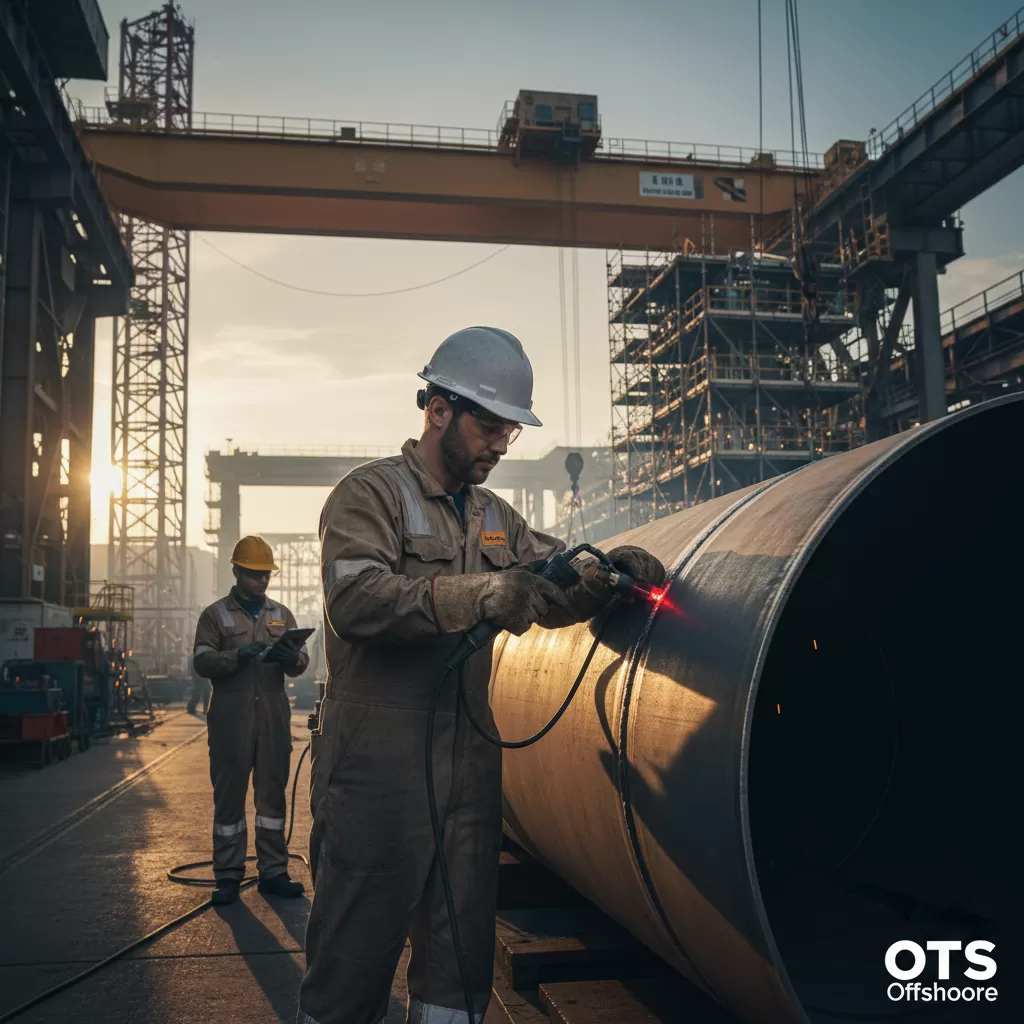
Effective Quality Control Welding is intrinsically linked to comprehensive and accurate inspection. A multi-faceted approach to inspection is employed, utilizing both destructive and non-destructive testing (NDT) methods to assess the quality of welds at various stages of fabrication and throughout the operational life of the rig. The selection of inspection techniques depends on the criticality of the weld, the type of potential defects, and the accessibility of the joint. The objective is to detect any flaws that could compromise the structural integrity and to ensure that the weld metal exhibits the required properties.
Visual Inspection (VT)
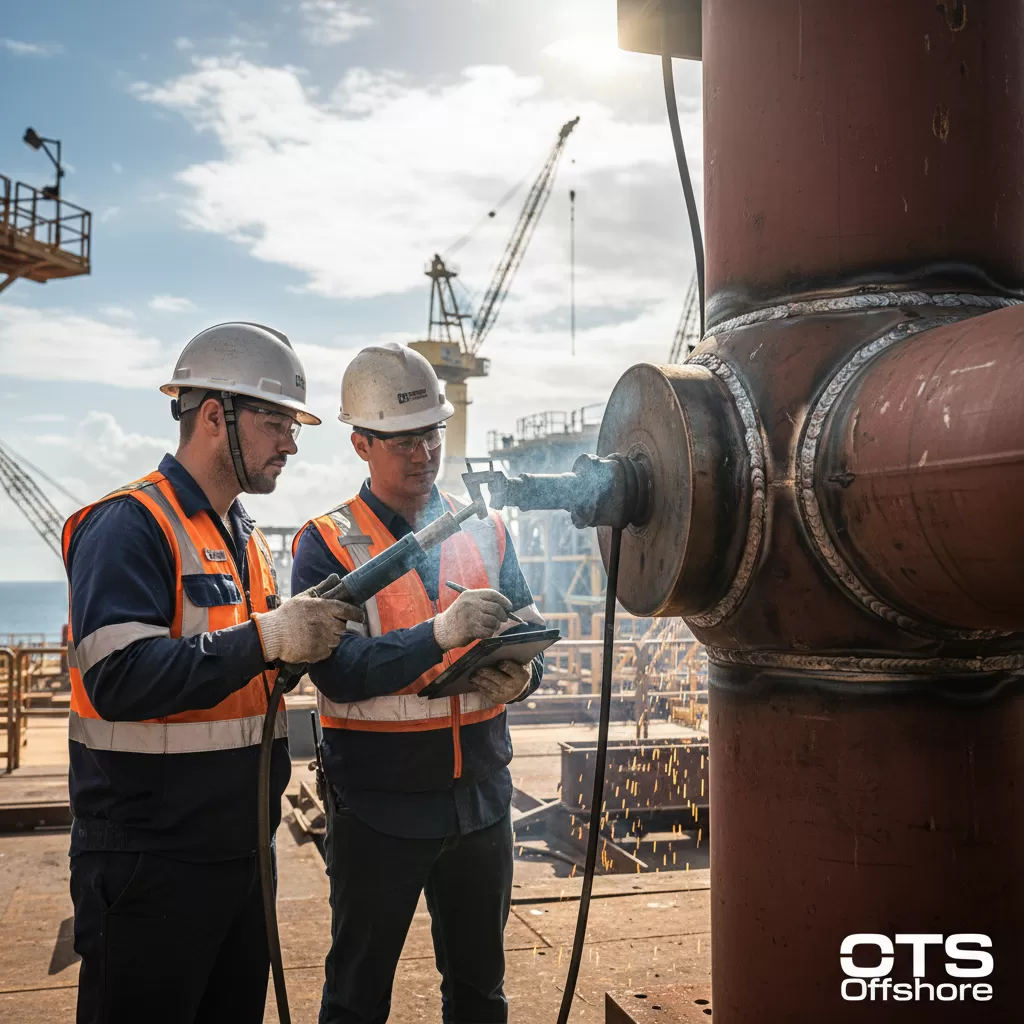
Visual Inspection (VT) is the most fundamental and often the first line of defense in Quality Control Welding. Performed by highly trained inspectors, VT involves a careful examination of the weld surface for discontinuities such as cracks, porosity, undercut, excessive weld bead reinforcement, and improper weld profile. While seemingly simple, effective visual inspection requires a keen eye for detail, an understanding of welding defects, and the application of appropriate lighting and magnification. This initial assessment can often identify obvious issues, preventing further work on a potentially flawed weld and saving significant resources.
Radiographic Testing (RT)
Radiographic Testing (RT) is a powerful non-destructive method used to detect internal defects within a weld, such as porosity, slag inclusions, and lack of fusion. It employs X-rays or gamma rays to penetrate the weld, creating an image on photographic film or a digital detector. Variations in material density, including voids or inclusions, appear as darker or lighter areas on the radiograph, allowing inspectors to identify and quantify defects. RT is particularly effective for detecting volumetric flaws. The interpretation of radiographic images requires specialized training and experience to accurately distinguish between genuine defects and acceptable features.
Ultrasonic Testing (UT)
Ultrasonic Testing (UT) utilizes high-frequency sound waves to detect internal and surface-breaking flaws. A transducer emits sound pulses into the weldment, and these waves travel through the material. When they encounter a discontinuity, such as a crack or void, the sound waves are reflected back to the transducer. The time it takes for the reflected waves to return, and their amplitude, provides information about the size, location, and type of the flaw. UT is highly sensitive to planar defects like cracks and is often used to complement radiographic testing. Advanced UT techniques, such as phased array ultrasonic testing (PAUT) and time-of-flight diffraction (TOFD), offer enhanced capabilities for defect sizing and characterization, crucial for accurate Quality Control Welding assessments.
Magnetic Particle Testing (MT)
Magnetic Particle Testing (MT) is a surface-breaking and near-surface flaw detection technique suitable for ferromagnetic materials. The weld area is magnetized, and then fine magnetic particles are applied. If a surface or near-surface discontinuity exists, it creates a magnetic field leakage, attracting the particles and making the flaw visible as an indication. MT is effective for detecting cracks, laps, and other surface defects. Its speed and relative simplicity make it a valuable tool in Quality Control Welding.
Dye Penetrant Testing (PT)
Dye Penetrant Testing (PT) is another surface-breaking flaw detection method, effective on both metallic and non-metallic materials. A colored or fluorescent penetrant is applied to the weld surface and allowed to seep into any surface-breaking discontinuities. Excess penetrant is removed, and then a developer is applied, which draws the trapped penetrant out of the flaws, making them visible. PT is particularly useful for detecting fine cracks that might be missed by other methods.
Destructive Testing
While non-destructive testing is preferred for in-service inspection and quality assurance during fabrication, destructive testing plays a vital role in the qualification of welding procedures and the verification of weld properties. This can include tensile testing to determine the ultimate strength of the weld, bend testing to assess ductility, impact testing to evaluate toughness at low temperatures, and macro-etching to examine the weld cross-section and identify potential defects. These tests provide definitive data on the mechanical performance of the welds, underpinning the confidence in the Quality Control Welding program.
Advanced Technologies Enhancing Quality Control Welding and Inspection
The offshore industry is a constant adopter of technological advancements to improve efficiency, safety, and the accuracy of Quality Control Welding. Emerging technologies are revolutionizing how welds are monitored, inspected, and their integrity assured.
Automated Welding Systems
Automated welding systems, such as those employing submerged arc welding (SAW) or gas metal arc welding (GMAW) with advanced control systems, offer significant advantages in terms of consistency and repeatability. These systems reduce the variability inherent in manual welding, leading to higher quality welds with fewer defects. The integration of sensors and real-time monitoring capabilities within these automated systems provides valuable data for Quality Control Welding.
Robotic Inspection
Robotic systems, including drones and crawlers equipped with cameras, ultrasonic transducers, and other sensors, are increasingly being deployed for inspecting welds in challenging or hazardous areas. These robots can access confined spaces, work at height, or operate in submerged environments, significantly reducing the risk to human inspectors and providing consistent, repeatable inspection data for Quality Control Welding.
3D Laser Scanning and Digital Twins
3D laser scanning technology enables the precise capture of weld geometry and the overall structure. This data can be compared against design models to identify any deviations or discrepancies, contributing to Quality Control Welding by ensuring dimensional accuracy. The concept of “digital twins” – virtual replicas of the physical rig – further integrates this data, allowing for simulation, analysis, and predictive maintenance, all of which rely on accurate weld data.
Artificial Intelligence (AI) and Machine Learning (ML)
AI and ML are beginning to play a role in analyzing vast datasets generated during welding and inspection. These technologies can identify patterns and anomalies that might be subtle or overlooked by human inspectors, potentially predicting weld failures before they occur. AI-powered systems can also assist in the interpretation of NDT data, enhancing the speed and accuracy of defect detection in Quality Control Welding.
The Human Element: Expertise and Training in Quality Control Welding
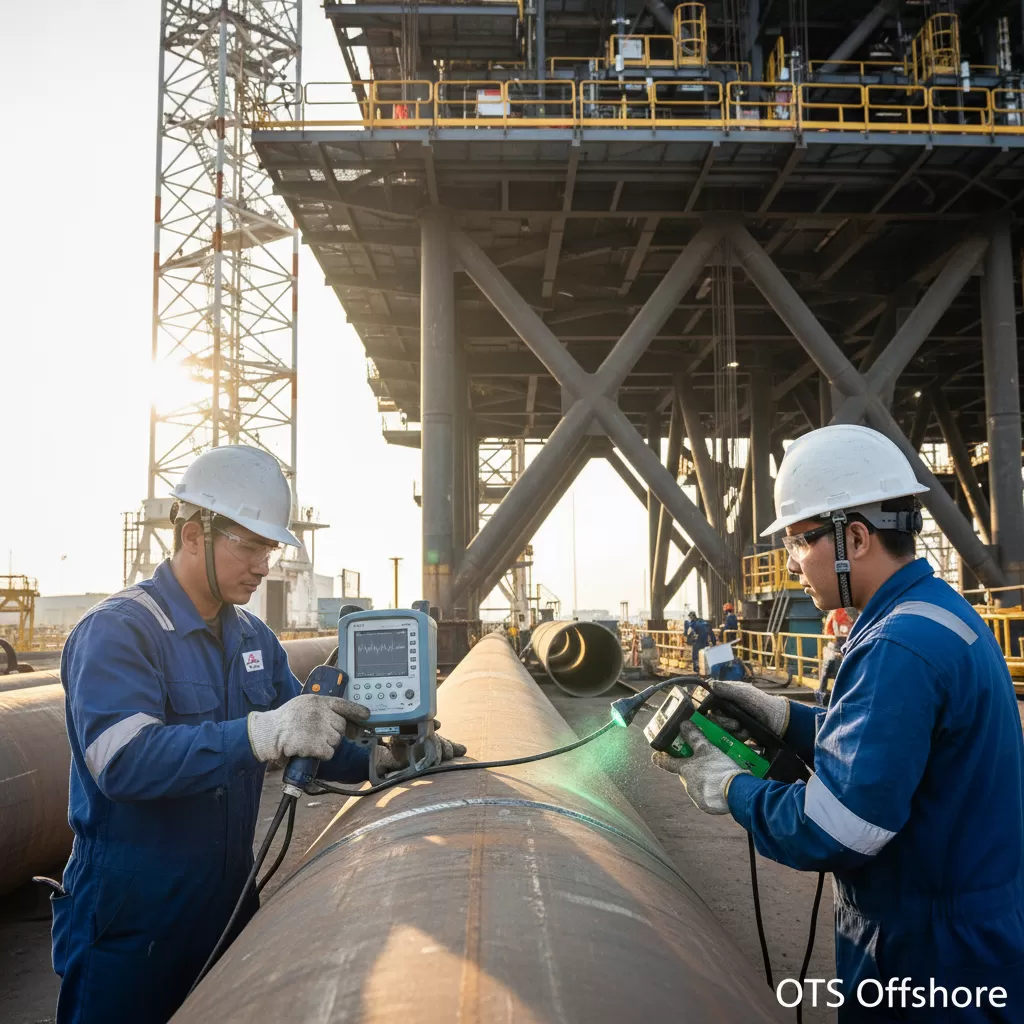
Despite the advent of advanced technologies, the expertise and dedication of human personnel remain indispensable in Quality Control Welding. Highly skilled welders, certified inspectors, welding engineers, and metallurgists are the backbone of any successful quality assurance program.
The Role of Certified Welding Inspectors
Certified welding inspectors, holding credentials from organizations like the American Welding Society (AWS) or the International Institute of Welding (IIW), are the gatekeepers of weld quality. They possess the knowledge and experience to interpret codes and standards, oversee welding operations, conduct inspections using various NDT methods, and make critical decisions regarding weld acceptability. Their judgment, combined with technological tools, ensures adherence to stringent Quality Control Welding requirements.
Continuous Professional Development
The field of welding technology and inspection is constantly evolving. Continuous professional development for personnel involved in Quality Control Welding is therefore essential. This includes ongoing training on new welding processes, inspection techniques, emerging materials, and updated industry standards. Staying at the forefront of knowledge ensures that the quality of offshore structures is consistently maintained.
Collaboration and Communication
Effective Quality Control Welding relies heavily on seamless collaboration and clear communication among all stakeholders, including engineering departments, fabrication teams, inspection agencies, and the client. Open dialogue and a shared understanding of quality objectives are crucial for preventing misunderstandings and ensuring that any issues are addressed promptly and effectively. This collaborative spirit is a vital, though often overlooked, aspect of achieving robust Quality Control Welding.
Challenges in Offshore Welding and the Corresponding Quality Control Measures
Fabricating offshore rigs presents unique challenges that necessitate specialized approaches to Quality Control Welding. These challenges often stem from the remote and harsh operating environment.
Environmental Factors
Welding operations offshore are often subject to adverse weather conditions such as high winds, strong currents, and extreme temperatures. These factors can affect weld quality by causing atmospheric contamination, hindering accessibility, and impacting heat dissipation. Robust wind shielding, controlled environments within fabrication yards, and careful planning of welding activities are crucial. Quality Control Welding procedures must account for these environmental variables.
Accessibility and Working Conditions
Offshore structures involve complex geometries and often require welding in confined spaces, at significant heights, or in submerged conditions. These situations demand specialized welding techniques, advanced rigging, and stringent safety protocols. Inspection in such areas also requires specialized equipment and methodologies to ensure comprehensive coverage and accurate data acquisition for Quality Control Welding.
Material Selection and Welding of Exotic Alloys
The demanding conditions offshore may necessitate the use of specialized materials and exotic alloys to ensure corrosion resistance and structural integrity. Welding these materials can be complex, requiring precise control of welding parameters, inert shielding gases, and specific preheating and post-weld heat treatment procedures. Extensive qualification testing and rigorous adherence to Quality Control Welding procedures are vital for these applications.
Corrosion Prevention
Corrosion is a pervasive threat to offshore structures. The welding process itself can sometimes create microstructural changes that make the weld susceptible to corrosion. Quality Control Welding involves selecting appropriate filler metals and implementing protective measures, such as specialized coatings and cathodic protection, to mitigate corrosion risks in and around the welded joints.
The robust implementation of Quality Control Welding and inspection protocols is not an optional add-on; it is an integral component of successful offshore rig fabrication. It underpins the safety, reliability, and longevity of these critical assets, ensuring the continuous and secure supply of energy to meet global demands. The meticulous application of established principles, coupled with the embrace of advanced technologies and the unwavering dedication of skilled professionals, forms the bedrock of excellence in this specialized field.