

Repair and fabrication services are crucial for maintaining the operational integrity and longevity of offshore process and static equipment. This article delves into the specialized expertise, techniques, and considerations involved in ensuring these critical assets perform reliably in demanding marine environments, covering everything from routine maintenance to complex modifications.
Expert Repair and Fabrication Services for Offshore Process and Static Equipment
The offshore energy sector, encompassing oil, gas, and increasingly, renewable energy operations, relies heavily on robust and dependable process and static equipment. These assets, from complex separation modules and pressure vessels to intricate piping systems and storage tanks, are the backbone of production facilities situated in harsh marine environments. Their continuous and safe operation is paramount, not only for economic viability but also for the safety of personnel and the protection of the environment. Consequently, the demand for specialized repair and fabrication services tailored to the unique challenges of the offshore industry is consistently high. These services are not merely about fixing what is broken; they represent a strategic approach to asset management, lifecycle extension, and operational efficiency. The ability to quickly and effectively address equipment failures, perform planned upgrades, or fabricate new components onsite or in a controlled shipyard environment is critical. This capability ensures minimal downtime, maximizes production uptime, and upholds the stringent safety and quality standards inherent in offshore operations. The scope of these services extends beyond simple welding or patching; it involves a deep understanding of material science, fluid dynamics, structural integrity, and the specific operational demands of each piece of equipment.
The Criticality of Offshore Equipment Maintenance
Offshore platforms and facilities operate under extreme conditions. Salinity, corrosive elements, constant motion due to waves and currents, and the sheer remoteness of these locations place immense stress on all equipment. Process equipment, which handles hydrocarbons and other fluids under high pressure and temperature, is particularly vulnerable to wear and tear. Static equipment, such as storage tanks, pressure vessels, and structural components, also faces degradation from environmental factors and operational loads. Failure in any of these components can lead to catastrophic consequences, including production stoppages, environmental disasters, and severe safety risks. Therefore, proactive and reactive maintenance, supported by expert repair and fabrication services, is not an option but a necessity. This includes regular inspections, non-destructive testing (NDT) to detect early signs of fatigue or corrosion, and timely repairs to prevent minor issues from escalating into major failures. The integration of advanced diagnostic tools and techniques plays a vital role in assessing the condition of equipment and planning the most effective maintenance strategies.
Challenges in Offshore Repair and Fabrication
The offshore environment presents a unique set of challenges that significantly impact repair and fabrication activities. Accessibility to equipment on platforms can be difficult, requiring specialized lifting equipment, scaffolding, and often, working at heights or in confined spaces. Weather conditions are a major disruptive factor; high winds, rough seas, and poor visibility can halt operations and pose significant safety risks. Furthermore, the corrosive nature of the marine atmosphere accelerates material degradation, requiring the use of specialized corrosion-resistant materials and coatings during repairs and fabrication. The logistical complexities of transporting personnel, equipment, and materials to remote offshore locations add another layer of difficulty. Project timelines are often tight, driven by production schedules and the need to minimize costly downtime. This necessitates efficient planning, rapid mobilization, and highly skilled teams capable of performing complex tasks under pressure and in challenging circumstances. The strict regulatory environment also imposes rigorous quality control and safety protocols that must be adhered to at every stage of the repair and fabrication process.
Comprehensive Repair Services for Offshore Assets
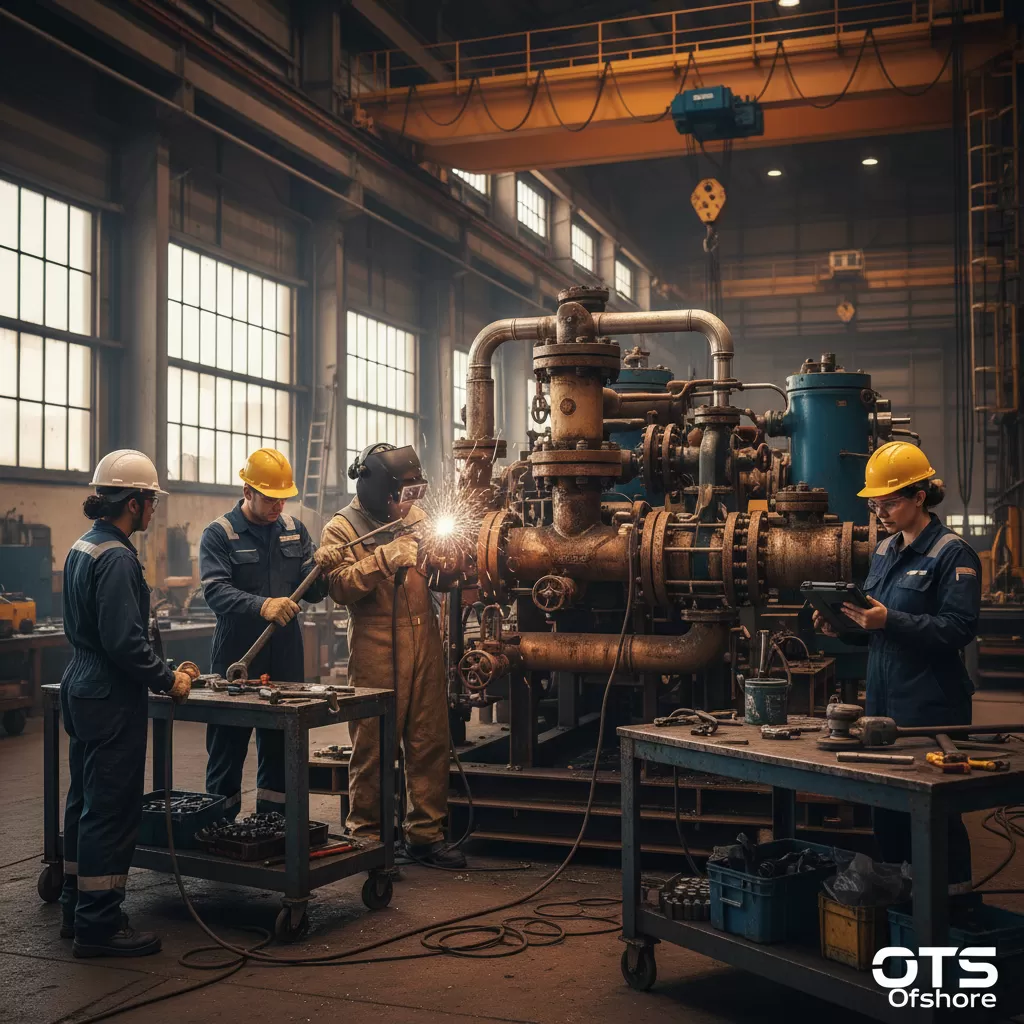
When offshore process and static equipment experiences damage, wear, or a performance degradation, comprehensive repair services are essential to restore it to its optimal operational state. These services encompass a wide range of interventions, from minor patching and welding to complete overhauls and component replacements.
Onshore Fabrication and Repair Capabilities
Many repair and fabrication services begin in controlled onshore facilities before offshore deployment. This allows for more complex fabrication work, precision machining, material preparation, and rigorous quality assurance testing in a safe and efficient environment.
– Precision machining and component refurbishment
– Advanced welding techniques for exotic materials
– Full system testing and commissioning prior to mobilization
– Large-scale module fabrication and integration
Offshore Repair Execution
When immediate intervention is required offshore, or when equipment cannot be safely transported to shore, specialized offshore repair teams are deployed. These teams are equipped with portable tools and expertise to perform repairs directly on the platform or vessel.
– In-situ welding and structural repairs
– Pipe replacement and rerouting
– Vessel and tank repair and relining
– Emergency equipment repairs to minimize downtime
Specialized Repair Techniques
The nature of offshore equipment often demands specialized repair techniques that go beyond conventional methods. These techniques are designed to address specific material challenges, environmental stresses, and operational requirements.
– High-alloy welding for corrosion resistance
– Cladding and overlay welding for wear and corrosion protection
– Gasket and seal replacement with specialized materials
– Composite repair systems for pipelines and vessels
Fabrication Services: Building and Modifying Offshore Equipment
Fabrication services for offshore operations involve the design, construction, and modification of process and static equipment. This can range from building entirely new modules for expansion projects to fabricating replacement parts for aging equipment. The emphasis is on precision, material integrity, and adherence to industry-specific codes and standards.
Custom Module Fabrication
Offshore facilities often require bespoke processing modules designed to meet specific production needs. Fabrication services play a key role in designing and constructing these modules, ensuring they are fit for purpose and can be safely installed offshore.
– Skid-mounted process units
– Wellhead modules and production facilities
– Utility and accommodation modules
– Integration with existing platform infrastructure
Pressure Vessel and Tank Fabrication
Pressure vessels and storage tanks are fundamental to offshore operations, holding and processing various fluids. Fabrication services ensure these critical components are built to exact specifications for safety and performance.
– Design and fabrication of pressure vessels according to ASME and other international codes
– Fabrication of large-volume storage tanks for crude oil, produced water, and chemicals
– Installation of internal and external coatings for corrosion protection
– Manufacturing of specialized tanks, such as glycol or methanol storage
Piping System Fabrication and Spooling
Complex piping networks are the circulatory system of any offshore facility. Fabrication services provide pre-fabricated pipe spools, reducing onsite work and ensuring accuracy and efficiency during installation.
– Fabrication of complex piping systems for oil, gas, and utility lines
– High-precision pipe spool fabrication for modular construction
– Welding of various pipe materials, including carbon steel, stainless steel, and exotic alloys
– Hydrostatic testing and NDT of all fabricated spools
Structural Steel Fabrication
The structural integrity of offshore platforms and substructures is paramount. Fabrication services are responsible for creating the steel frameworks that support all operational equipment and personnel.
– Fabrication of platform decks, legs, and bracing
– Construction of helidecks and crane pedestals
– Fabrication of support structures for process equipment and pipelines
– Supply of bespoke structural steel components for offshore installations
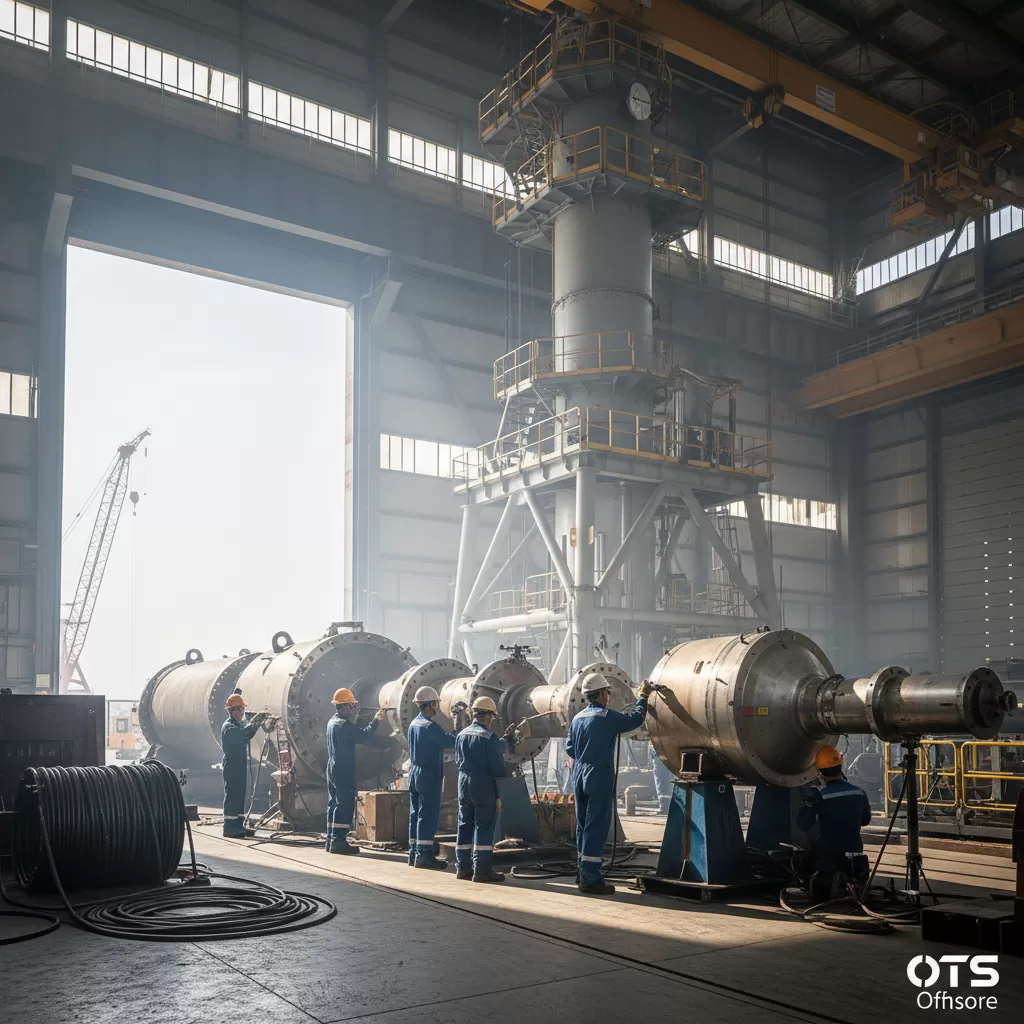
Material Selection and Advanced Welding for Offshore Environments
The success of both repair and fabrication services in the offshore sector hinges on the correct selection of materials and the application of advanced welding techniques capable of withstanding the relentless corrosive and mechanical stresses.
Corrosion-Resistant Materials
The saline and humid offshore atmosphere is a potent corrosive agent. Therefore, the selection of materials that offer superior resistance to corrosion is a primary consideration.
– Stainless steels (e.g., 316L, duplex, super duplex) for their excellent corrosion resistance
– Nickel alloys for extremely corrosive environments and high temperatures
– Titanium alloys for specialized applications requiring high strength and exceptional corrosion resistance
– Advanced coatings and linings to provide an additional barrier against degradation
Advanced Welding Technologies
Welding offshore is inherently more challenging due to environmental factors and the need for flawless joints that can withstand high pressures and stresses. Advanced welding technologies ensure the integrity of these critical connections.
– Gas Tungsten Arc Welding (GTAW/TIG) for precise, high-quality welds on thin materials and exotic alloys
– Shielded Metal Arc Welding (SMAW/Stick) for robust welds in challenging field conditions
– Gas Metal Arc Welding (GMAW/MIG) for faster deposition rates on thicker materials
– Submerged Arc Welding (SAW) for high-quality, high-deposition welds on large structures and vessels
– Orbital welding for highly consistent and precise pipe-to-pipe connections
Quality Assurance and Control
The rigorous standards of the offshore industry demand an unwavering commitment to quality assurance and control throughout the repair and fabrication process. This is not merely a procedural step but a fundamental requirement for safety and operational reliability.
Non-Destructive Testing (NDT)
NDT methods are indispensable for verifying the integrity of welds and materials without causing damage. They are employed at multiple stages of repair and fabrication.
– Ultrasonic Testing (UT) to detect internal flaws in welds and materials
– Radiographic Testing (RT) for volumetric inspection of weld integrity
– Magnetic Particle Testing (MT) and Dye Penetrant Testing (PT) for surface defect detection
– Eddy Current Testing (ECT) for detecting surface and near-surface flaws in conductive materials
Hydrostatic Testing
After fabrication or significant repair, pressure vessels, piping systems, and other equipment are subjected to hydrostatic testing to verify their structural integrity and leak-tightness under pressure. This simulation ensures the equipment can safely handle its intended operating pressures.
Documentation and Certification
Comprehensive documentation and certification are crucial for demonstrating compliance with industry standards, regulatory requirements, and client specifications. This includes detailed material traceability, welding procedures, inspection reports, and final certification of all work performed.
The Role of Technology in Modern Offshore Repair and Fabrication
Technological advancements are continuously transforming the landscape of offshore repair and fabrication services, enhancing efficiency, accuracy, and safety.
Digitalization and BIM
Building Information Modeling (BIM) and other digital tools are increasingly used for design, planning, and execution. This allows for better visualization, clash detection, and improved coordination between engineering, fabrication, and offshore installation teams.
Robotics and Automation
The adoption of robotics and automation in welding and inspection processes is improving consistency, reducing human exposure to hazardous environments, and increasing throughput.
Advanced Inspection Tools
Technological innovations in NDT, such as phased array ultrasonic testing (PAUT) and guided wave testing, provide more detailed and efficient inspection capabilities for complex geometries and larger structures.
Data Analytics and Predictive Maintenance
The collection and analysis of operational data from equipment, combined with advanced analytics, enable predictive maintenance strategies. This allows for proactive repairs before failures occur, further optimizing asset performance and minimizing downtime.
The effective provision of repair and fabrication services for offshore process and static equipment demands a unique blend of specialized engineering knowledge, practical hands-on expertise, stringent quality control, and a deep understanding of the demanding offshore operational environment. It is a critical enabler for the continued safe and efficient production of energy resources worldwide.