


Structural Health Monitoring (SHM) has emerged as a critical discipline in ensuring the long-term integrity and operational efficiency of offshore wind turbine foundations. This comprehensive approach employs advanced sensing technologies and data analysis techniques to detect, diagnose, and predict potential structural issues before they escalate into catastrophic failures. The proactive nature of SHM is paramount in the harsh marine environment, where offshore wind farms face constant challenges from wave loading, wind forces, and corrosive seawater.
The Indispensable Role of Structural Health Monitoring in Offshore Wind Energy
The escalating global demand for renewable energy sources has propelled the offshore wind sector into a period of rapid expansion. As these colossal structures are deployed in increasingly remote and challenging marine environments, the necessity for robust and reliable infrastructure becomes paramount. At the heart of ensuring this reliability lies Structural Health Monitoring (SHM). This advanced methodology transcends traditional inspection techniques, offering a continuous, data-driven insight into the condition of offshore wind turbine foundations. The financial implications of unexpected downtime, structural damage, or complete foundation failure are substantial, encompassing repair costs, lost energy production, and potential environmental remediation. Therefore, implementing a sophisticated SHM system is not merely a preventative measure but a strategic investment in the long-term viability and profitability of offshore wind projects. The data generated by SHM systems allows for predictive maintenance, enabling operators to schedule interventions proactively, thereby minimizing operational disruptions and maximizing asset lifespan. The inherent complexities of offshore environments, including extreme weather events, tidal currents, and marine growth, exert continuous stress on foundation structures. Understanding the cumulative impact of these environmental factors is crucial for maintaining structural integrity. SHM provides the granular data necessary to assess these impacts accurately. Furthermore, as wind farms age and components approach the end of their design life, SHM becomes even more vital in monitoring degradation and making informed decisions about extending operational periods or planning for decommissioning. The evolution of SHM technologies, from passive sensors to active interrogation systems, continuously enhances its diagnostic capabilities. The insights gleaned from SHM data also contribute to the refinement of design codes and manufacturing standards for future offshore wind turbine foundations, fostering a cycle of continuous improvement within the industry. This proactive approach to asset management, driven by robust SHM, is fundamental to achieving the ambitious renewable energy targets set by governments worldwide. The integration of SHM into the operational framework of offshore wind farms represents a significant advancement in ensuring the safety, efficiency, and economic sustainability of this vital renewable energy sector.
Key Challenges in Monitoring Offshore Wind Turbine Foundations
The offshore environment presents a unique and formidable set of challenges that significantly complicate the implementation and effectiveness of Structural Health Monitoring for wind turbine foundations. These challenges stem from the inherent nature of the marine setting and the scale of the infrastructure involved.
– Environmental Extremities: Offshore foundations are constantly subjected to harsh weather conditions, including powerful storms, high winds, and significant wave action. These forces impart dynamic loads and vibrations that can lead to fatigue damage and structural degradation over time. The corrosive nature of seawater also accelerates material deterioration, particularly in steel structures.
– Accessibility and Maintenance: Reaching offshore structures for routine inspections or repairs is inherently difficult, time-consuming, and expensive. Adverse sea states can render access impossible for extended periods, leading to delays in crucial maintenance and potential exacerbation of minor issues.
– Data Acquisition and Transmission: Deploying and maintaining sensors in such a challenging environment requires robust, reliable, and waterproof systems. Transmitting large volumes of data from remote offshore locations back to shore for analysis can also be problematic due to connectivity issues and bandwidth limitations.
– Foundation Variability: Offshore wind turbine foundations are diverse, ranging from monopiles and jacket structures to gravity-based foundations and floating platforms. Each type has its own unique structural characteristics and potential failure modes, necessitating tailored SHM strategies.
– Installation Complexity: The installation process itself for offshore foundations is a complex and capital-intensive undertaking. Monitoring the structural integrity during and immediately after installation is crucial to identify any anomalies or damage that may have occurred during transportation and piling.
– Long-Term Performance Assessment: Accurately predicting the long-term performance and remaining useful life of these massive structures requires continuous monitoring and sophisticated data interpretation. Understanding the cumulative effects of cyclic loading and environmental exposure is key.
– Cost-Effectiveness: Implementing comprehensive SHM systems involves significant upfront investment in sensors, data acquisition hardware, software, and ongoing operational costs for data analysis and maintenance. Demonstrating a clear return on investment through reduced operational expenditure and enhanced safety is essential.
– Regulatory Compliance: Adhering to evolving industry standards and regulatory requirements for structural integrity and safety adds another layer of complexity to SHM implementation.
Addressing these multifaceted challenges requires innovative engineering solutions, advanced sensing technologies, and intelligent data analytics to ensure that SHM systems provide accurate, reliable, and actionable insights for the longevity of offshore wind assets.
Advancements in Sensing Technologies for Foundation Monitoring
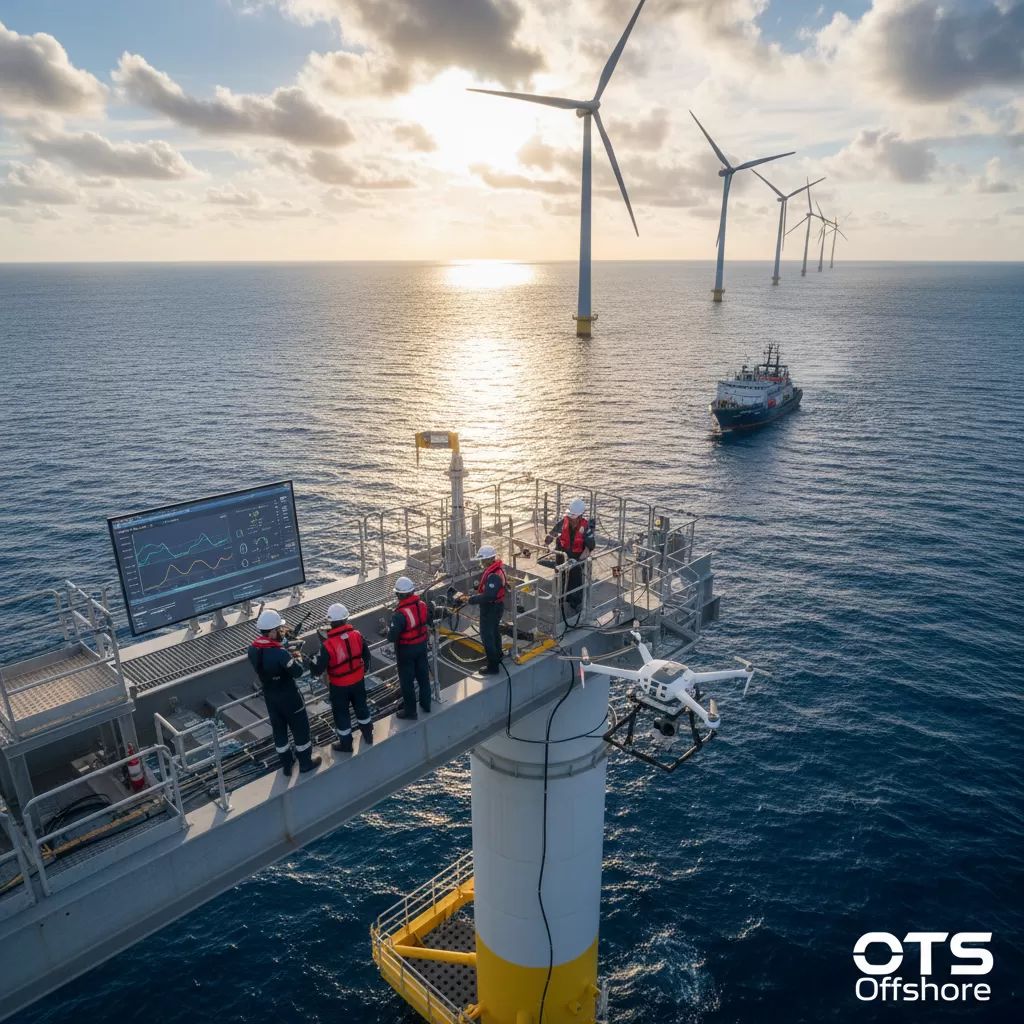
The evolution of Structural Health Monitoring for offshore wind turbine foundations is intrinsically linked to the development and refinement of sensing technologies. These advancements have enabled more comprehensive, accurate, and cost-effective monitoring solutions, moving beyond traditional visual inspections.
– Fiber Optic Sensors: These sensors are highly resilient to the marine environment and offer a multitude of advantages.
– Strain and temperature monitoring: Distributed Fiber Optic Sensing (DFOS) can continuously measure strain and temperature along the entire length of an optical fiber, providing a detailed picture of stress distribution across the foundation.
– Corrosion detection: Specialized fiber optic sensors can be embedded to detect early signs of corrosion by monitoring changes in electrochemical potential.
– Electromagnetic interference immunity: Fiber optics are unaffected by electrical noise common in industrial settings.
– Acoustic Emission (AE) Sensors: AE sensors detect high-frequency stress waves generated by crack initiation, propagation, and plastic deformation within the foundation material.
– Real-time crack detection: AE can pinpoint the location and intensity of active damage events as they occur, providing early warnings of critical structural changes.
– Fatigue monitoring: By tracking AE activity, engineers can gain insights into the fatigue life consumption of the foundation.
– Accelerometers and Vibration Monitoring: These sensors measure the dynamic response of the foundation to environmental loads (wind, waves) and operational forces (turbine operation).
– Modal analysis: Vibration data can be used to determine the natural frequencies and mode shapes of the foundation, which change as structural damage accumulates.
– Structural dynamics: Monitoring changes in vibration patterns can indicate potential issues like scour around the foundation or internal damage.
– Strain Gauges: Traditional electrical strain gauges remain valuable for measuring localized strains and stresses at critical points on the foundation.
– High accuracy: Modern strain gauges offer high precision in measuring deformation.
– Fatigue analysis: They are crucial for monitoring the cumulative fatigue damage under cyclic loading.
– Corrosion Monitoring Sensors: Electrochemical sensors can directly measure corrosion rates and detect the presence of corrosive agents.
– Cathodic protection monitoring: These sensors are vital for ensuring the effectiveness of cathodic protection systems designed to prevent steel corrosion.
– Material degradation assessment: They provide direct insights into the rate of material loss due to corrosion.
– Scour Monitoring Systems: Scour, the erosion of seabed material around the foundation, is a significant risk.
– Acoustic Doppler Current Profilers (ADCPs): These devices can monitor current speeds and directions, providing data to assess scour potential.
– Seabed profilers: Sonar and other acoustic devices can map the seabed topography around the foundation to detect changes indicative of scour.
– Wireless Sensor Networks: The development of robust, low-power wireless communication technologies is enabling easier deployment and data collection from sensors, reducing cabling complexity and maintenance requirements.
– Embedded and Integrated Sensors: Increasingly, sensors are being embedded directly into concrete structures or integrated into composite materials during manufacturing, providing a more permanent and reliable monitoring solution.
The integration of multiple sensor types within a holistic SHM system provides a more comprehensive and robust understanding of the foundation’s structural integrity, enabling proactive maintenance and ensuring the long-term safety and performance of offshore wind energy assets.
Implementing a Robust Structural Health Monitoring Strategy
Establishing an effective Structural Health Monitoring (SHM) program for offshore wind turbine foundations requires a systematic and strategic approach, integrating technological solutions with operational protocols. It is not simply a matter of installing sensors but involves a continuous cycle of data acquisition, analysis, interpretation, and action.
– Define Monitoring Objectives: Clearly articulate what needs to be monitored and why. This includes identifying critical structural components, potential failure modes, and performance indicators relevant to the specific foundation type and site conditions. For instance, monitoring scour depth around monopiles is a key objective, while assessing fatigue in jacket structure welds is critical for other foundation types.
– Site-Specific Risk Assessment: Conduct a thorough assessment of the environmental loads, geological conditions, and operational stresses that the foundation will encounter throughout its lifespan. This informs the selection of appropriate sensing technologies and the placement of monitoring points. Understanding historical weather patterns and seabed characteristics is crucial.
– Sensor Selection and Placement: Choose sensors based on their suitability for the marine environment, accuracy requirements, and the specific parameters being monitored. Strategic placement is critical to capture representative data from critical areas, such as the splash zone, seabed interface, and high-stress regions. Redundancy in critical sensor locations is often advisable.
– Data Acquisition and Transmission Infrastructure: Design a reliable system for collecting data from sensors at appropriate intervals. This includes power supply, data logging, and robust communication systems capable of transmitting data to shore, even in challenging offshore conditions. Edge computing can be utilized to pre-process data offshore, reducing transmission bandwidth requirements.
– Data Management and Storage: Establish a secure and organized system for storing the vast amounts of data generated by SHM systems. This includes metadata management, version control, and secure access protocols. Cloud-based solutions are increasingly popular for their scalability and accessibility.
– Advanced Data Analysis and Interpretation: Employ sophisticated algorithms and analytical techniques to process raw sensor data. This may include signal processing, statistical analysis, finite element modeling, and machine learning for anomaly detection, damage identification, and predictive modeling. The goal is to transform raw data into actionable insights.
– Developing Baseline and Thresholds: Establish baseline structural behavior under normal operating conditions. Define alarm thresholds for various parameters, indicating when a deviation from the baseline requires further investigation. These thresholds should be dynamically updated as more data is collected.
– Predictive Maintenance Integration: Integrate SHM data into the overall maintenance strategy. Use predictive analytics to forecast potential component failures and schedule maintenance proactively, minimizing downtime and optimizing resource allocation. This shifts the paradigm from reactive to predictive maintenance.
– Regular Reporting and Review: Generate regular reports detailing the structural condition, key findings, and any identified risks. Establish a process for reviewing these reports and making informed decisions regarding structural interventions, repairs, or operational adjustments. Periodic expert review of the SHM system itself is also recommended.
– System Calibration and Maintenance: Implement a schedule for regular calibration and maintenance of sensors and data acquisition equipment to ensure ongoing accuracy and reliability. This includes checking sensor integrity, battery life, and communication links.
– Training and Expertise: Ensure that personnel responsible for operating and interpreting the SHM system are adequately trained and possess the necessary expertise in structural engineering, data science, and marine operations.
A well-executed SHM strategy is not a one-time deployment but an ongoing, adaptive process that evolves with the operational life of the wind turbine foundation, contributing significantly to its safety, reliability, and economic performance.

The Economic and Safety Imperatives of SHM
The implementation of Structural Health Monitoring (SHM) for offshore wind turbine foundations is driven by a dual imperative: the substantial economic benefits derived from enhanced operational efficiency and asset longevity, and the non-negotiable requirement for ensuring human safety and environmental protection.
– Reduced Operational and Maintenance Costs: By providing early detection of potential issues, SHM allows for timely and targeted interventions. This proactive approach is significantly more cost-effective than addressing major structural failures that can arise from neglected minor damage. Predictive maintenance, enabled by SHM, minimizes unscheduled downtime, which is a major cost driver in the offshore wind industry due to logistics and vessel chartering expenses.
– Extended Asset Lifespan: Continuous monitoring helps in understanding the cumulative effects of fatigue and environmental degradation. This knowledge allows operators to make informed decisions about extending the operational life of foundations, delaying costly decommissioning and replacement activities, and maximizing the return on investment.
– Increased Energy Production Reliability: Unforeseen structural issues can lead to turbine shutdowns, resulting in lost revenue from electricity generation. SHM helps to maintain structural integrity, thereby ensuring the continuous and reliable operation of wind turbines, leading to predictable energy output.
– Enhanced Safety for Personnel: The offshore environment is inherently dangerous. Structural failures of turbines or their foundations pose severe risks to the personnel working on or near the structures, as well as to maritime traffic in the vicinity. SHM provides critical information to prevent catastrophic failures, thereby safeguarding lives.
– Environmental Protection: A structural failure can lead to significant environmental damage, including the release of hazardous materials. SHM acts as a crucial safeguard against such events, contributing to the sustainable operation of offshore wind farms and protecting marine ecosystems.
– Improved Insurance Premiums: Demonstrating a commitment to robust asset integrity management through SHM can lead to more favorable insurance terms and reduced premiums, reflecting a lower risk profile for the asset owner.
– Data-Driven Decision Making: SHM systems generate valuable data that informs future designs, manufacturing processes, and operational strategies. This feedback loop contributes to the continuous improvement of offshore wind technology, leading to more resilient and cost-effective solutions in the long run.
– Regulatory Compliance and Risk Mitigation: Many regulatory bodies are increasingly emphasizing the importance of structural integrity management. Implementing SHM helps ensure compliance with these regulations and mitigates legal and financial risks associated with structural failures.
The economic rationale for SHM is clear: it transforms asset management from a reactive, cost-intensive undertaking into a proactive, value-generating strategy. Combined with the paramount importance of safety and environmental stewardship, the imperatives for robust Structural Health Monitoring in the offshore wind sector are undeniable and continue to grow as the industry matures and expands into more challenging frontiers.
Future Trends in Offshore Wind Foundation SHM
The field of Structural Health Monitoring (SHM) for offshore wind turbine foundations is in a constant state of evolution, driven by technological innovation, increasing data analytics capabilities, and the growing demands of the offshore renewable energy sector. Several key trends are shaping its future trajectory.
– Integration of Artificial Intelligence (AI) and Machine Learning (ML): The sheer volume of data generated by SHM systems necessitates advanced analytical tools. AI and ML algorithms are becoming indispensable for pattern recognition, anomaly detection, predictive modeling of failure modes, and identifying subtle degradation patterns that might be missed by human analysts. This will lead to more sophisticated prognostics and diagnostics.
– Development of Smart Materials and Self-Sensing Structures: Future foundations may incorporate “smart materials” that can intrinsically monitor their own structural state. This includes materials with embedded sensing capabilities that change their electrical or optical properties in response to stress, strain, or damage, effectively turning the structure itself into a sensor network.
– Enhanced Wireless and IoT Connectivity: The expansion of the Internet of Things (IoT) and advancements in low-power, long-range wireless communication technologies will enable more seamless and ubiquitous data collection from sensors. This will reduce reliance on extensive cabling, simplify installation, and improve data transmission reliability from remote offshore locations.
– Digital Twins for Predictive Analysis: The creation of comprehensive digital twins of offshore wind turbine foundations is gaining traction. These virtual replicas, fed with real-time SHM data, allow for advanced simulations, scenario testing, and highly accurate predictions of structural behavior under various conditions, facilitating optimized maintenance planning and risk assessment.
– Drone and Autonomous Vehicle Integration: Unmanned aerial vehicles (UAVs) and autonomous underwater vehicles (AUVs) equipped with advanced sensors (e.g., LiDAR, thermal imaging, high-resolution cameras) will play a greater role in inspecting hard-to-reach areas of foundations and monitoring for external damage or environmental changes, complementing fixed sensor networks.
– Standardization of Data and Protocols: As the industry matures, there will be a greater push for standardization of data formats, communication protocols, and analytical methodologies. This will enable better interoperability between different SHM systems and facilitate the benchmarking and comparison of performance across various projects and operators.
– Focus on Scour and Environmental Load Monitoring: With increasing deployments in deeper waters and more exposed locations, understanding and mitigating scour effects and accurately quantifying complex environmental loads will remain a critical focus for SHM systems. Advanced seabed monitoring and wave impact measurement technologies will be crucial.
– Cyber-Physical Systems (CPS) for Holistic Asset Management: SHM will become an integral part of broader Cyber-Physical Systems that integrate physical assets, computational models, and networked communication. This holistic approach will enable integrated decision-making across operations, maintenance, and performance optimization of entire wind farms.
– Lifecycle SHM: The scope of SHM will expand to encompass the entire lifecycle of the foundation, from installation and commissioning through operation and decommissioning. This ensures continuous integrity assessment and informed decision-making at every stage.
These emerging trends promise to make Structural Health Monitoring even more powerful, efficient, and integral to the success of the global offshore wind energy industry, ensuring the continued safe, reliable, and cost-effective expansion of this vital renewable energy source.