

The global energy landscape is undergoing a profound transformation, driven by the imperative to decarbonize and enhance operational efficiency. This article delves into the critical shift within the wind energy sector, moving from traditional reactive maintenance strategies to a more sophisticated, proactive approach. We will explore the underlying technologies, benefits, and challenges associated with this evolution, highlighting how it’s reshaping the future of renewable energy operations.
The Global Shift: Transitioning from Reactive to Proactive Maintenance in Wind Energy
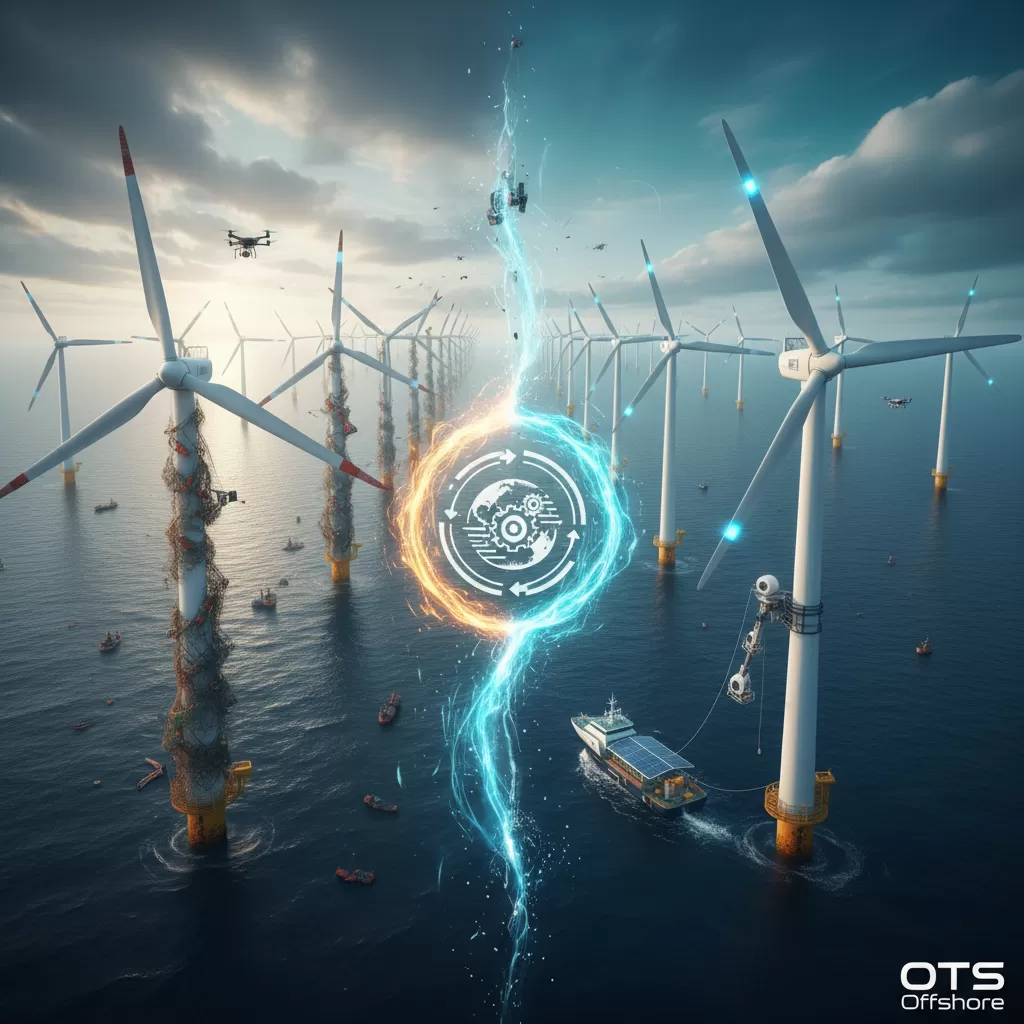
The Global Shift: Transitioning towards proactive maintenance in the wind energy sector represents a paradigm change, moving away from costly, reactive repairs to intelligent, predictive strategies. This evolution is crucial for maximizing asset lifespan, minimizing downtime, and ensuring the economic viability of wind power as a cornerstone of a sustainable energy future. As the global demand for clean energy escalates, the efficient and reliable operation of wind turbines becomes paramount, necessitating a fundamental reevaluation of maintenance protocols. This article explores the drivers, methodologies, and transformative impact of this essential Global Shift: Transitioning.
Understanding the Reactive Maintenance Model in Wind Energy
Historically, wind turbine maintenance has largely operated under a reactive model. This approach dictates that maintenance actions are performed only after a component has failed or is showing clear signs of imminent breakdown. The philosophy behind reactive maintenance is simple: fix it when it’s broken. While seemingly straightforward, this strategy carries significant drawbacks, especially in the context of large-scale, high-value assets like wind turbines situated in remote or offshore environments.
– Breakdown-driven interventions: Repairs are initiated solely in response to operational failures or performance degradation.
– Unscheduled downtime: This leads to unexpected outages, disrupting electricity generation and impacting revenue streams.
– Increased repair costs: Emergency repairs are often more expensive due to expedited logistics, overtime labor, and potential secondary damage caused by component failure.
– Reduced asset lifespan: Repeated failures and the stress on other components from a malfunctioning part can accelerate wear and tear, shortening the overall operational life of the turbine.
– Safety concerns: Equipment failures can pose significant safety risks to maintenance personnel and surrounding areas.
The inherent unpredictability of reactive maintenance makes long-term operational planning exceedingly difficult. Financial forecasting becomes challenging as unexpected repair bills can drastically alter budgetary projections. Furthermore, the environmental impact of unplanned downtime can be indirectly linked to increased reliance on fossil fuels during periods of reduced wind power generation.

The Imperative for Change: Drivers of the Global Shift: Transitioning
Several converging factors are propelling the Global Shift: Transitioning towards proactive maintenance in the wind energy industry. The economic and operational realities of expanding renewable energy portfolios necessitate a more intelligent and forward-thinking approach to asset management.
– Growing installed capacity: The sheer number and geographical dispersion of wind turbines, both onshore and offshore, make reactive maintenance logistically and economically unsustainable.
– Aging turbine fleets: As the first generation of wind turbines reaches the latter half of their operational life, the frequency of component failures naturally increases, highlighting the limitations of a reactive approach.
– Cost reduction targets: The drive to make wind energy more competitive with traditional energy sources demands a significant reduction in operational expenditures, with maintenance being a prime area for optimization.
– Technological advancements: The proliferation of sensors, data analytics capabilities, and artificial intelligence offers unprecedented opportunities to predict and prevent failures.
– Environmental sustainability goals: Ensuring reliable and consistent renewable energy generation is critical to meeting global decarbonization targets. Unplanned outages undermine this objective.
– Increased complexity of turbine technology: Modern wind turbines are intricate systems with sophisticated control mechanisms and power electronics, making failure diagnosis and repair more complex.
The recognition of these drivers has created a strong impetus for the industry to invest in and adopt more advanced maintenance strategies. The Global Shift: Transitioning is not merely a trend; it’s a strategic necessity for the continued growth and success of the wind energy sector.
Defining Proactive Maintenance: A Multi-faceted Approach
Proactive maintenance encompasses a suite of strategies aimed at preventing equipment failures before they occur. This contrasts sharply with the reactive model, focusing on foresight and intervention rather than response. The core principle is to maintain equipment in optimal working condition through scheduled inspections, condition monitoring, and timely interventions based on data-driven insights. Within the wind energy context, this translates to a sophisticated application of various techniques.
– Predictive Maintenance (PdM): This is perhaps the most impactful component of proactive maintenance. PdM utilizes real-time data from sensors to predict when a component is likely to fail. By analyzing parameters such as vibration, temperature, oil debris, and electrical signals, potential issues can be identified weeks or even months in advance.
– Preventive Maintenance (PPM): This involves scheduled maintenance tasks performed at regular intervals or according to specific operating hours. While traditional preventive maintenance is time-based, in a proactive model, it’s often informed by condition monitoring, leading to more optimized scheduling.
– Condition-Based Maintenance (CBM): CBM is closely related to PdM, focusing on monitoring the actual condition of equipment rather than relying on fixed schedules. Maintenance is performed only when indicators suggest it is necessary.
– Reliability-Centered Maintenance (RCM): RCM is a systematic process for determining the maintenance requirements of a system throughout its life cycle. It focuses on preserving the functions of physical assets, identifying failure modes that could affect these functions, and then determining the appropriate maintenance tasks.
The Global Shift: Transitioning is fundamentally about moving towards these data-driven, foresightful maintenance paradigms, significantly reducing reliance on chance and emergency interventions.
The Pillars of Proactive Maintenance: Key Technologies and Methodologies
The successful implementation of proactive maintenance in wind energy relies on a robust integration of several key technologies and methodologies. These elements work in synergy to provide a comprehensive view of turbine health and predict potential issues.
– Condition Monitoring Systems (CMS): CMS are at the heart of proactive maintenance. These systems continuously collect data from various sensors installed on critical turbine components such as gearboxes, generators, bearings, and blades.
– Vibration analysis: Detects anomalies in rotational components, indicating bearing wear, imbalance, or misalignment.
– Thermography: Identifies hotspots in electrical components or bearings that signal increased resistance or friction.
– Oil analysis: Detects wear particles, contaminants, or degradation of lubricant properties in gearboxes and hydraulic systems.
– Acoustic emission monitoring: Captures high-frequency sounds indicative of incipient crack propagation or material stress.
– Electrical signal analysis: Monitors parameters like voltage, current, and power quality to detect issues in generators and power electronics.
– Internet of Things (IoT) and Sensor Networks: The widespread deployment of IoT devices and sophisticated sensor networks provides the granular data necessary for effective condition monitoring. These sensors collect vast amounts of operational and environmental data, transmitting it wirelessly for analysis.
– Big Data Analytics and AI/Machine Learning: Raw sensor data is often overwhelming. Advanced analytics platforms, powered by AI and machine learning algorithms, are essential for processing this data, identifying patterns, and generating actionable insights.
– Anomaly detection: Algorithms can flag deviations from normal operating parameters, indicating potential problems.
– Predictive modeling: Machine learning models can forecast the remaining useful life (RUL) of components based on historical data and current conditions.
– Root cause analysis: AI can assist in identifying the underlying causes of failures, preventing recurrence.
– Digital Twins: A digital twin is a virtual replica of a physical wind turbine. It integrates real-time sensor data with historical performance information to simulate the turbine’s behavior under various conditions. This allows for virtual testing of maintenance strategies and prediction of failure modes without impacting the actual asset.
– Remote monitoring and diagnostics centers: Centralized centers staffed by experts analyze data from multiple wind farms, enabling early detection of issues and facilitating rapid response.
– Advanced robotics and drones: For inspections in hard-to-reach or hazardous areas, particularly offshore, drones and robotic systems equipped with cameras and sensors can conduct detailed visual and thermal inspections, reducing the need for human intervention in risky environments.
Benefits of Transitioning to Proactive Maintenance
The Global Shift: Transitioning to proactive maintenance offers a compelling array of benefits that directly impact the profitability, reliability, and sustainability of wind energy operations. These advantages are crucial for the long-term success of the industry.
– Reduced operational and maintenance (O&M) costs: By preventing catastrophic failures and optimizing maintenance schedules, significant savings can be realized.
– Minimized unplanned downtime: This translates directly to increased energy production and revenue.
– Extended component and asset lifespan: Proactive interventions address issues early, preventing them from causing cascading damage and prolonging the operational life of turbines.
– Optimized spare parts inventory: Better predictability allows for more efficient management of spare parts, reducing holding costs.
– Reduced labor costs: Less emergency call-outs and more planned maintenance reduce overtime and travel expenses.
– Improved turbine reliability and availability: Consistent performance and reduced downtime ensure that wind farms operate closer to their maximum capacity factor.
– Enhanced safety for personnel: By addressing potential issues before they become critical failures, the risks associated with maintenance operations are significantly reduced, especially in challenging offshore environments.
– Optimized performance and energy production: Well-maintained turbines operate more efficiently, maximizing power output. Predictive insights can also inform operational adjustments for peak performance.
– Better resource planning and scheduling: With predictable maintenance needs, operators can plan labor, equipment, and logistics more effectively.
– Data-driven decision making: The wealth of data generated by proactive maintenance systems provides valuable insights for future turbine design, operational strategies, and investment decisions.
Challenges and Considerations in the Global Shift: Transitioning
While the benefits are substantial, the Global Shift: Transitioning to proactive maintenance is not without its challenges. Overcoming these hurdles is essential for widespread adoption and successful implementation.
– Initial investment: Implementing advanced sensor networks, data analytics platforms, and AI software requires significant upfront capital investment.
– Data management and integration: Handling the vast amounts of data generated by modern wind turbines and integrating it from disparate sources can be complex.
– Skillset development: The industry requires personnel with expertise in data science, AI, and advanced analytics, necessitating investment in training and recruitment.
– Cybersecurity: Protecting the sensitive operational data and control systems from cyber threats is a critical concern.
– Cultural resistance to change: Shifting from established reactive maintenance practices to a new, data-driven approach may encounter resistance from some stakeholders.
– Standardization and interoperability: Ensuring that data formats and communication protocols are standardized across different turbine manufacturers and maintenance providers is crucial for seamless integration.
– The “black box” problem of AI: Understanding how AI algorithms arrive at their predictions can sometimes be challenging, requiring transparency and validation mechanisms.
Addressing these challenges requires a strategic approach involving investment in technology, talent development, robust cybersecurity measures, and effective change management. The Global Shift: Transitioning is an ongoing process that necessitates continuous adaptation and learning.

The Future of Wind Turbine Maintenance: A Proactive Horizon
The trajectory of maintenance in the wind energy sector is undeniably towards a fully proactive and predictive future. The Global Shift: Transitioning is not a singular event but an evolutionary process that will continue to accelerate as technology advances and data analytics become more sophisticated.
– Autonomous operations: In the long term, AI-powered systems could potentially manage many aspects of turbine maintenance autonomously, with human intervention limited to complex issues or strategic oversight.
– Integrated asset management: Proactive maintenance will become an integral part of a broader, integrated asset management strategy that considers the entire lifecycle of wind farm assets.
– AI-driven optimization of grid integration: Predictive maintenance data can also be used to forecast energy generation more accurately, aiding grid operators in balancing supply and demand.
– Advanced materials and self-healing technologies: Future advancements in materials science may lead to components that can self-diagnose and even self-repair minor damage, further augmenting proactive maintenance efforts.
The continued evolution of the Global Shift: Transitioning will be driven by the industry’s commitment to innovation and its unwavering pursuit of efficiency and sustainability in renewable energy generation.
Case Studies and Industry Adoption Trends
Leading wind energy operators and manufacturers are increasingly demonstrating the tangible benefits of adopting proactive maintenance strategies. These real-world examples highlight the success of the Global Shift: Transitioning.
– Major wind farm operators have reported significant reductions in unscheduled downtime, often exceeding 20-30%, by implementing condition monitoring and predictive analytics.
– Manufacturers are integrating advanced diagnostic tools directly into their turbine designs, offering predictive maintenance as a key service offering to their clients.
– The offshore wind sector, with its inherent logistical complexities and higher O&M costs, is a particularly strong adopter of proactive maintenance due to the substantial cost savings and safety improvements it offers.
– Investment in digital O&M platforms and data analytics capabilities is a growing trend across the industry, indicating a collective move towards a more intelligent approach to asset management.
– Collaborative efforts between turbine manufacturers, independent power producers, and technology providers are fostering the development of more integrated and effective proactive maintenance solutions.
The increasing adoption rates and positive outcomes from these case studies underscore the inevitability and efficacy of the Global Shift: Transitioning, solidifying its place as the standard for efficient wind energy operations.