

In the Offshore, Oil & Gas, and Industrial sectors, early defect detection is essential for ensuring equipment safety, quality, and reliability.
OTS provides Non-Destructive Testing (NDT) — MT, PT, UT, ECT — to inspect welds and steel structures for Offshore, Oil & Gas, and industrial projects.
What is Non-Destructive Testing (NDT) and Why Is It Important?
Non-Destructive Testing (NDT) is a group of inspection methods used to detect surface and internal defects without damaging or altering the product.
In the offshore industry, early defect detection plays a critical role in ensuring equipment quality, reliability, and operational performance. NDT enables the inspection of materials and welded joints, supporting quality control, project acceptance, and compliance with technical requirements while preserving the integrity of the inspected component.
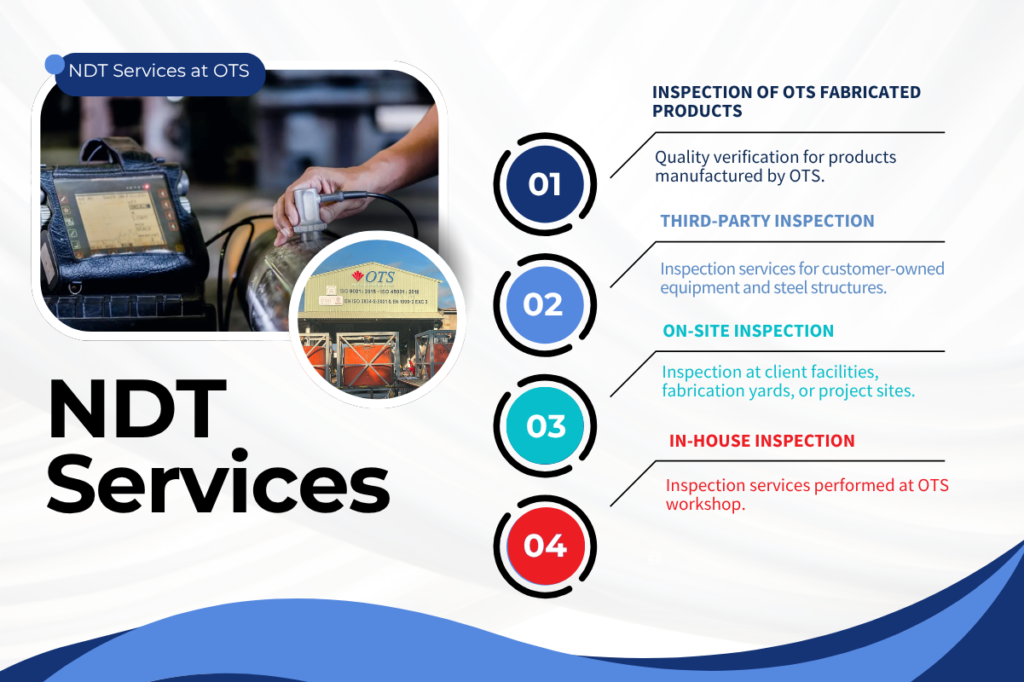
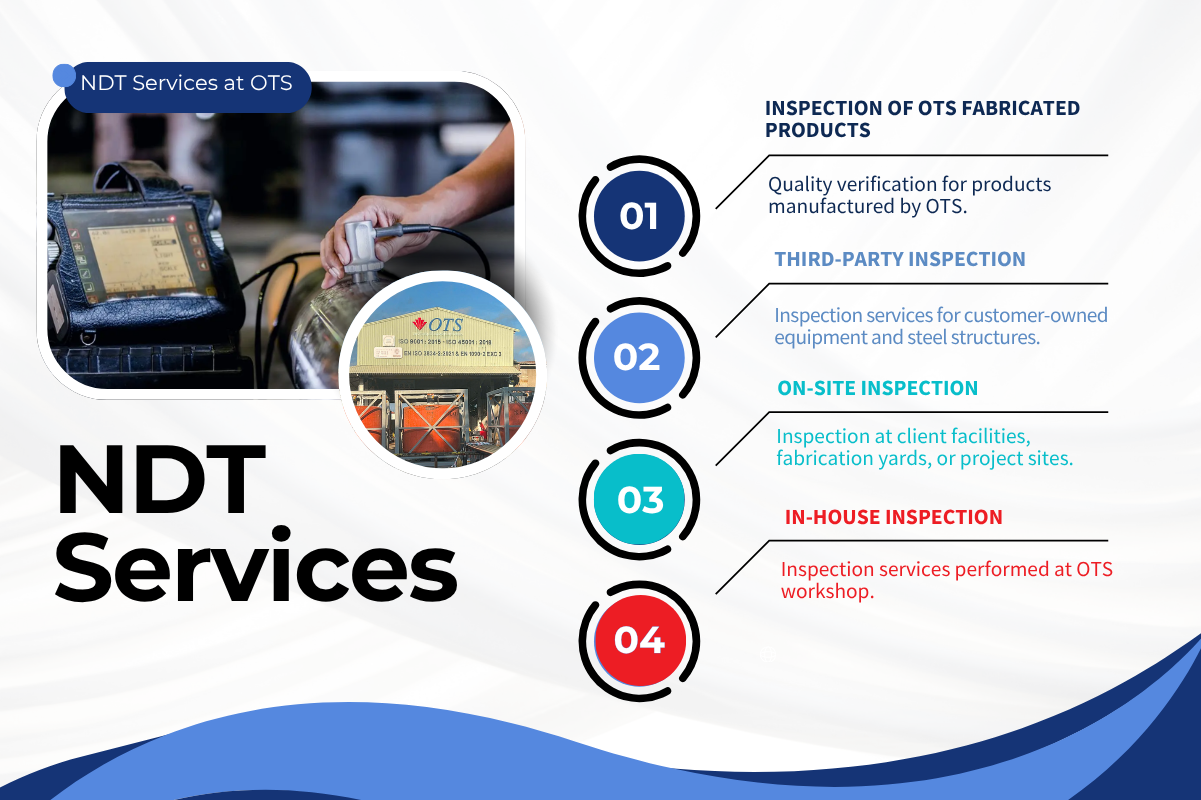
NDT Services at OTS
OTS provides Non-Destructive Testing services for a wide range of equipment and steel structures used in the Offshore, Oil & Gas, and Industrial sectors.
NDT Methods at OTS
Depending on project specifications, OTS applies various Non-Destructive Testing methods to evaluate the quality of materials and welded joints.
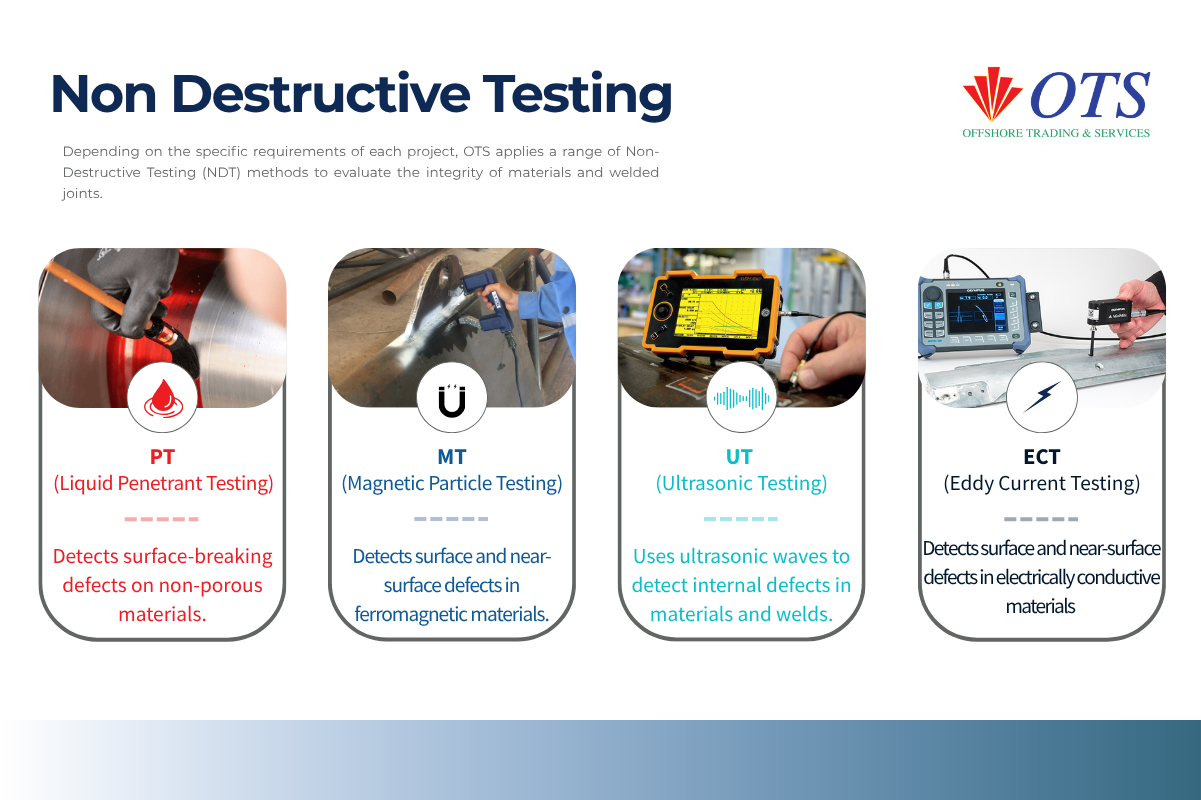
Our inspection capabilities include:
- Magnetic Particle Testing (MT) – Detects surface and near-surface defects in ferromagnetic materials.
- Liquid Penetrant Testing (PT) – Identifies surface-breaking cracks and discontinuities.
- Ultrasonic Testing (UT) – Detects internal defects in materials and welded joints using ultrasonic waves.
- Eddy Current Testing (ECT) – Evaluates surface and near-surface defects in conductive materials.
The appropriate inspection method is selected based on the technical requirements and specifications of each project.
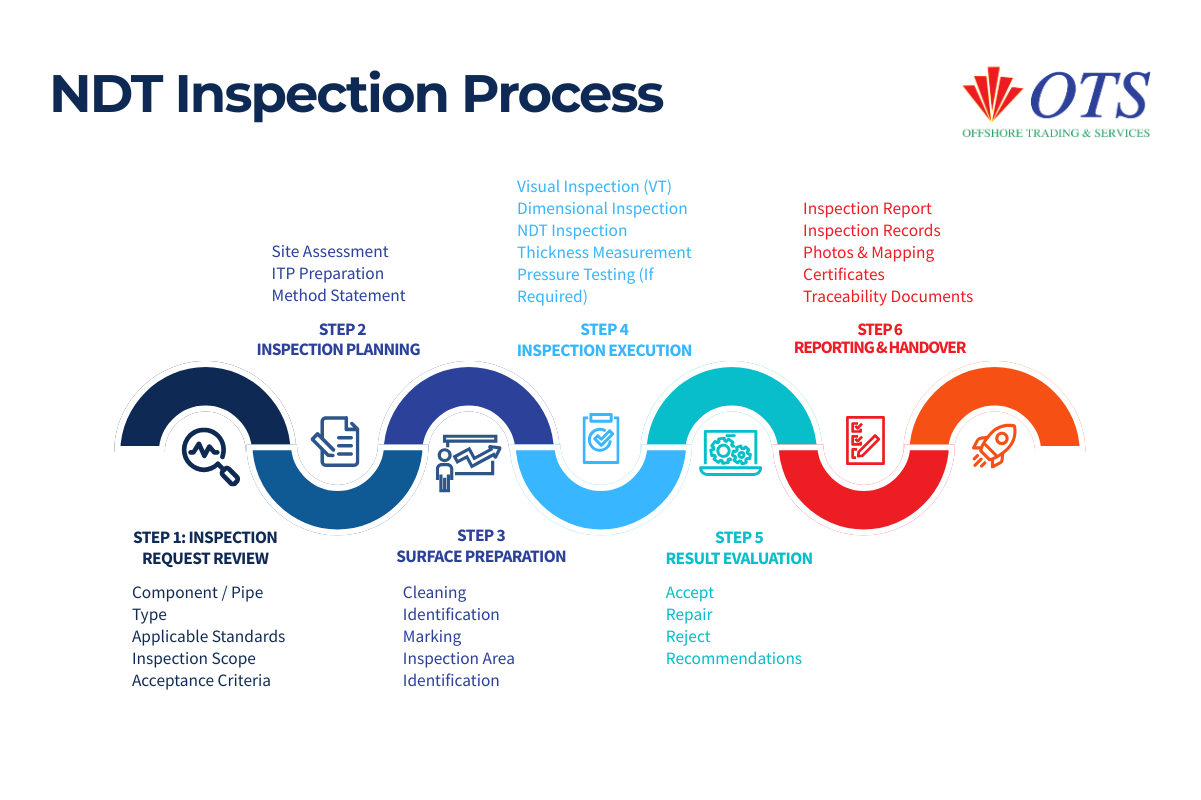
NDT Inspection Process at OTS
To ensure consistency and full traceability, all NDT activities are carried out in accordance with OTS’s quality control procedures.
Benefits of NDT Services
Choosing OTS’s Non-Destructive Testing services helps improve product quality while reducing project risks.
Early Defect Detection
Identify material and weld defects before equipment is placed into service.
Improved Reliability
Enhance product quality and increase confidence before delivery.
Reduced Risk and Cost
Minimize repair, replacement, and unplanned operational downtime.
Compliance with Technical Requirements
Support project acceptance and compliance with applicable technical standards.
Traceability and Documentation
Inspection results are fully documented to support quality management and project records.
OTS Commitment to Quality
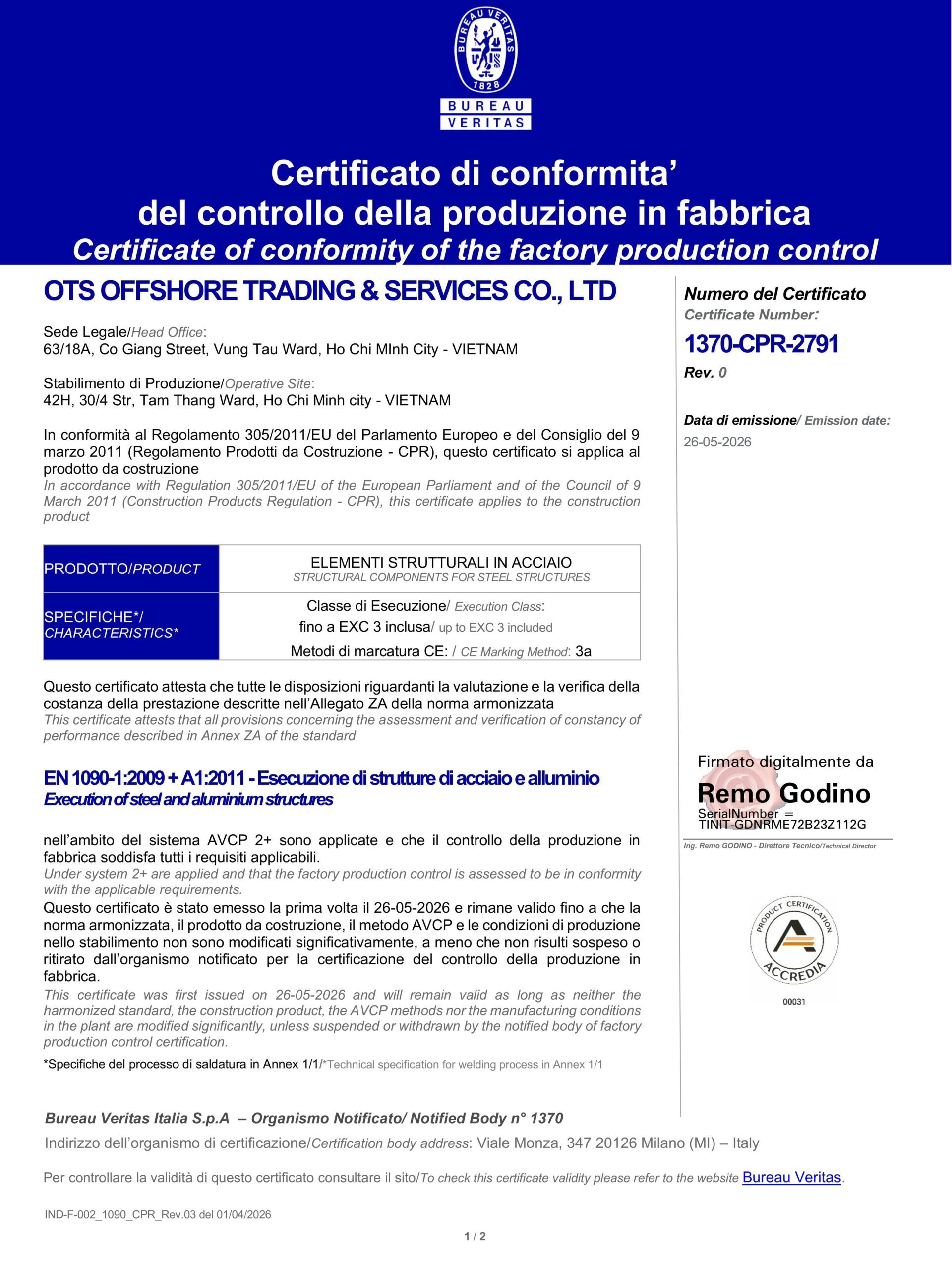
At OTS, Non-Destructive Testing is more than an inspection method—it is a technical service that provides customers with objective and reliable quality assessments. With the capability to perform a wide range of NDT methods both in our workshop and on-site, OTS supports customers in quality control, compliance with technical requirements, and improving the reliability of Offshore, Oil & Gas, and Industrial projects.